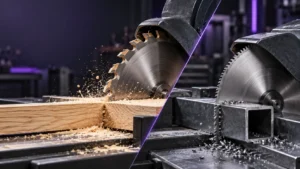
Metal saw blade vs wood saw blade is not a cosmetic comparison. The two blade types are designed for different materials, tooth loads, chip sizes, heat levels, and cutting speeds. A blade that cuts wood quickly may overheat or lose its teeth when used on steel. A metal blade may survive wood cutting, but it can produce slow feed rates, poor chip clearance, and burned surfaces.
For B2B buyers, the right choice depends on more than the material name. Blade diameter, bore, tooth count, tooth geometry, hook angle, kerf width, machine RPM, feed rate, workpiece thickness, and production volume all affect the result. This guide explains the differences and gives you a practical selection process for wood, panels, aluminum, steel, stainless steel, copper, and brass.
Quick Comparison: Metal Saw Blade vs Wood Saw Blade
| Factor | Wood saw blade | Metal saw blade |
|---|---|---|
| Primary materials | Softwood, hardwood, MDF, plywood, laminates | Steel, stainless steel, aluminum, copper, brass, alloys |
| Tooth design | Often larger gullets and aggressive cutting edges | Finer, stronger teeth designed for controlled chip removal |
| Common materials | Carbide-tipped steel, high-carbon steel | HSS, bi-metal, carbide-tipped, cermet |
| Heat control | Optimized for fast cutting through low-density materials | Designed for higher friction and heat generated by metal |
| Typical kerf | Can be wider for fast chip clearance | Often controlled to reduce load, waste, and heat |
| Cutting speed | Usually higher for wood applications | Usually lower and matched to material hardness |
| Main priority | Fast feed, clean fiber cutting, chip evacuation | Tooth life, heat stability, burr control, dimensional accuracy |
Always select a blade rated for the material and machine. The diameter may fit physically while the tooth geometry, RPM rating, or thermal design is still unsuitable.
What Is a Wood Saw Blade?
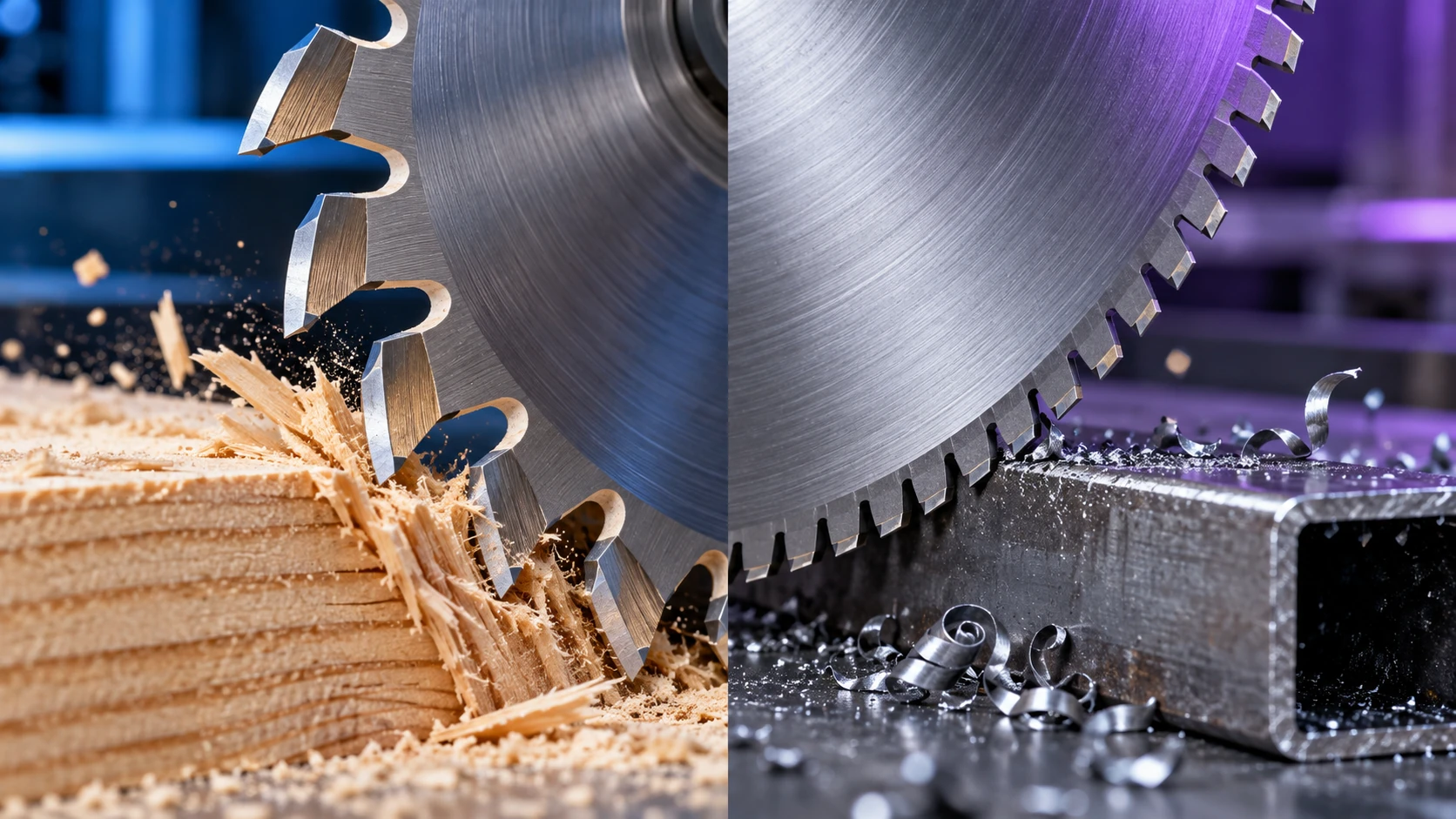
A wood saw blade is designed to cut fibrous, relatively low-density materials. Its tooth profile is intended to slice or shear wood fibers and move sawdust away from the cut. Many wood blades use carbide-tipped teeth because carbide keeps an edge during repeated cutting of hardwood, panels, laminates, and abrasive adhesives. For CNC routing and panel processing, see our woodworking cutting tools range.
Wood Blade Tooth Design
Common wood blade profiles include alternate top bevel (ATB), flat-top grind, and triple-chip grind (TCG). ATB teeth are often selected for clean crosscuts because the alternating bevels slice the surface fibers. TCG uses a combination of trapezoidal and flat teeth and is useful for harder or abrasive boards, laminates, and some non-ferrous applications.
Wood blades generally use larger gullets when rapid chip removal is the priority. A low tooth count can make a rip cut quickly, while a higher tooth count can improve the finish on crosscuts, panels, or veneered materials. More teeth are not automatically better: if the gullets cannot clear chips, the blade may heat up and feed poorly.
Typical Wood Applications
- Softwood framing and ripping.
- Hardwood crosscutting and fine furniture work.
- MDF, plywood, melamine, and laminated panels.
- Composite boards where tear-out and surface finish matter.
What Is a Metal Saw Blade?
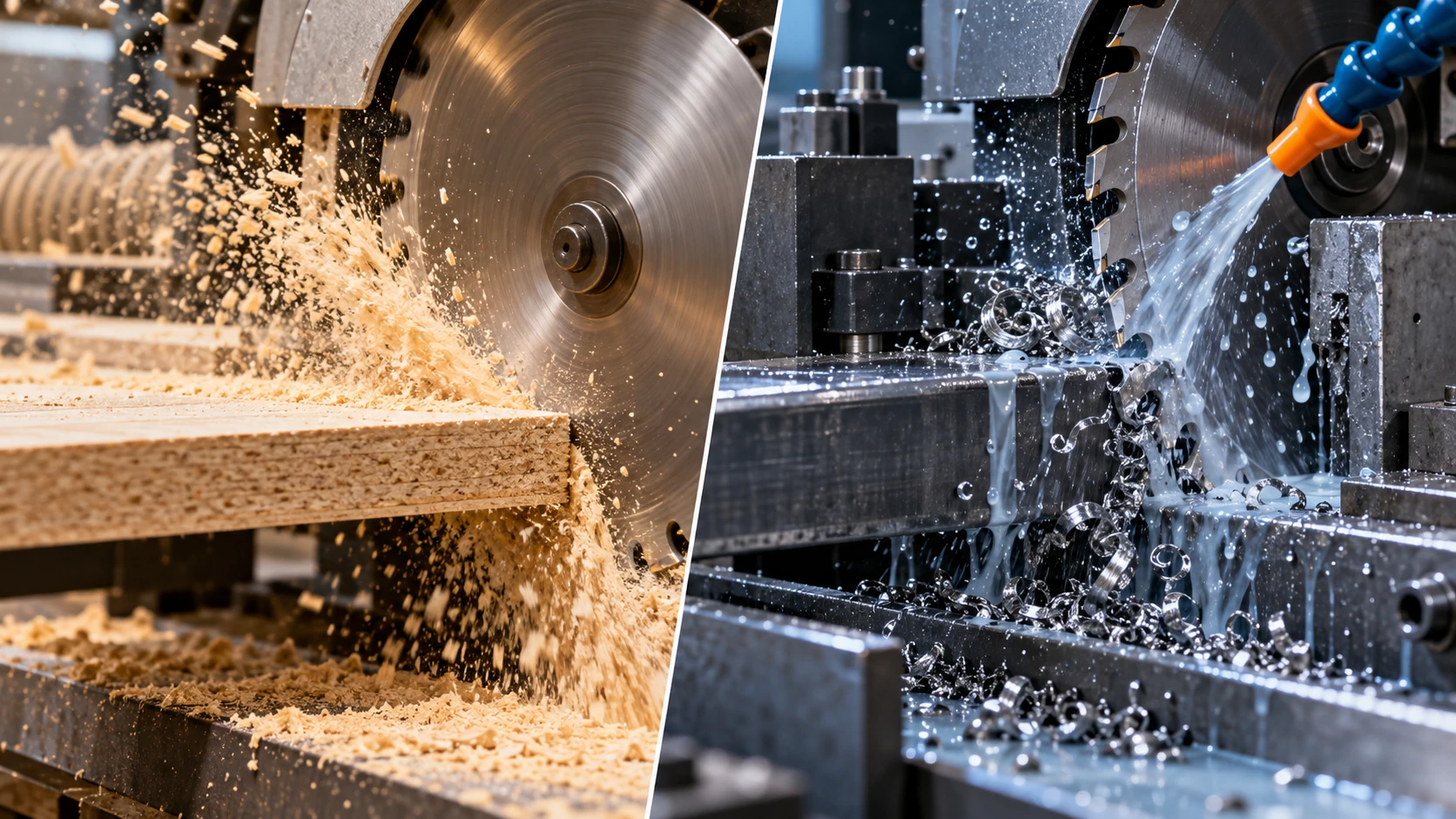
A metal saw blade is engineered for materials with higher density, cutting force, and thermal load. Depending on the machine and workpiece, the blade may use high-speed steel, bi-metal construction, carbide-tipped teeth, cermet tips, or another wear-resistant grade. For industrial converting and automated cutting applications, review our custom industrial machine knives capabilities.
Metal Blade Tooth Design
Metal cutting usually requires controlled tooth engagement. Fine tooth spacing, suitable tooth pitch, a stable set, and a carefully selected hook angle help reduce shock and manage the chip thickness. Thin sheet may require a finer pitch so several teeth stay engaged. Thick sections may need a coarser pitch to prevent the gullets from packing with chips.
Metal blades are often designed to carry heat into the chips or into the coolant rather than allowing the cutting edge to overheat. The correct tooth geometry also reduces burrs and helps the blade remain stable when cutting steel, stainless steel, aluminum, or brass.
Typical Metal Applications
- Ferrous steel profiles, tube, bar, and sheet.
- Stainless steel and heat-resistant alloys.
- Aluminum, copper, brass, and other non-ferrous metals.
- Production sawing where repeatable kerf and cut quality are required.
Core Differences Between Metal and Wood Saw Blades
Tooth Count and Tooth Spacing
Wood cutting often benefits from large gullets and a tooth count selected for the required finish. Metal cutting needs a tooth pitch that matches the material thickness so the blade does not overload a single tooth or allow too few teeth to engage. A thinner workpiece generally needs finer spacing; a thick section may need a coarser pitch for chip capacity.
Hook Angle and Cutting Mechanics
A positive hook angle can make a blade more aggressive, which is useful in some wood cutting operations. Metal blades may use a lower or negative hook angle to reduce grabbing and control the entry of the tooth into a dense workpiece. The correct angle depends on the machine, material, thickness, and safety requirements.
Blade Material and Durability
Wood blades can use standard steel bodies with carbide teeth because the tooth load and temperature are different from metal cutting. Metal blades may require bi-metal construction, HSS, carbide, or cermet to maintain the cutting edge under higher force and heat. A harder tooth material can improve wear resistance, but it also needs the correct setup and tooth geometry.
Heat and Chip Evacuation
Wood produces light chips and sawdust, while metal produces dense chips and more cutting heat. Metal cutting therefore requires a blade and operating method that control chip packing, friction, and thermal damage. Coolant, mist, dry-cut design, chip brushes, and correct feed rates may all be part of the process.
Kerf Width and Motor Load
Kerf is the width of material removed by the blade. A wider kerf can improve stability in some wood applications but consumes more material and may increase motor load. A controlled or thin kerf can reduce waste and power demand, but it must remain stable for the machine and material. For metal, kerf also affects burr formation, heat, cut accuracy, and the force required from the saw.
Can You Use a Wood Saw Blade to Cut Metal?
In most industrial situations, you should not use a standard wood saw blade to cut steel or other hard metals. The aggressive tooth shape, hook angle, RPM expectation, and material system may be unsuitable for the load and heat produced by metal.
Possible results include rapid tooth wear, chipped carbide, overheating, welded chips, blade distortion, poor cut quality, and damage to the saw. The wrong blade can also increase kickback or create an unsafe operating condition. If a blade is specifically rated for a non-ferrous material, follow that manufacturer’s instructions; do not generalize the rating to steel.
Can You Use a Metal Saw Blade to Cut Wood?
A metal blade may cut wood, but it is usually an inefficient choice. Fine teeth and small gullets can fill with sawdust, while a low or negative hook angle may feed slowly. The result can be friction, burning, a rough surface, and unnecessary motor load.
There are combination blades and specialty blades designed for more than one material family. These should be treated as a separate engineered product, not as permission to interchange ordinary wood and metal blades.
How to Choose the Right Blade by Material
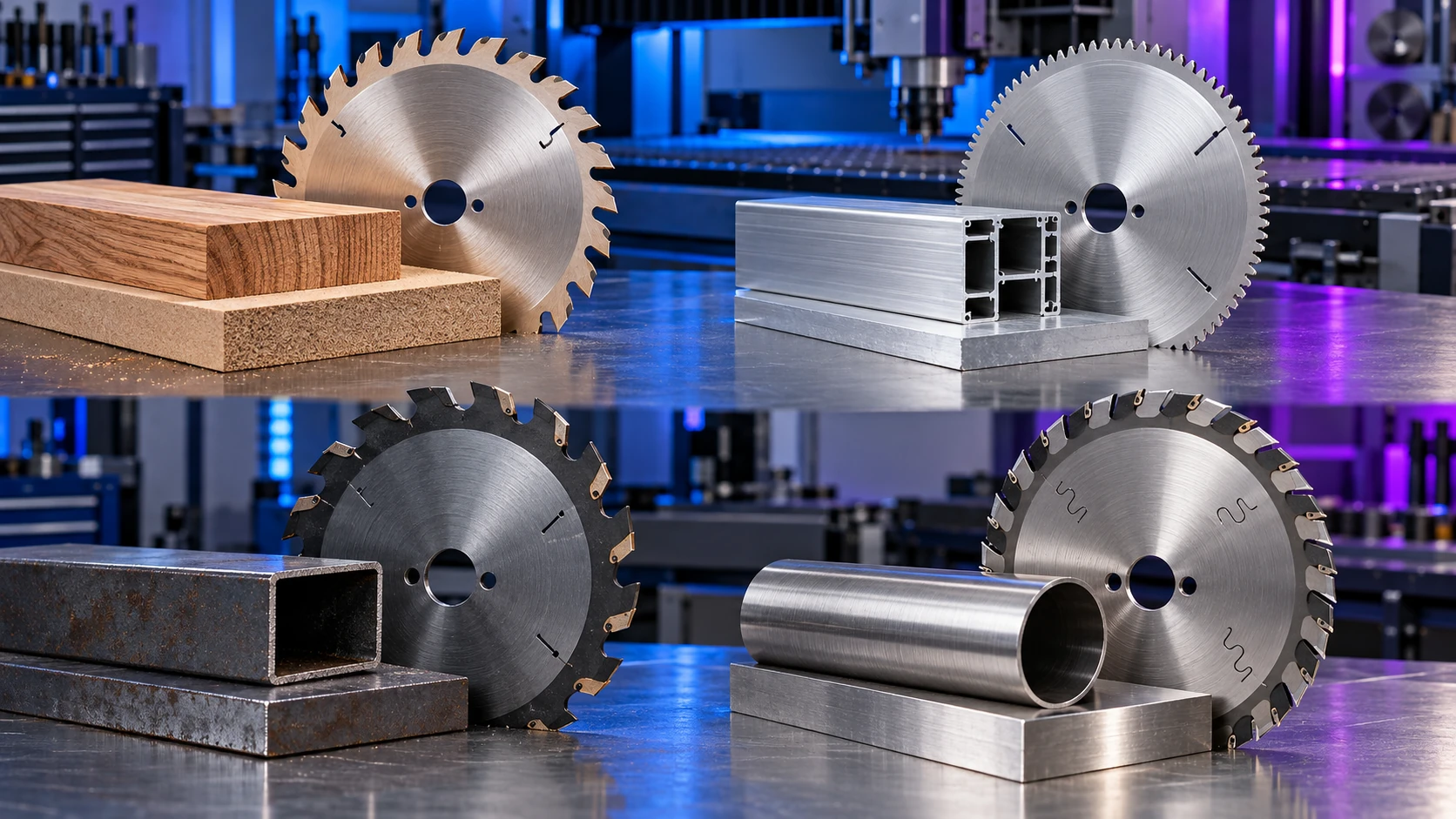
| Material | Starting blade direction | Key parameters to confirm |
|---|---|---|
| Softwood | Wood blade with a larger gullet and suitable rip or crosscut tooth pattern | Required finish, feed rate, blade diameter |
| Hardwood | Fine-tooth carbide-tipped wood blade | Tooth grind, edge sharpness, heat and resin buildup |
| MDF and coated panels | Fine-finish ATB or TCG panel blade | Coating abrasiveness, tear-out, tooth count, kerf |
| Aluminum | Non-ferrous metal blade or approved specialty blade | Hook angle, chip clearance, lubrication, tooth geometry |
| Mild steel | Ferrous metal blade matched to thickness and machine | Tooth pitch, RPM, coolant or dry-cut rating |
| Stainless steel | Wear-resistant metal blade with validated cutting data | Heat control, tooth material, feed, work hardening |
| Copper and brass | Non-ferrous blade with controlled rake and chip space | Grab prevention, chip evacuation, surface finish |
How to Choose Tooth Count, Kerf Width, and Hook Angle
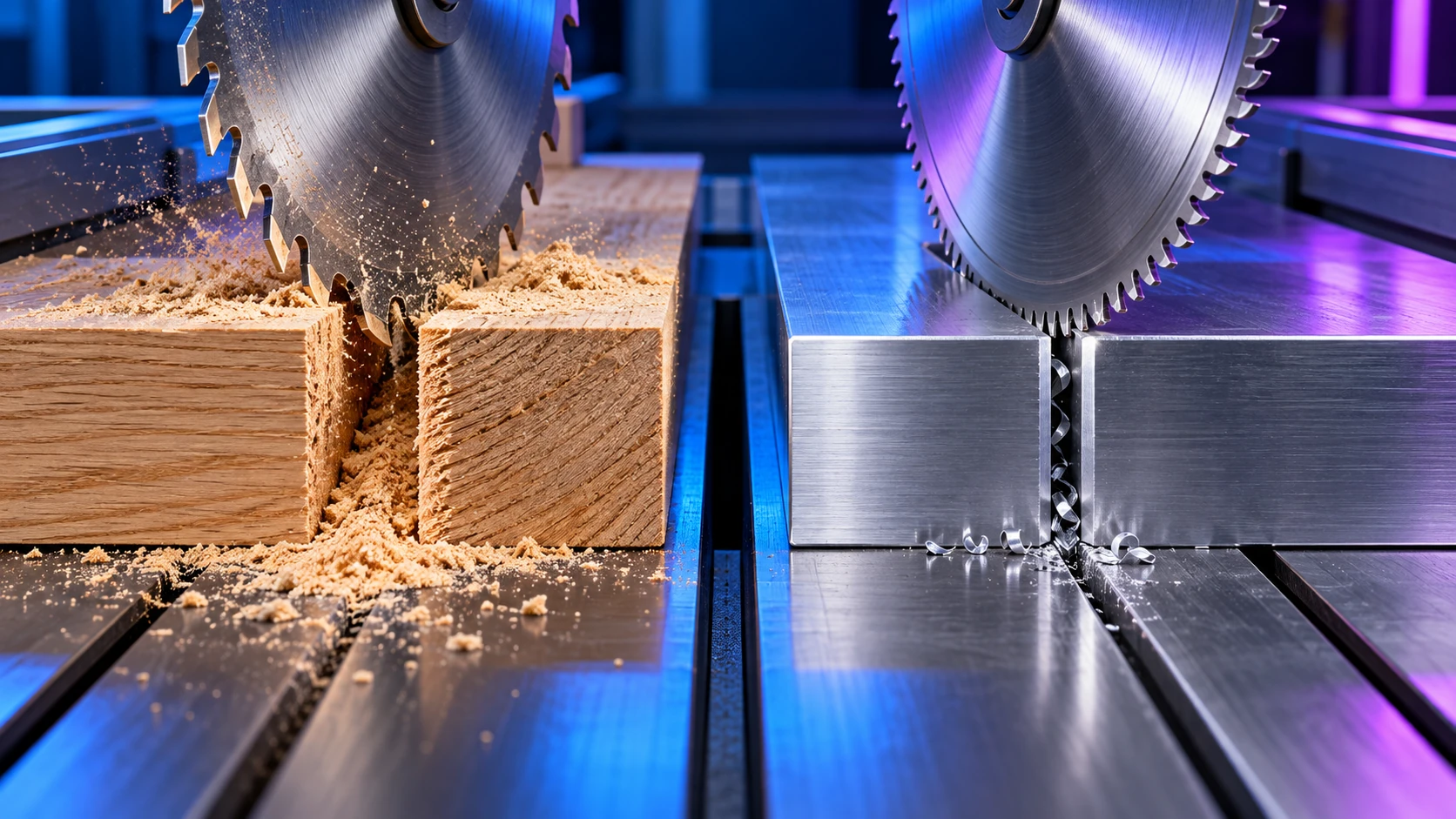
- Match tooth pitch to thickness. Keep an appropriate number of teeth engaged in the workpiece. Too few teeth can cause shock; too many can restrict chip space.
- Choose tooth count for the required finish. Lower tooth counts usually prioritize speed and chip capacity. Higher counts can improve finish when feed and material support are suitable.
- Confirm the kerf. A thin kerf can reduce material waste, but a blade that is too thin for the application may deflect or vibrate.
- Check the hook angle. Aggressive positive angles can feed quickly in suitable wood applications. Controlled or negative angles may be safer for dense metals and some machine setups.
- Use the correct RPM and feed. The blade diameter, tooth geometry, material, and machine rating must be considered together.
B2B Saw Blade Selection Checklist
Send these details to a supplier before requesting a quotation or custom recommendation:
- Material type, grade, hardness, and coating.
- Workpiece thickness, width, and profile.
- Blade outside diameter, bore, body thickness, and kerf.
- Required tooth count, pitch, set, grind, and hook angle.
- Machine model, spindle or band speed, and power.
- Cutting direction, feed rate, coolant, and lubrication method.
- Required cut tolerance, surface finish, and burr limit.
- Monthly volume, batch size, resharpening plan, and target tool life.
- Drawing, sample, photo, or current blade reference number.
Safety Notice
Use only a saw blade rated for the material, machine, and operating speed. Install the correct guard, confirm the arbor and clamping surfaces are clean, secure the workpiece, and wear suitable eye, hearing, and chip protection. Stop the machine before changing a blade, clearing chips, measuring a cut, or investigating vibration. Never remove a guard or continue cutting after unusual noise, overheating, tooth damage, or blade wobble appears.
Frequently Asked Questions
Can a wood saw blade cut metal?
A standard wood saw blade should not be used for steel or other ferrous metals. It may overheat, lose teeth, distort, or create an unsafe cutting condition. Use a metal-rated blade or a manufacturer-approved specialty blade.
Can a metal saw blade cut wood?
It may cut wood, but the result is usually slow and inefficient. Fine teeth and limited gullets can clog with sawdust, increase friction, and burn the cut surface.
What is the best saw blade for aluminum?
Use a blade specifically rated for non-ferrous metals. Confirm hook angle, tooth geometry, lubrication, chip clearance, and the manufacturer’s RPM and feed recommendations.
What is the best saw blade for MDF?
A fine-finish carbide-tipped panel blade with a suitable ATB or TCG profile is a common starting point. The final choice depends on thickness, coating, required edge quality, and panel saw setup.
Are more teeth always better?
No. More teeth can improve finish, but they reduce chip space and may slow the feed. The correct tooth count must match material thickness, cutting direction, and the required finish.
How do I choose the correct kerf width?
Balance material waste, motor load, stability, deflection, and cut accuracy. A thin kerf is not automatically better if the blade cannot remain stable in the material or machine.
How ZIROO TOOLS Can Help
ZIROO TOOLS supports B2B buyers with industrial cutting tools and application-based selection. Share your material, machine, blade dimensions, tooth requirements, and production target so the blade can be matched to the actual cutting conditions.
Contact ZIROO TOOLS for a saw blade recommendation and quotation.