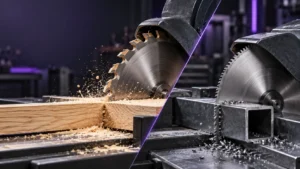
Selecting a saw blade by diameter alone is a costly mistake. A blade may fit the arbor and still be wrong for the material, machine, cutting speed, and required finish. In industrial purchasing, the difference between a metal saw blade vs wood saw blade affects more than cut speed: it affects tooth life, burr control, heat, operator safety, rework, and the consistency of a production run.
This guide explains the structural differences between metal-cutting and wood-cutting saw blades, where each should be used, and what purchasing teams should confirm before placing a repeat order. The short answer is simple: choose the blade for the workpiece and machine, not for the fact that it physically fits the saw.
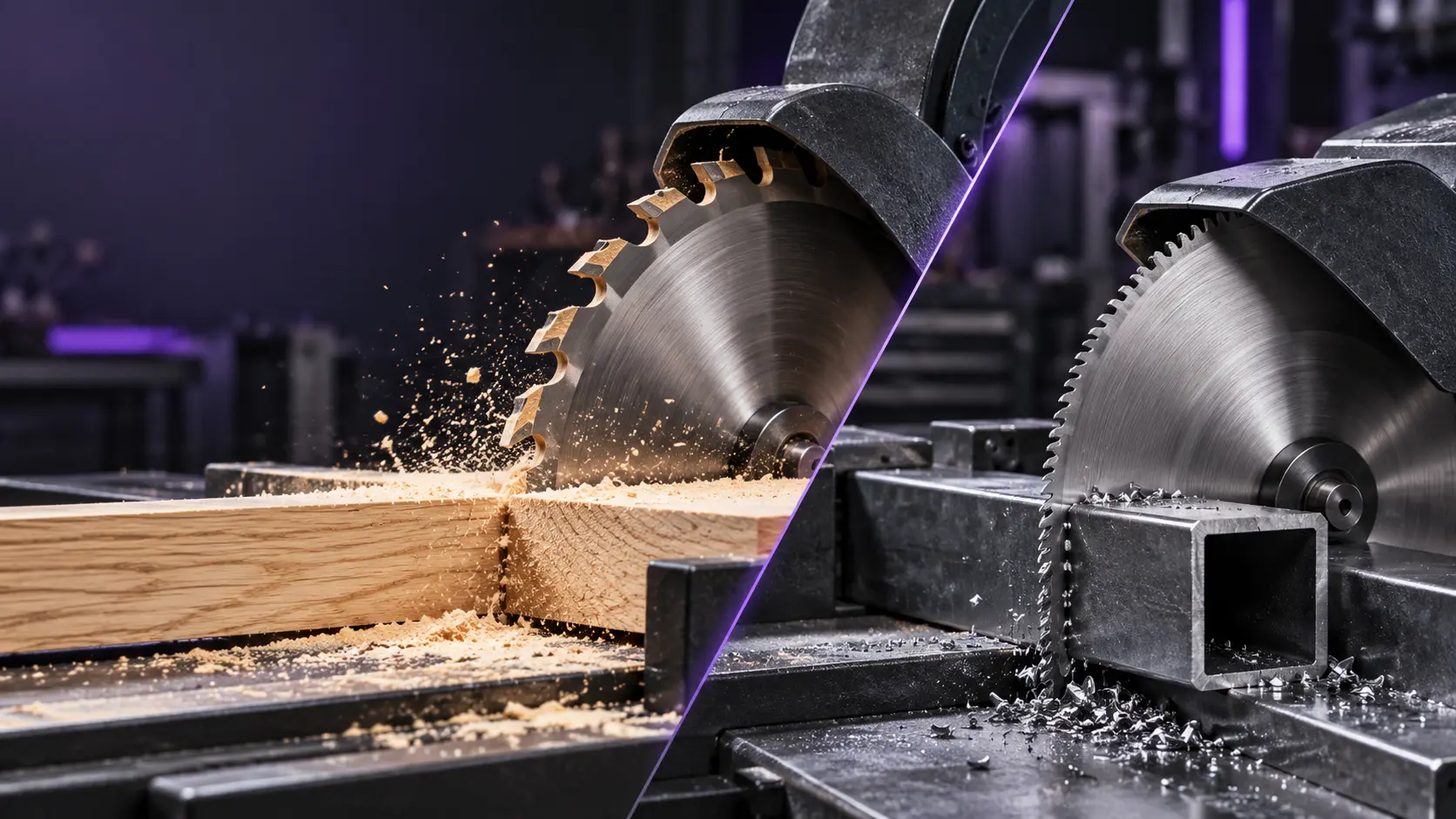
Metal Saw Blade vs Wood Saw Blade: Quick Comparison
| Selection factor | Wood saw blade | Metal saw blade |
|---|---|---|
| Primary material | Solid wood, plywood, MDF, laminate | Steel, stainless steel, aluminum, brass, and other metals |
| Tooth form | More aggressive teeth and larger gullets for sawdust removal | Finer, stronger cutting edges designed for controlled chip formation |
| Typical cutting goal | Fast feed rate and clean wood fibers | Controlled heat, straight cuts, low burr, and edge stability |
| Blade construction | Steel body with carbide-tipped or specialty teeth, depending on wood product | HSS, carbide-tipped, cermet, or application-specific tooth systems |
| Speed requirement | Usually higher peripheral speed, subject to the machine and blade rating | Matched to alloy, section thickness, coolant strategy, and machine capability |
| Risk of using the wrong blade | Burn marks, splintering, overload, and poor cut quality | Rapid dulling, tooth damage, excess heat, burrs, and possible safety hazards |
What Makes a Wood Saw Blade Different?
Wood is a fibrous material. A wood saw blade is designed to separate or shear fibers quickly while clearing a relatively high volume of sawdust. That is why many woodworking blades use an open tooth profile and generous gullets. The tooth geometry prioritizes feed rate and evacuation rather than the slow, controlled chip formation needed in metal cutting.
The exact blade still depends on the wood product. A ripping blade for solid timber, a crosscut blade for furniture panels, and a blade for laminate-faced board do not use the same tooth count or grind. For CNC routers, tool selection is also different from circular saw selection; a production team should select the cutter geometry around the board material, nesting process, spindle, and required edge quality. See our guide to types of wood router bits for CNC woodworking for the matching principles used in routed wood components.
What Makes a Metal Saw Blade Different?
Metal cutting places much higher demand on the cutting edge. The blade must resist abrasion and thermal cycling while producing manageable chips. A metal saw blade therefore uses tooth geometry, tooth pitch, edge material, and coatings that are matched to the metal grade and its section shape.
For example, thin-wall tube, solid bar, stainless steel, and aluminum do not create the same chip load or heat pattern. A good specification considers the material, thickness, whether the cut is interrupted, and whether the machine is a cold saw, band saw, circular saw, or automated cut-off line. The blade supplier should also know whether coolant is used and what edge condition is acceptable after cutting.
Five Core Differences That Affect Your Results
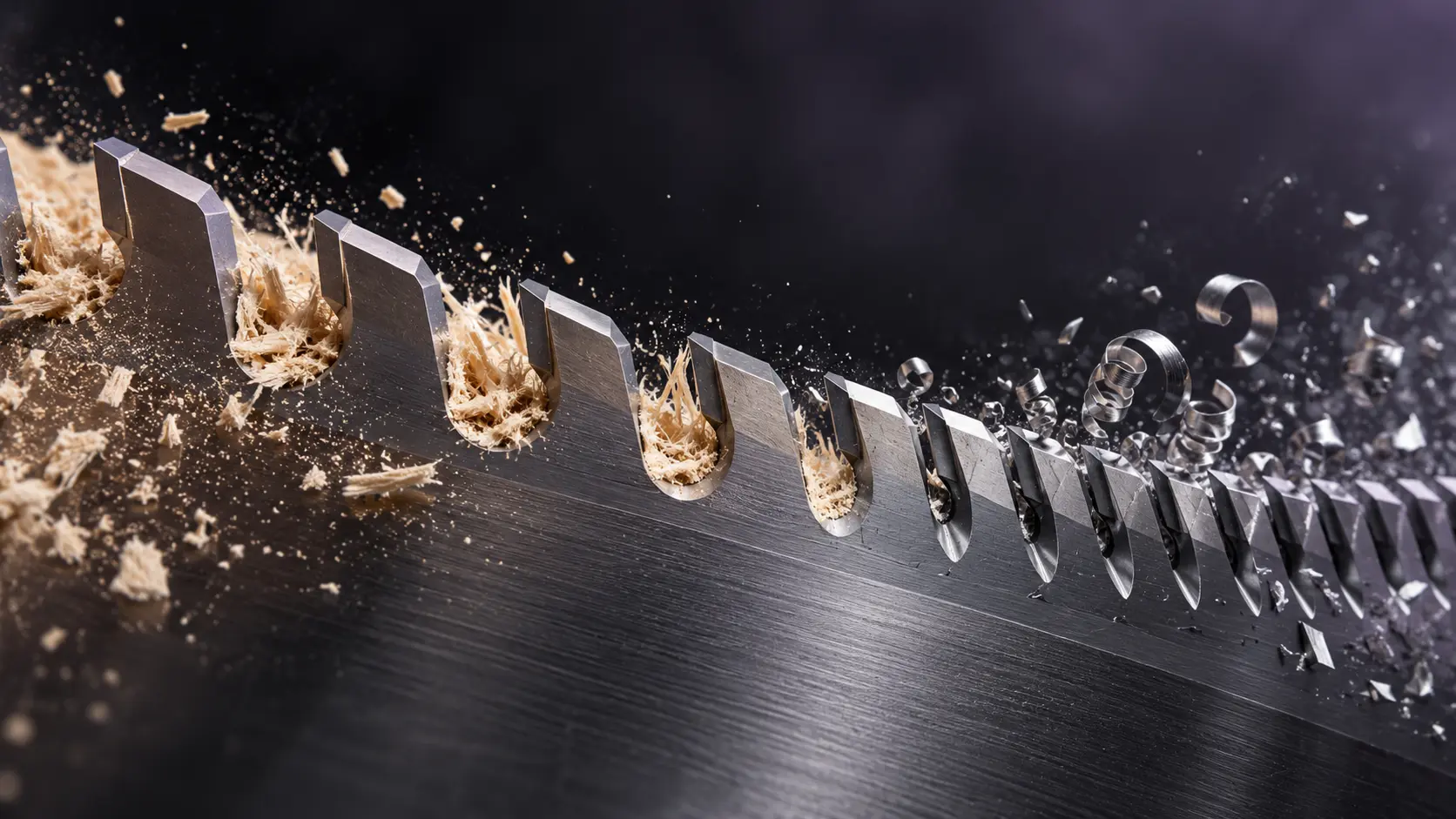
1. Tooth geometry and gullet capacity
Wood blades commonly need room to carry sawdust away at a fast feed. Their teeth can be more aggressive because wood fibers offer less resistance than steel or stainless steel. Metal-cutting teeth are usually more closely spaced and designed to take a controlled chip. The tooth pitch must allow enough teeth to engage the material without packing the gullets.
For a buyer, tooth count is not a universal “more is better” number. It must be considered with material thickness and machine feed. A blade that cuts thin metal with too few teeth engaged can snag or damage the workpiece. A blade that is too fine for a thick section can run hot because the gullets cannot clear chips efficiently.
2. Edge material and wear resistance
Both blade families may use carbide, but the grade and design are not automatically interchangeable. Woodworking carbide is selected for abrasion from wood fibers, adhesives, and panel surfaces. Metal cutting may require HSS, carbide, cermet, or a specialized edge system that maintains integrity under mechanical load and heat.
Do not choose only by the word “carbide.” Confirm the workpiece alloy, hardness range, cutting method, and the blade maker’s recommended speed. For a related metal-cutting decision, compare the strengths and limitations in our carbide vs HSS saw blades guide.
3. Heat management
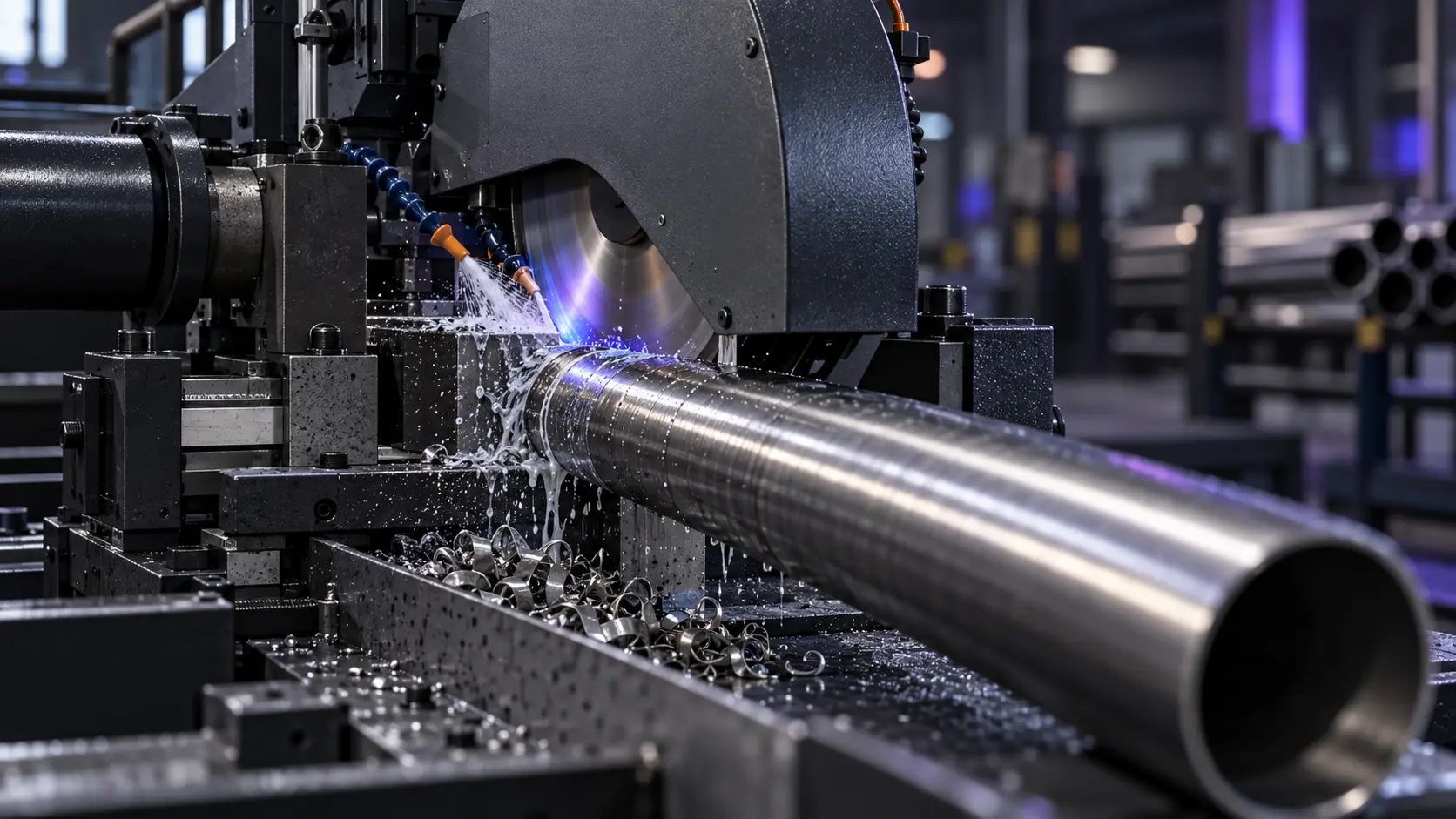
Heat is often the decisive difference. Wood can scorch when friction becomes excessive, but most metal-cutting failures are more severe: edge softening, micro-chipping, work hardening around the cut, discoloration, or burr formation. Metal blade design and operating conditions aim to remove heat with the chip and, where appropriate, coolant.
Using a wood blade on metal can create rapid heat buildup and tooth damage. Using a metal blade on wood may produce unnecessarily slow cuts and burn marks. In both cases, the operator may try to compensate with feed or speed, which can make the failure worse.
4. Kerf, stiffness, and cut quality
Kerf is the width of material removed by the blade. It influences power demand, material waste, stability, and finish. Wood blades are often designed to balance fast cutting and chip clearance, while metal blades are engineered around straightness, burr control, and the load imposed by a denser workpiece.
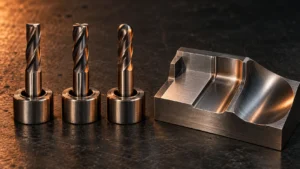
For metal components that move to drilling, tapping, or milling after cut-off, a clean and stable cut protects the next operation. Burrs, deformation, and heat-affected edges can add setup time downstream. If parts require secondary CNC work, align your cutting process with the rest of the tool plan, including milling cutter tools for subsequent machining operations.
5. Machine compatibility and operating window
A blade specification must match the machine’s arbor, guard, RPM range, feed system, clamping method, and coolant arrangement. Two blades with the same diameter can have very different safe operating limits. Before changing blade types, check the saw manufacturer’s instructions and the blade rating; never assume a blade is suitable simply because it mounts on the machine. Use the blade and saw manufacturer’s documented RPM, feed, and coolant guidance for the final process settings.
Can You Use a Wood Saw Blade to Cut Metal?
For normal industrial production, this is not recommended. A wood blade is not a safe or reliable substitute for a blade designed for metal. Its tooth geometry and edge system are not made for the load and heat produced by metal. The likely outcomes are damaged teeth, poor finish, high burrs, overheating, and an increased risk of kickback or workpiece movement.
There are specialty multi-material blades on the market, but their application limits still need to be verified. “Multi-material” does not mean every alloy, thickness, or machine is covered. Ask for the recommended material groups, thickness range, RPM, feed range, coolant guidance, and expected cut quality before approving the blade for a production line.
Can You Use a Metal Saw Blade to Cut Wood?
A metal-cutting blade may physically cut wood, but it is normally an inefficient choice. The tooth profile may not clear sawdust well, the feed can be slow, and friction can leave a burned edge. More importantly, the blade may not be rated for the speed of a woodworking saw. Follow the blade and machine manufacturer’s operating limits rather than using a metal blade as a general-purpose replacement.
How to Choose the Right Saw Blade for Your Production Job
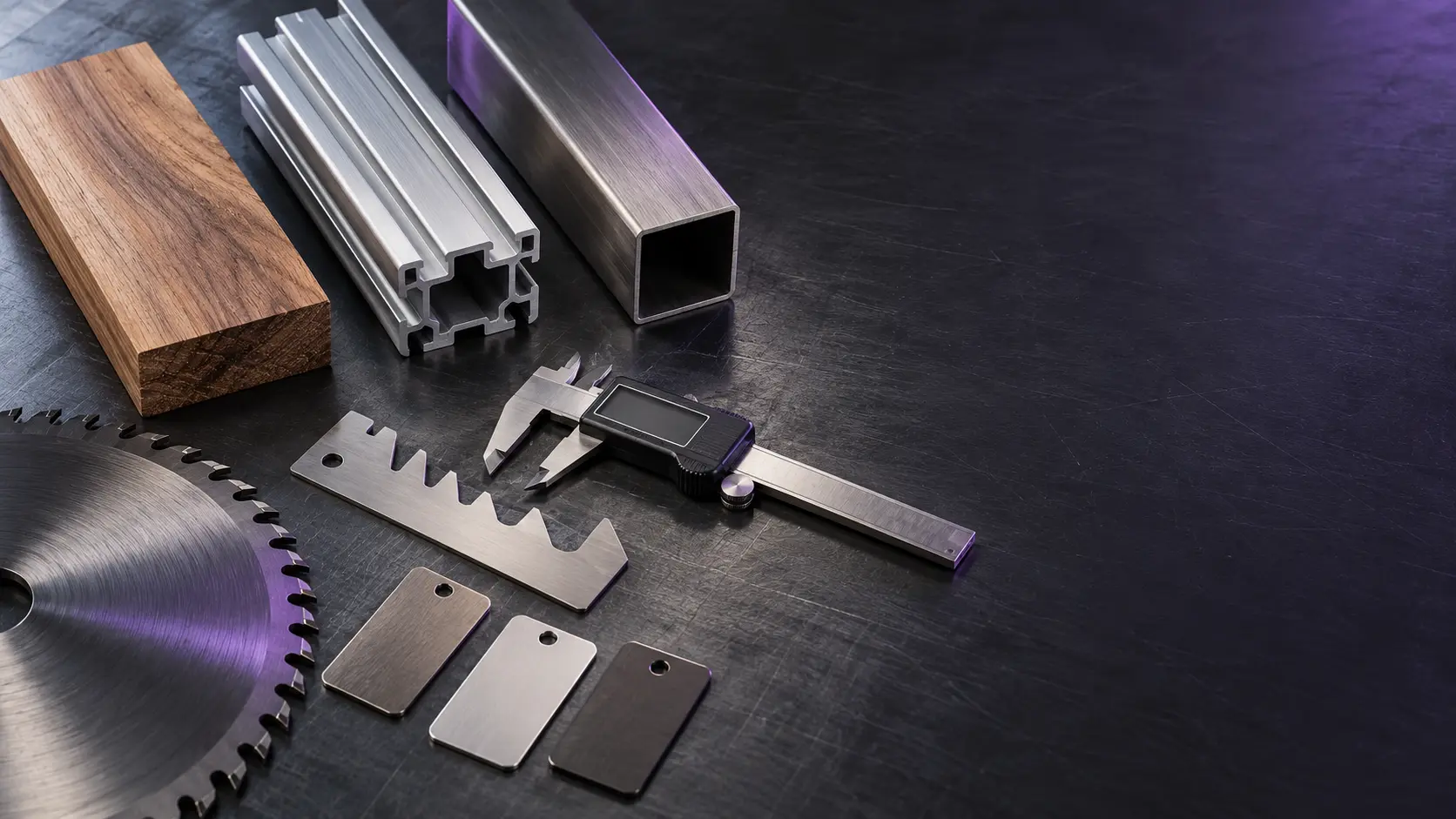
Use this checklist when requesting a quotation or evaluating a new supplier:
- Identify the workpiece. State the material grade, hardness if known, profile, wall thickness, and whether it is solid or hollow.
- Identify the cutting machine. Share the saw type, blade diameter, arbor size, available speed range, clamping method, and coolant setup.
- Define the cut requirement. Confirm cut length tolerance, surface finish, acceptable burr level, and whether the cut face will be machined later.
- Set the production target. Specify prototype, batch, or continuous production; cycle-time and blade-life expectations influence the recommendation.
- Validate before scale-up. Run a controlled trial with documented material, speed, feed, coolant, and inspection results before converting the full production schedule.
Common Buying Mistakes to Avoid
- Ordering by diameter only: diameter and arbor are compatibility checks, not a complete cutting specification.
- Using generic “metal” as the material description: aluminum, mild steel, stainless steel, and hardened alloys require different recommendations.
- Ignoring section thickness: tooth pitch and chip evacuation depend heavily on the material cross-section.
- Comparing only unit price: evaluate cuts per blade, reject rate, secondary deburring, and downtime—not just the purchase price.
- Skipping a production trial: a blade that works on one machine may not deliver the same outcome on a different clamping or coolant setup.
When a Saw Blade Is Not the Right Solution
Some jobs are better solved by another cutting process. If you need profiles, pockets, precision holes, mold features, or complex 3D geometry, CNC milling tools may be more appropriate than sawing. For example, a flat, ball-nose, or corner-radius tool is selected around the machined feature rather than a cut-off operation. Explore how to choose the right carbide end mill when your production step requires CNC material removal.
For mold components, internal corners and surface transitions also influence the tool choice. Our article on end mill corner radius for mold machining explains when a radius tool can improve edge strength and reduce stress concentration in the machining process.
FAQ
What is the main difference between a metal saw blade and a wood saw blade?
The main difference is the tooth system and operating design. Wood blades focus on fast fiber cutting and sawdust removal, while metal blades focus on controlled chip formation, heat resistance, edge durability, and cut stability.
Does a higher tooth count always give a cleaner cut?
No. A higher tooth count can improve finish in some applications, but the correct pitch must still match material thickness and chip volume. Too many teeth can restrict chip clearance and create heat; too few can produce vibration and poor edge quality.
Which saw blade should I use for aluminum?
Use a blade specifically recommended for aluminum and your saw type. Aluminum has different chip behavior from steel, so confirm tooth geometry, cutting speed, lubrication or coolant guidance, and the workpiece profile with the blade supplier.
Why does a saw blade leave burrs on metal?
Burrs can result from an unsuitable tooth geometry, dull teeth, incorrect speed or feed, inadequate clamping, poor chip evacuation, or a blade not matched to the material thickness. Review the whole cutting setup, not only the blade.
What information should I provide to a saw blade manufacturer?
Provide the material grade, dimensions, wall thickness, saw model, blade diameter and arbor, cutting speed range, coolant method, required cut quality, and monthly volume. This helps the supplier recommend a blade that fits your real process.
Final Takeaway
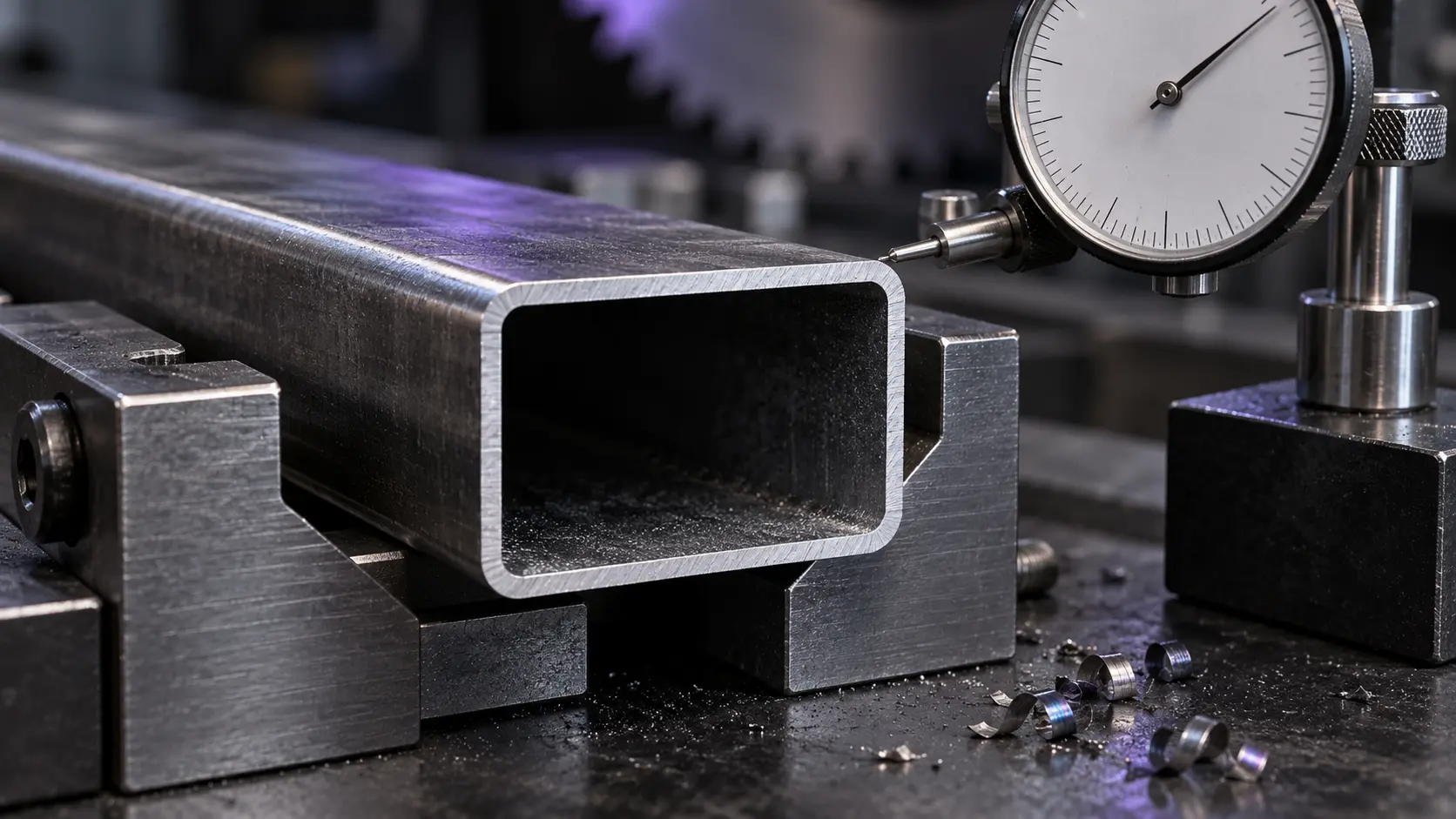
Metal saw blades and wood saw blades are engineered for different cutting mechanics. The correct choice protects cut quality, tool life, machine uptime, and operator safety. For repeat industrial jobs, specify the workpiece and machine conditions in detail, then validate the blade under controlled production conditions.
ZIROO TOOLS supports B2B buyers with cutting-tool selection for defined materials and machining processes. Contact ZIROO TOOLS with your material, drawing, machine information, and target output to discuss a suitable tooling approach.