Drill Bits for Metal: How to Choose the Right Bit for Your Material and Process
Choosing drill bits for metal is not a matter of finding one bit that is “best” for every job. A drill that works well in mild steel can overheat in stainless steel, clog in aluminum, or chip on a rigid CNC machine when the hole, coolant, or geometry is wrong. For a reliable purchase decision, define the workpiece and hole first, then match the drill substrate, geometry, coating, machine stability, and cooling method. Effective drill bits for metal selection also benefits from reviewing the manufacturer’s drill-bit application guidance alongside the actual process conditions.
This guide is written for purchasing teams, distributors, and CNC production buyers who need to compare metal drill bits before samples or a bulk order. It explains the practical differences between HSS, cobalt, and solid carbide drills; the role of point geometry; and the information you should provide to a tooling supplier.
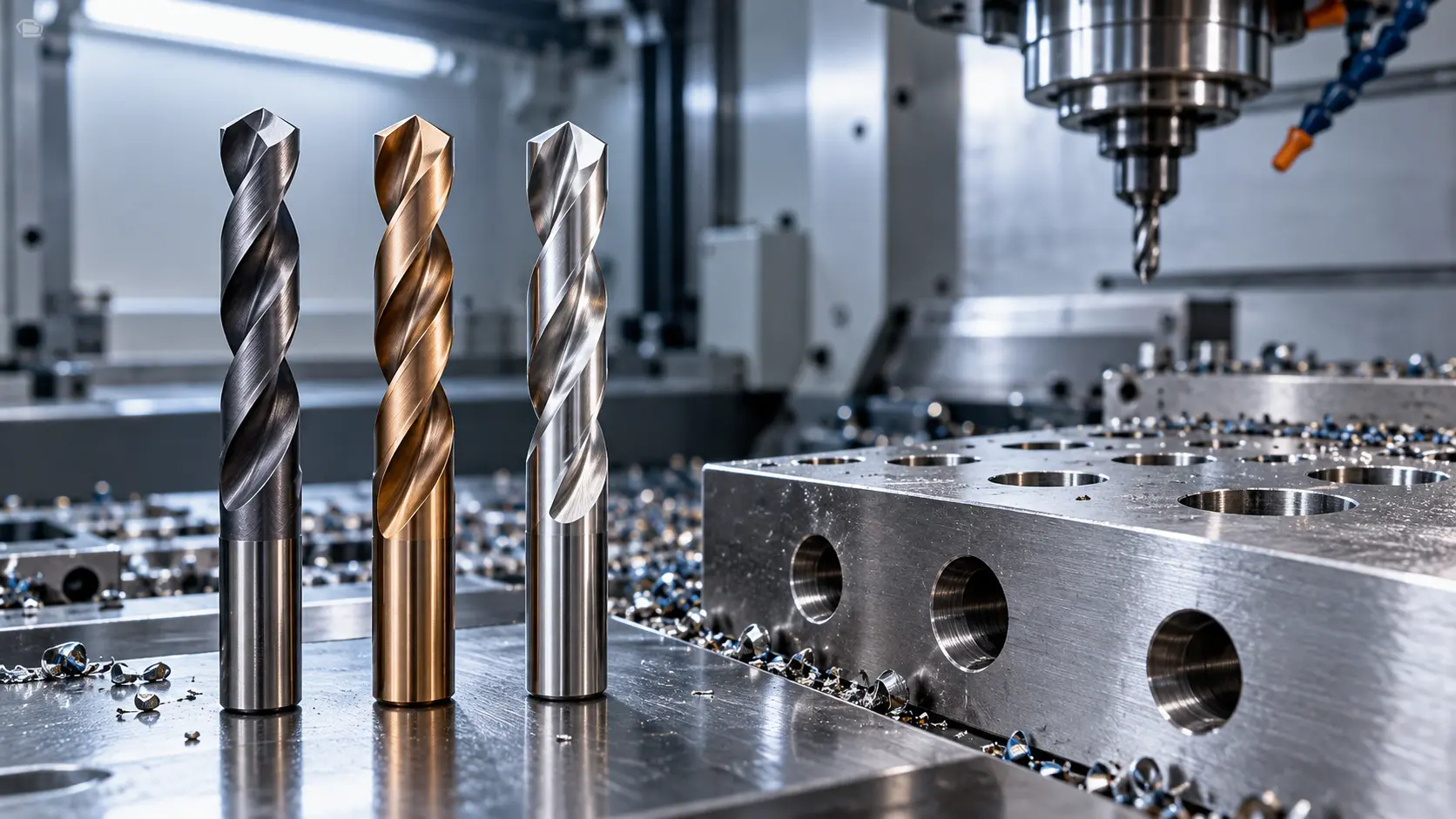
Quick Answer: How to Choose Drill Bits for Metal
Start with five questions: What metal grade and condition are you drilling? What are the hole diameter and depth? Is the hole through or blind? How stable is the machine and toolholding? How will chips and heat leave the hole? These answers are more useful than a generic label such as “metal drill bit.”
- Confirm the workpiece. Record the material grade, approximate hardness, surface condition, and whether it work-hardens or contains abrasive inclusions.
- Define the hole. Specify diameter, depth, tolerance, through or blind condition, and any bottom or entry requirement.
- Check the process. Note hand drill, drill press, or CNC machine; toolholder condition; runout; fixture stability; and coolant availability.
- Select the drill system. Match HSS, cobalt HSS, or solid carbide together with the appropriate geometry, coating, length, and coolant design.
- Validate with a controlled trial. Compare hole quality, chip control, wear, cycle time, and accepted parts under the same conditions.
Start With the Workpiece, Not the Drill Label
“Metal” includes materials with very different cutting behavior. Mild steel, stainless steel, aluminum, cast iron, hardened steel, and titanium alloys do not create the same heat, chips, cutting force, or edge wear. A useful inquiry identifies the exact material if possible, rather than only saying “steel.”
| Workpiece condition | What changes the selection | What to confirm before ordering |
|---|---|---|
| Mild or low-carbon steel | General drilling load, burr target, batch size | Hole depth, required finish, machine type |
| Stainless steel or tough alloy steel | Heat, work hardening, edge support | Grade, coolant method, stable feed capability |
| Aluminum, brass, or copper | Chip evacuation and built-up edge tendency | Alloy, chip form, lubrication, surface-finish target |
| Cast iron or abrasive material | Abrasive wear and dust/chip management | Material condition, dry or wet process, tool life target |
| Hardened steel, titanium, or difficult alloy | Specialized geometry, heat management, machine rigidity | Hardness, hole depth, holder runout, coolant delivery |
Treat this table as a starting point, not a substitute for a drill-series application guide. The same material family may require a different drill when the hole becomes deeper, the diameter becomes smaller, or the machine becomes less rigid.
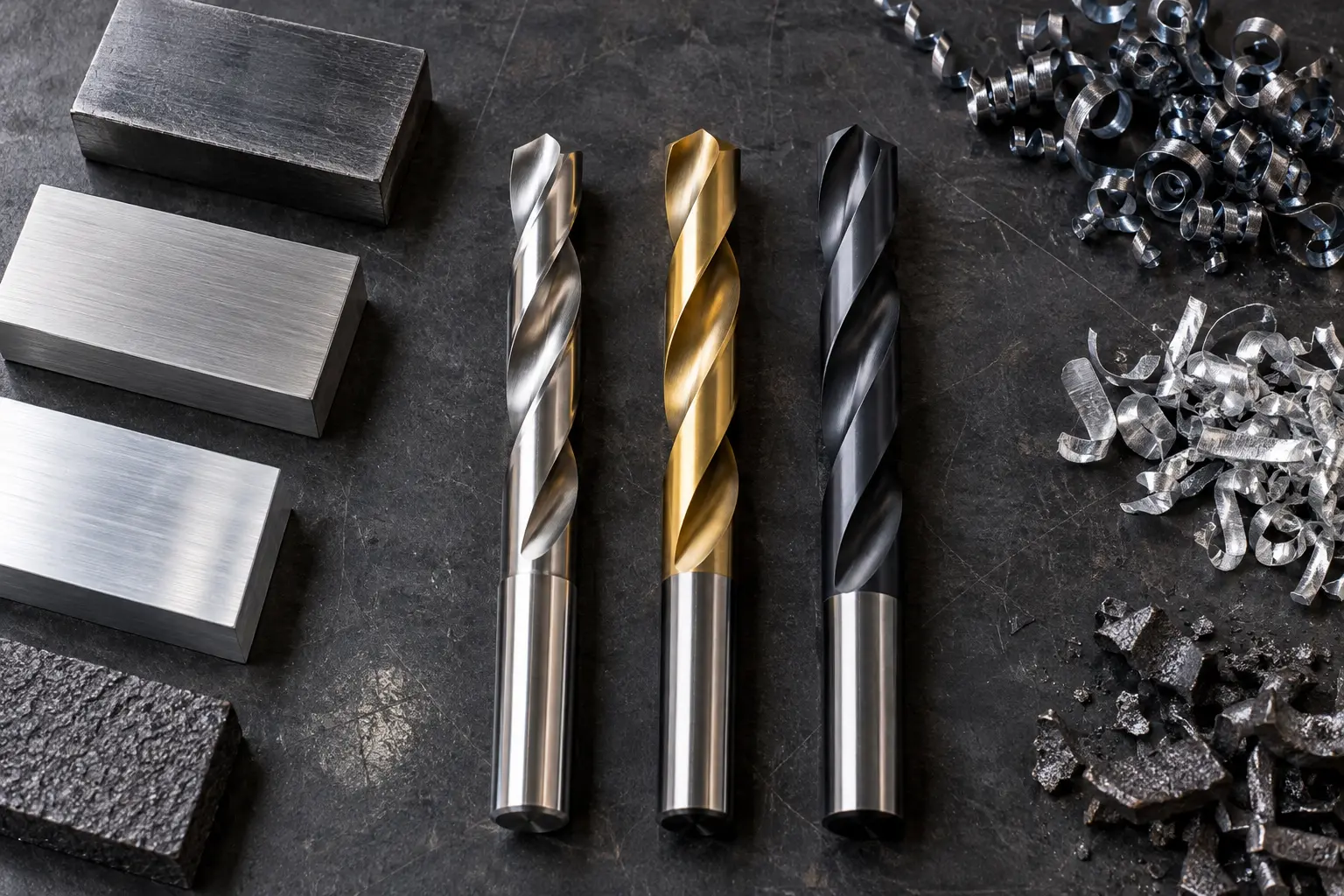
HSS vs Cobalt vs Solid Carbide Drill Bits
Drill substrate affects toughness, hot hardness, wear resistance, and the process stability needed to use the tool successfully. It does not determine performance alone; geometry, coating, clamping, and cutting conditions remain part of the same system.
HSS drills
HSS is a practical starting point for many general metal-drilling operations. It is comparatively forgiving where setup rigidity varies and is commonly considered when initial tool cost and versatility matter. Select the actual geometry and finish around the material and hole rather than assuming every HSS drill is interchangeable.
Cobalt HSS drills
Cobalt drills are a type of high-speed steel alloy, not a coating. They are often considered when heat, wear, or tougher workpiece materials make a general HSS drill lose its edge too quickly. Cobalt still requires correct feed, speed, lubrication, and centering; changing only the drill material will not solve a poor fixture or excessive runout.
Solid carbide drills
Solid carbide can be a strong option in stable CNC drilling where repeatability, wear resistance, and productivity justify the higher initial tooling cost. Carbide is less forgiving of vibration, poor clamping, damaged holders, or unsuitable interruption. For this reason, a carbide drill should be evaluated together with machine rigidity, toolholding, coolant access, and the permitted runout.
For a closer comparison of these two common options, see our cobalt vs carbide drill bits guide for metal drilling.
Geometry Matters as Much as Substrate
Two drills can share the same nominal diameter and point angle while cutting differently. Point angle, split-point design, helix, flute form, web thickness, edge preparation, and working length all influence how the drill enters the workpiece and removes chips.
118° and 135° point angles
A 118° point is a familiar general-purpose starting geometry. A 135° point is commonly used in tougher or more demanding applications and is often paired with a split point. Neither number is a universal material rule. Use the drill manufacturer’s application data for the relevant series, then verify the result with the actual material, depth, coolant, and machine condition.
Split point and centering
A split point changes the central chisel-edge region. It may improve centering and reduce walking on a flat entry, but it is not a replacement for correct fixturing or a suitable spot-drilling strategy. If hole location is critical, verify the complete starting operation rather than evaluating the twist drill in isolation.
Length, flutes, and hole depth
Choose the working length for the hole you need, not simply the longest drill available. As depth increases, deflection, chip evacuation, heat removal, and hole-straightness risk increase. Deep-hole applications may need a different drill design, coolant path, and process plan from a shallow hole of the same diameter.
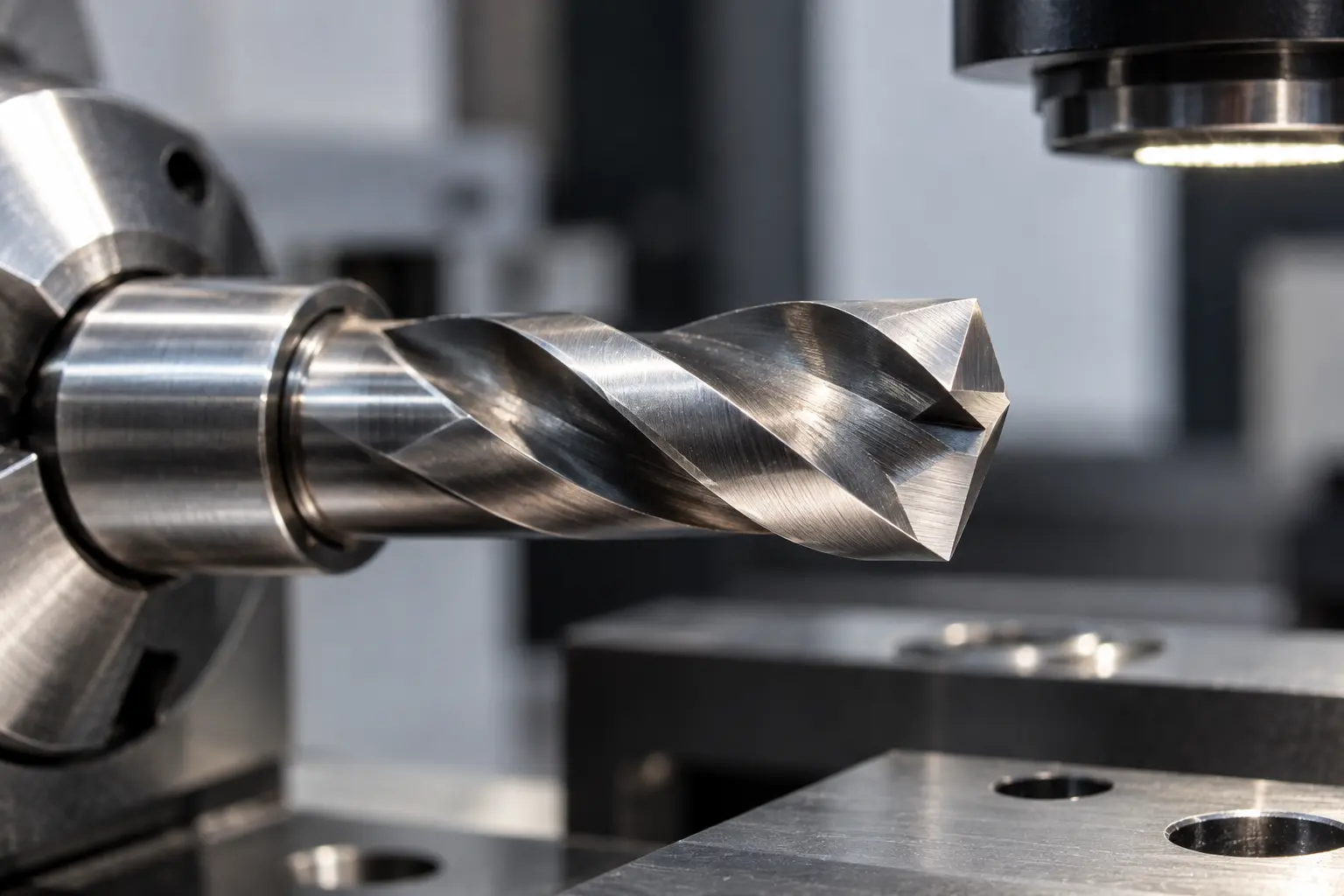
Coating Is Not the Same as Drill Material
A recurring purchasing mistake is treating a titanium-colored drill as a “titanium drill” in the same sense as a solid carbide drill. Many products use an HSS or cobalt HSS substrate with a surface coating. The coating can influence friction, heat resistance, and wear behavior, but it does not turn the substrate into solid carbide.
When comparing quotes, request the substrate, coating name, drill geometry, point style, diameter tolerance, working length, and recommended application range as separate items. This makes it easier to compare suppliers fairly and avoids a selection based only on color or a shortened product description.
If you need to distinguish alloyed cobalt HSS from a titanium-based surface treatment, read cobalt vs titanium drill bits for metal drilling.
Define the Hole Before Selecting the Tool
The required hole changes the tool direction. A short through hole and a deep blind hole may use the same diameter, but they do not expose the drill to the same chip, heat, or alignment risks. Include the following information in the selection process:
- Nominal diameter and permitted tolerance.
- Hole depth and depth-to-diameter ratio.
- Through hole, blind hole, cross hole, angled entry, or interrupted entry.
- Required bottom condition, surface finish, burr limit, and positional requirement.
- Whether the operation is a prototype, maintenance job, or repeat production process.
For repeat production, judge drill bits for metal by the cost per accepted hole, not only the price per tool. Tool changes, scrap, rework, operator intervention, cycle time, and inspection results all affect the final cost.
Match the Drill to the Machine, Holder, and Coolant
Before moving to a harder or more expensive drill, inspect the process. Hand drilling, a bench drill, and a CNC machining center offer different rigidity, alignment, and coolant control. A solid carbide tool may be appropriate on a stable CNC process but may chip in a setup where vibration or runout cannot be controlled.
Check that the holder is clean and in good condition, the drill is clamped to the correct depth, the workpiece is supported, and chips can leave the hole. Confirm whether coolant reaches the cutting zone effectively. For difficult or deep holes, coolant delivery and evacuation can matter as much as the drill substrate.
For broader drilling-process options, explore ZIROO TOOLS hole-making tools before finalizing the tooling route.
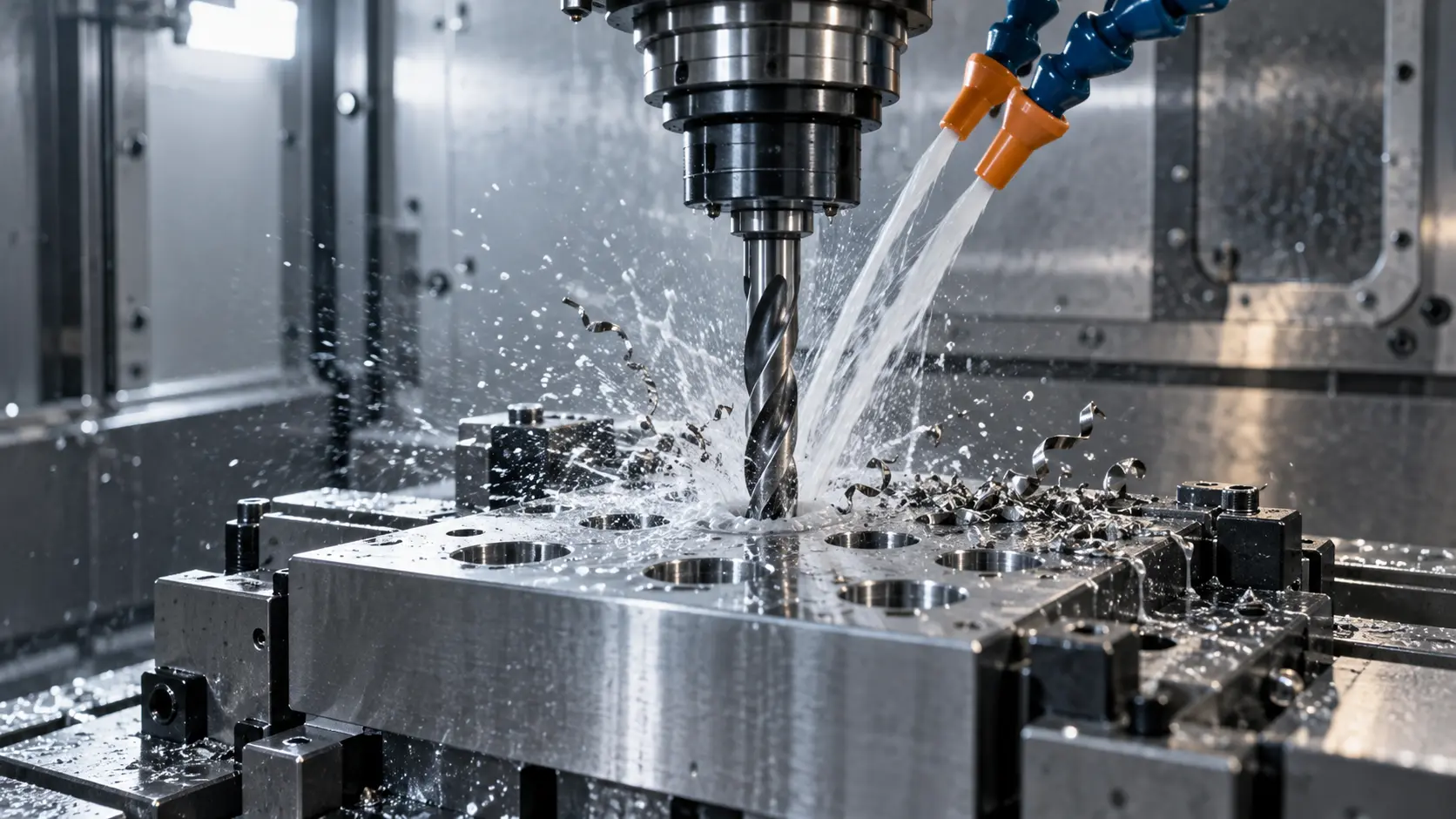
Common Metal-Drilling Problems: What to Check First
| Observed problem | Do not assume | Check first |
|---|---|---|
| Overheating or blue discoloration | That a coating alone will solve it | Speed, feed, lubricant/coolant access, chip packing, and workpiece material. |
| Chipping or broken drill | That carbide is automatically the wrong choice | Runout, holder condition, interrupted entry, fixture rigidity, and chip evacuation. |
| Walking or poor location | That point angle alone is the cause | Entry surface, split-point or spot-drill strategy, clamping, and machine alignment. |
| Oversize or poor-quality hole | That a larger drill is required | Runout, drill wear, lip symmetry, holder stability, and inspection method. |
| Long chips or packing | That a new drill grade is the only fix | Hole depth, flute geometry, coolant direction, peck cycle, and material chip behavior. |
Document the failure before changing the tool. A clear photo of the drill edge, the chips, the hole, and the holder often gives a supplier more useful information than a short note such as “the drill breaks fast.”
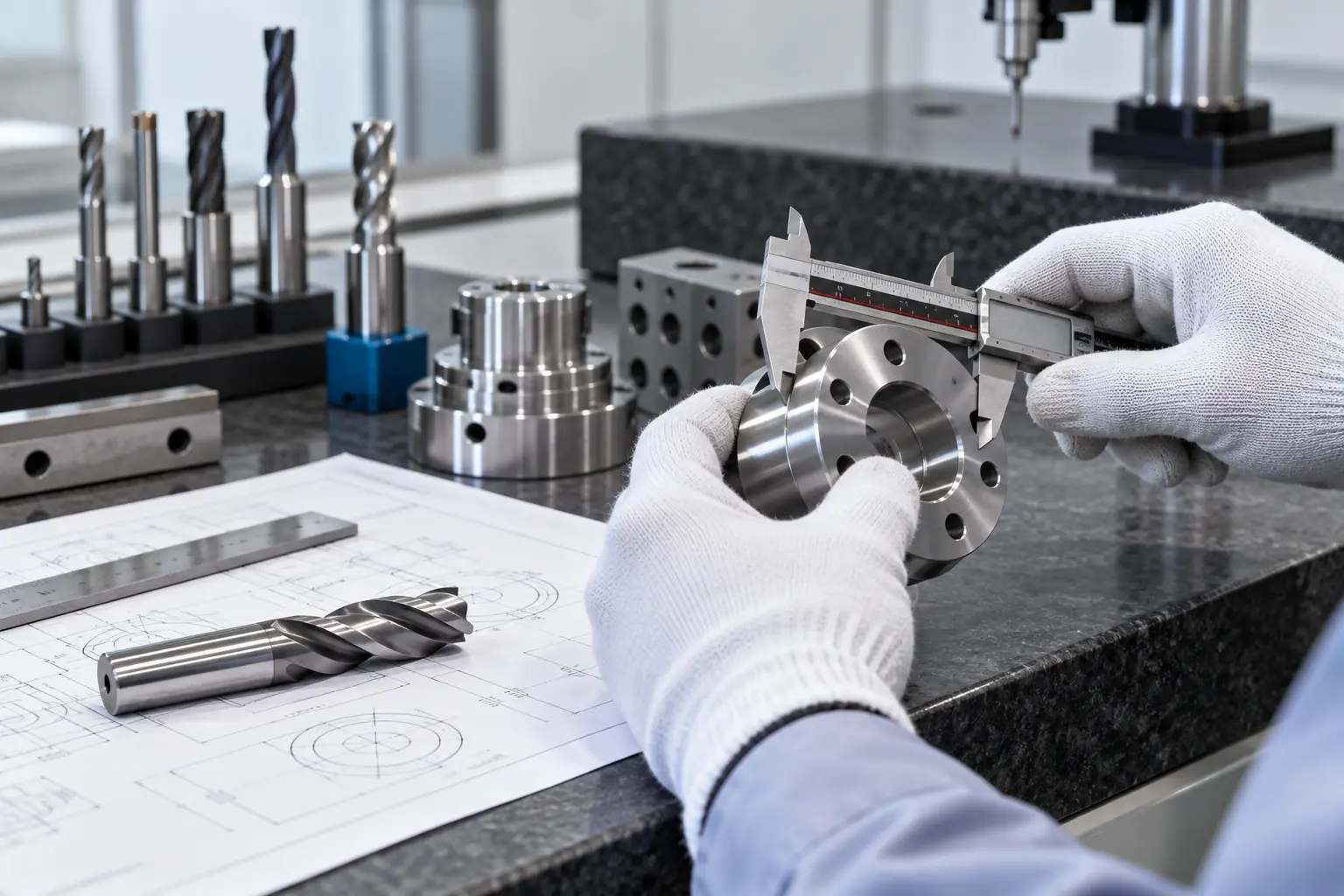
B2B Buyer Checklist for Drill Bits for Metal
Use this checklist when requesting samples, a replacement recommendation, or a bulk quotation from ZIROO TOOLS:
- Workpiece material grade, condition, and hardness if known.
- Hole diameter, depth, tolerance, and through or blind condition.
- Machine type, spindle condition, holder type, and any known runout issue.
- Coolant or lubrication method and chip-removal constraints.
- Current drill code, drawing, or photographs of the existing tool.
- Current problem: overheating, chipping, poor hole quality, chip packing, or short tool life.
- Sample quantity, packaging, labeling, annual volume, and custom-marking requirements.
Frequently Asked Questions
What type of drill bit is best for metal?
There is no single best type for every metal. Start with the workpiece, hole requirement, machine stability, coolant, and production target. HSS, cobalt HSS, and solid carbide each have different practical roles.
Are cobalt drill bits better than HSS drill bits?
Cobalt HSS can be a useful direction where heat and wear are greater, but it is not automatically better for every job. The actual material, drill geometry, speed, feed, cooling, and setup stability still determine the result.
When should I consider a solid carbide drill?
Consider solid carbide when a stable CNC process needs repeatability, wear resistance, productivity, or demanding hole quality. Confirm the holder, runout, fixture rigidity, coolant, and chip evacuation before switching.
Is a 135° drill always better than a 118° drill?
No. Point angle is only one part of the geometry. Use the drill manufacturer’s recommendation for the material and application, then validate it in the actual process.
Why does a metal drill bit overheat?
Typical causes include unsuitable speed or feed, inadequate lubrication, chip packing, unsuitable geometry, excessive wear, or a material that creates more heat than the drill system can manage.
Can titanium-coated drills replace carbide drills?
No. A titanium-based coating and a solid carbide substrate are different things. Compare substrate, coating, geometry, and application range separately before treating two drills as equivalent.
What information is needed for a drill-bit quotation?
Provide the material, hole diameter and depth, tolerance, machine, coolant method, current tool code, issue observed, quantity, and any drawing or packaging requirement.
Request a Drill Recommendation from ZIROO TOOLS
The right drill bits for metal are selected as part of a drilling process, not as isolated catalog items. Send ZIROO TOOLS your material, hole drawing, machine conditions, cooling method, current tool code, and trial target. We can help you clarify the required drill specification before you move to samples or a production quotation.