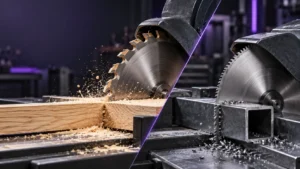
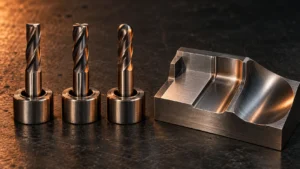
If you are comparing spiral and helical cutterheads for a planer or jointer, the first challenge is often terminology. Some manufacturers use the two terms to describe different insert arrangements, while others use them more loosely or interchangeably. That means a product name alone may not tell you exactly how a cutterhead is built.
The useful comparison is therefore practical: how are the inserts arranged, what cutting action does that arrangement create, what maintenance does the head require, and will it fit your machine? This guide explains the common distinctions, shows what to verify before buying, and provides a checklist you can use when speaking with a supplier.
\n
\n
\n
What Is a Spiral Cutterhead?
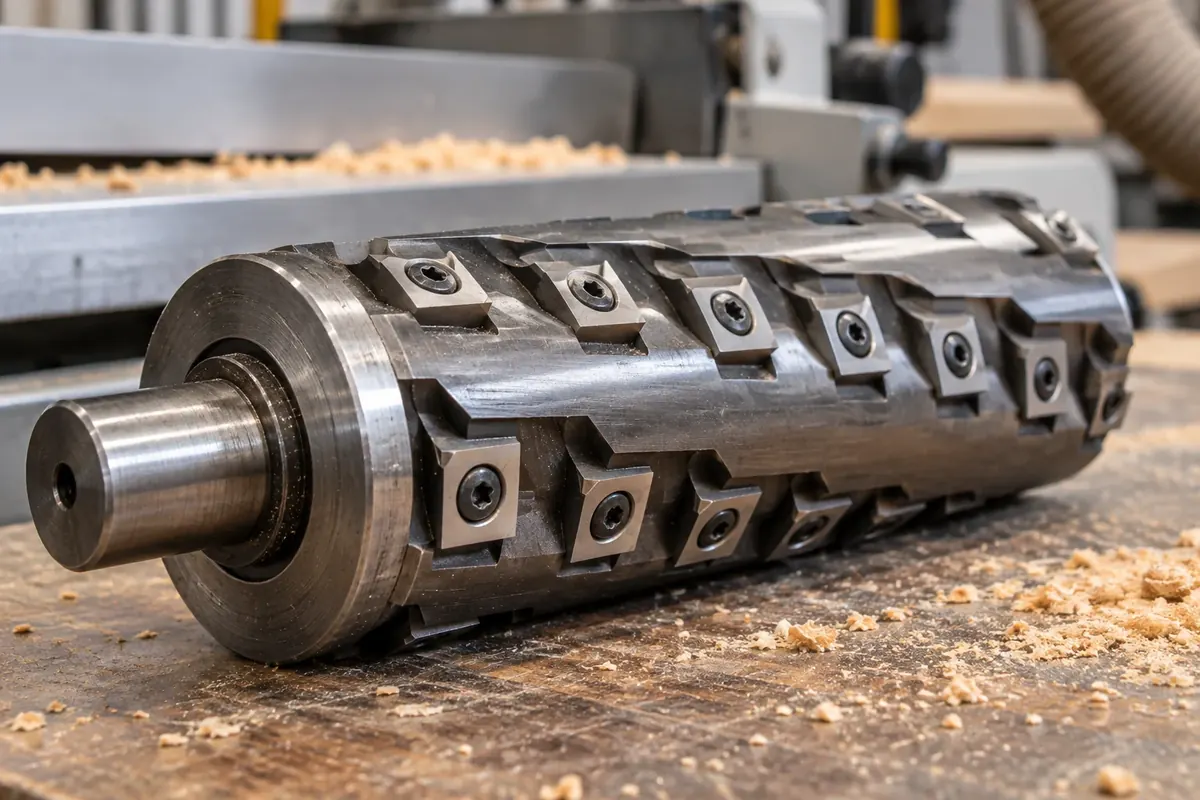
A spiral cutterhead uses multiple small cutting inserts distributed around a rotating cutter body. The inserts are generally replaceable or indexable, so a worn or damaged edge can often be turned to another usable edge or replaced individually, subject to the insert and cutterhead manufacturer’s instructions.
The word “spiral” is commonly used to describe the pattern formed by inserts around the cutterhead. However, manufacturers do not always use the term in exactly the same way. In some product descriptions, “spiral” refers broadly to an insert-style cutterhead; in others, it describes a particular insert layout or orientation. Check the product drawing and documentation instead of assuming every spiral head has the same geometry.
What Is a Helical Cutterhead?
A helical cutterhead also uses multiple inserts positioned around the cutter body. In some manufacturers’ terminology, the inserts are set at an angle to the direction of the cut. This arrangement is intended to create a shearing action as the cutterhead passes over the workpiece.
That description is useful when it matches the manufacturer’s design, but it is not a universal naming rule. One supplier may distinguish a helical arrangement from a spiral one by insert angle; another may use “helical” and “spiral” for similar insert-style heads. Confirm the actual layout, cutting edge orientation, and machine compatibility for the model you are considering.
Spiral vs. Helical Cutterheads: Key Differences
The table below summarizes common ways the terms are used. Treat it as a guide for questions to ask, not as a universal engineering specification.
| Comparison point | Spiral cutterhead | Helical cutterhead |
|---|---|---|
| Common description | A cutterhead with multiple inserts arranged around the cutter body | Often described as having inserts set at an angle to create a shearing cut |
| Insert layout | Varies by manufacturer and model | Varies by manufacturer and model; some makers emphasize the insert angle |
| Cutting action | Depends on insert orientation and head geometry | May create a shearing action when the inserts are angled as specified by the maker |
| Maintenance | Individual inserts may be rotated or replaced if the design allows | Individual inserts may be rotated or replaced if the design allows |
| What to verify | Product drawing, insert arrangement, dimensions, and machine fit | Product drawing, insert angle, dimensions, and machine fit |
\n
\n
\n
Both names are used for insert-style cutterheads in woodworking equipment, but the labels alone do not establish that two products have the same design or performance. Ask the supplier to identify the exact cutterhead construction and provide documentation for the specific model.
Why Cutterhead Terminology Can Be Confusing
There is no single naming convention that every manufacturer follows. Some product descriptions make a clear distinction between “spiral” and “helical”; other guides point out that the words are sometimes used interchangeably. Even a machine or installation document may use one term in its title and another in the technical description.
To compare products accurately, look beyond the headline or listing name. Review:
- A product drawing or clear image showing the insert pattern.
- The orientation of each insert relative to the workpiece travel.
- The number, shape, and specification of the inserts.
- The cutterhead dimensions and mounting arrangement.
- The machine models the manufacturer lists as compatible.
- The installation, operating, and maintenance instructions.
If a supplier cannot explain how its terminology maps to the physical design, request a drawing or written specification before ordering.
Benefits and Trade-Offs to Consider
Insert-level maintenance
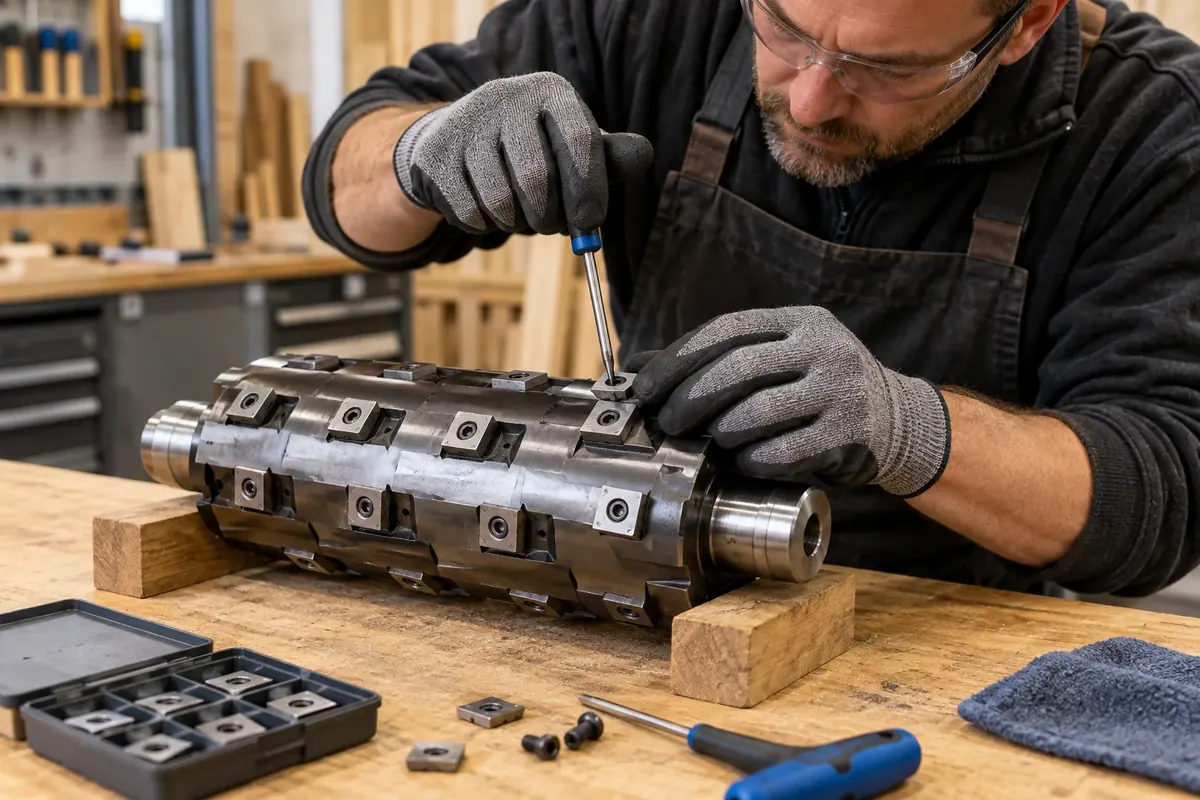
With many insert-style heads, maintenance can be localized: an individual insert may be rotated to a fresh edge or replaced instead of changing a full-length knife. The exact number of usable edges and the correct rotation procedure depend on the insert design. Follow the manufacturer’s instructions, and keep the correct insert specification on record when ordering spares.
\n
\n
\n
Cutting action and finish
An angled insert can produce a shearing action in designs that use that geometry. The resulting finish depends on more than the “spiral” or “helical” label: the cutterhead design, insert condition, machine setup, workpiece material, feed rate, and depth of cut all matter. Do not rely on a general claim that one label always produces a better finish. Ask for test conditions or application guidance relevant to your material and machine.
Noise and operating conditions
Some manufacturers describe insert-style heads as quieter than conventional straight-knife arrangements. Actual noise depends on the machine, cutterhead, workpiece, extraction system, and operating conditions. Treat comparative noise statements as model-specific unless the supplier provides a clear test method and comparable data. Hearing protection and the machine maker’s safety instructions remain important.
Purchase and ownership cost
Compare the complete ownership requirements, not just the initial purchase price. Consider the cutterhead price, compatible spare inserts, replacement availability, installation work, maintenance time, and any machine changes required. Avoid assuming a specific payback period unless it is calculated from your own production and maintenance data.
Match the choice to the work, not a generic ranking
The correct selection depends on what you process and what constraint you are trying to solve. A workshop that runs a small range of stock occasionally may weigh purchase price and replacement simplicity differently from a production shop that processes many boards each shift. A shop working with varied or figured material may ask more questions about the maker’s finish guidance, while a distributor may focus on compatibility documentation, insert availability, and serviceability across customer machines.
These are decision priorities, not guarantees that one cutterhead category is best for a particular buyer. Discuss representative materials and working conditions with the supplier. If your work includes several species, board widths, or feed settings, describe the range rather than providing only the easiest example. This gives the supplier a better basis for recommending a model and makes the written recommendation more useful later.
Consider setup and downtime
An insert-style head can change the maintenance task from handling a long knife to inspecting or servicing individual inserts, but this does not remove setup work. You may need to identify a damaged insert, clean its seat, use the correct tool, follow a specified tightening sequence, and verify that the insert is seated correctly. A maintenance procedure that is simple on paper can still take time if the shop lacks spare inserts, the correct tools, or a clear record of the insert specification.
Before changing cutterhead types, ask who will perform routine service, what training they need, and how quickly replacement inserts can be obtained in your market. Include those practical factors in the comparison. They often matter more to day-to-day production than a broad statement about the number of edges on an insert.
Check dust extraction and machine condition
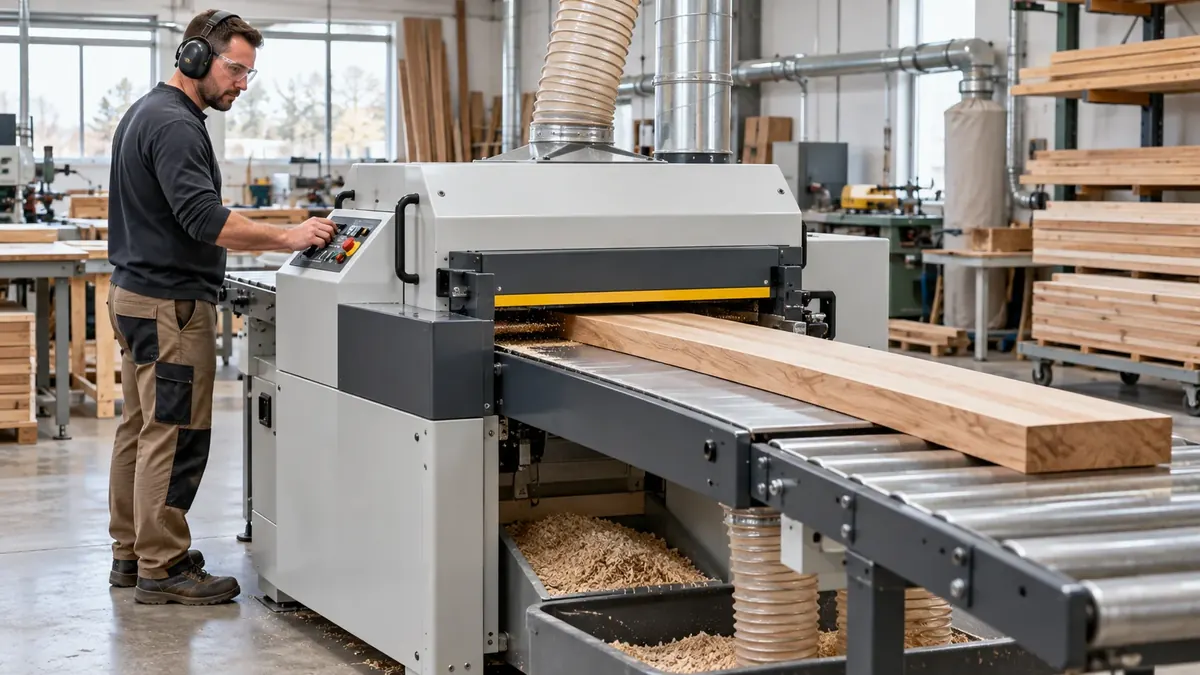
Cutterhead selection is only one part of a planer or jointer setup. Dust extraction, guards, bearings, feed mechanisms, and machine alignment also affect safe and consistent operation. Confirm that the proposed cutterhead is approved for the machine and that the machine is in serviceable condition before installation. Do not modify guards or operate outside the maker’s instructions to accommodate a replacement head.
If finish quality or vibration is already a concern, record the current machine condition and settings before making a change. That baseline helps you determine whether the cutterhead itself caused a difference or whether another factor—such as worn bearings, a dull edge, feed setup, or workpiece variation—was responsible.
A Practical Comparison Method for Buyers
When comparing quotes, use the same questions for every candidate. This prevents a product with a detailed specification from appearing more expensive simply because another quote omits important items.
| Decision area | Questions to ask every supplier | Evidence to keep |
|---|---|---|
| Machine fit | Is this exact cutterhead approved for my machine model and revision? | Written compatibility confirmation and drawing |
| Geometry | How are the inserts arranged and oriented? How does your company define spiral or helical? | Product drawing, technical description, or installation manual |
| Insert supply | What is the exact insert specification and how are spares ordered? | Part number, dimensions, grade, and reorder details |
| Installation | Are special tools, balancing, adjustments, or authorized service required? | Installation and safety instructions |
| Maintenance | How should inserts be inspected, rotated, cleaned, and replaced? | Maintenance procedure and recommended inspection intervals, if provided |
| Application | Is the model suitable for my material, workpiece range, and production pattern? | Supplier recommendation tied to the stated application |
| Cost | What is included in the quote, and what recurring parts or service may be needed? | Itemized quotation and spare-part pricing |
If an answer is vague, mark it as open rather than filling the gap with an assumption. A lower initial quote may exclude inserts, installation, or other items that affect the total purchase. A higher quote may include useful documentation or support, but you should verify exactly what is included.
Estimating Ownership Cost Without Guessing
There is no reliable universal cost-saving percentage for changing to a spiral or helical cutterhead. Instead, build a simple comparison from your own operating history. Over a chosen period, list the costs that apply to each option:
- Initial cutterhead purchase and installation.
- Inserts, knives, fasteners, and other wear parts.
- Labor time for inspection, indexing, replacement, or setup.
- Downtime while waiting for parts or completing maintenance.
- Any required machine adjustments or approved service.
- Freight, duties, and local availability of replacement parts.
Use this simple structure: Estimated ownership cost = purchase and installation + parts + maintenance labor + downtime-related cost + logistics. Use the same time period and production assumptions for both options. If you do not know the downtime cost or service interval, leave it as an unknown and ask the supplier or your production team to help estimate it. A transparent estimate with ranges is more useful than a precise-looking figure built on unsupported assumptions.
The result also depends on how the shop uses the machine. If the planer runs only occasionally, the cost of spare inserts and maintenance may matter more than small differences in service time. If it runs continuously, parts availability and the time required to restore production may deserve greater weight. The comparison should reflect your operating pattern, not a generic example from a product page.
Common Buying Mistakes to Avoid
Choosing by name alone
“Spiral” and “helical” do not identify a single universal design. Confirm the arrangement and model-specific documentation.
Assuming that a similar machine means a compatible machine
Two machines from the same brand can use different cutterhead dimensions or mounting details. Check the exact model and revision, and get written confirmation.
Comparing only the upfront price
Include installation, inserts, fasteners, maintenance labor, and spare-part logistics where applicable. Ask each supplier to state what its quotation includes.
Treating broad performance language as test data
Statements such as “smoother,” “quieter,” or “longer lasting” need context. Request the conditions and evidence behind a claim if it will influence a technical or financial decision.
Ordering without a maintenance plan
Confirm the insert part number, replacement procedure, required tool, and spare availability before the machine needs service. Keep the information with the machine’s maintenance records.
Installing without following the manuals
Use the machine and cutterhead makers’ approved procedures, operating limits, guarding, and safety instructions. If installation requirements are unclear, stop and ask the manufacturer or a qualified service provider.
Questions to Send with a Quote Request
For a more useful quotation, include your machine details and ask the supplier to answer these questions in writing:
- Does this cutterhead fit my exact machine model and revision? Please provide the drawing and dimensions you used to verify fit.
- How does your company distinguish a spiral cutterhead from a helical cutterhead for this model?
- What is the insert specification, and what is the correct procedure for indexing or replacement?
- Which parts are included in the quotation, and which must be purchased separately?
- What tools, adjustments, or professional installation are required?
- What operating limits and safety procedures apply?
- How can I obtain replacement inserts and fasteners in my region?
- Is the cutterhead recommended for my material and workpiece range? Please explain the basis for that recommendation.
Share photos or drawings only through a channel suitable for technical files, and identify which dimensions are measured versus taken from a manual. That makes it easier to resolve discrepancies before the purchase is finalized.
How to Choose the Right Cutterhead for Your Machine
Use these steps before selecting a replacement or upgrade:
- Identify the machine precisely. Record the manufacturer, model, year or revision if relevant, and the machine’s current cutterhead configuration.
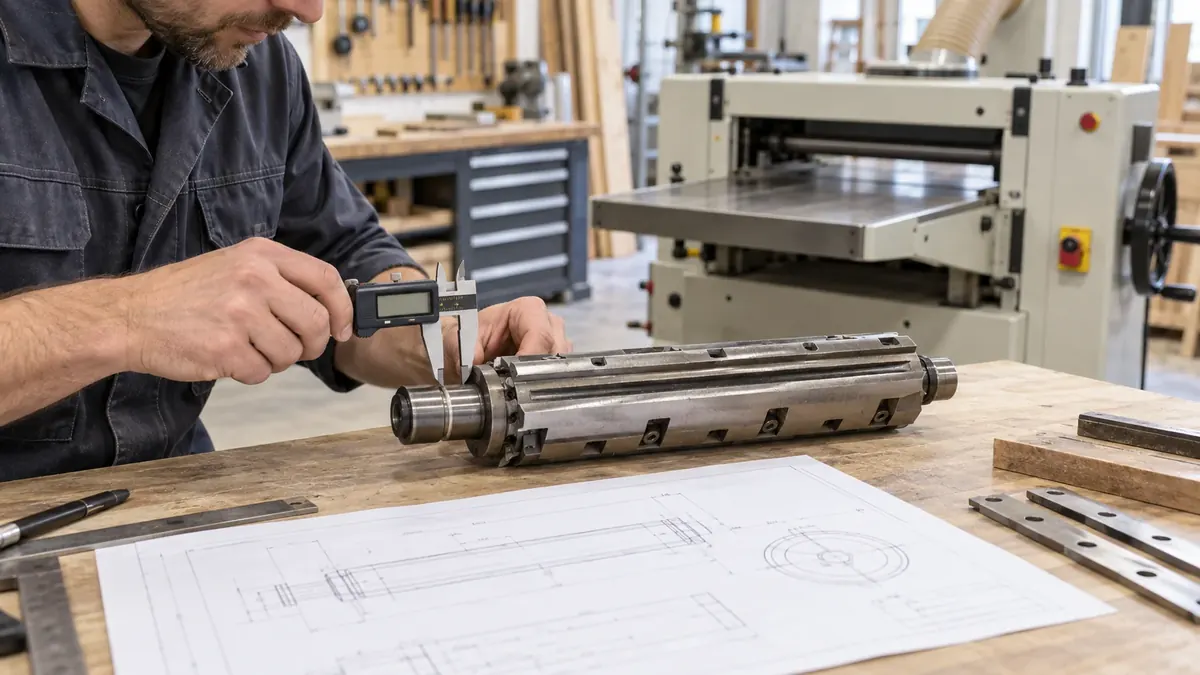
- Confirm the physical fit. Ask the supplier to verify cutterhead length, diameter, shaft or bore details, mounting features, and required clearances against your machine documentation.
- Clarify the insert design. Request the insert layout, orientation, insert specification, and an explanation of how the supplier uses “spiral” or “helical.”
- Check operating requirements. Confirm permitted rotation speed, installation steps, balancing requirements, and any restrictions in the machine and cutterhead manuals. Do not exceed manufacturer limits.
- Review maintenance and spares. Ask how inserts are indexed or replaced, what tools are required, whether fasteners are reusable, and how to order the correct replacement inserts.
- Compare the application. Explain the material, workpiece dimensions, production pattern, and finish requirement to the supplier. Ask which documented model is appropriate and why.
- Get compatibility in writing. Keep the supplier’s confirmation and the technical drawing with your machine records before placing the order.
\n
\n
\n
Cutterhead Buying Checklist
Before requesting a quote, prepare the following information:
- Machine brand and exact model.
- Existing cutterhead dimensions and mounting details, if available.
- A photo of the machine plate and current cutterhead, where safe to obtain.
- Material types and typical workpiece dimensions.
- Required surface finish and production volume.
- Insert shape, size, grade, and fastening details for the proposed head.
- Compatible machine list and installation documentation.
- Spare insert availability and expected maintenance procedure.
- Shipping, packaging, and after-sales support requirements for your market.
This information helps the supplier evaluate fit and application before quoting. If any machine specification is uncertain, ask the machine or cutterhead manufacturer to confirm it rather than relying on a visual match.
Frequently Asked Questions
Are spiral and helical cutterheads the same?
Not always. Some manufacturers distinguish the terms by insert orientation or layout, while other sources use them interchangeably. Compare the drawing and specification for the exact model instead of relying on the name alone.
Which cutterhead is better for a planer?
There is no universal answer based only on the label. The right choice depends on the machine, workpiece material, desired finish, maintenance requirements, and the cutterhead manufacturer’s compatibility guidance.
Do spiral cutterheads use carbide inserts?
Many insert-style woodworking cutterheads use carbide inserts, but verify the material and specification for the particular product. Do not assume all cutterheads marketed as spiral use the same insert type.
Can a helical cutterhead fit any planer?
No. Compatibility depends on the planer model and the cutterhead’s dimensions, mounting arrangement, clearances, and operating requirements. Confirm fit with the manufacturer or supplier before ordering.
How should I compare cutterhead maintenance requirements?
Ask how inserts are rotated or replaced, how many usable edges the specific insert has, what tools and procedures are required, and whether compatible spares are available. Follow the model’s maintenance instructions.
Will changing the cutterhead automatically improve surface finish?
Not automatically. Finish depends on cutterhead geometry and condition, machine setup, workpiece material, feed, and other operating factors. Ask the supplier what results are documented for the specific model and conditions similar to yours. If finish is a critical requirement, agree on a practical evaluation method before making a purchase decision.
What should I do if the listing does not show dimensions?
Ask the supplier for a technical drawing and written compatibility confirmation before ordering. Provide your exact machine model and any relevant manual or existing cutterhead measurements. Do not estimate a fit from a product photo or assume that a similar model uses the same dimensions.
What should I confirm before ordering a replacement cutterhead?
Confirm the exact machine model, cutterhead dimensions and mounting details, insert specification, installation requirements, operating limits, and written compatibility. Keep the supplier’s drawing and confirmation with your equipment records.
Final Thoughts
When comparing spiral vs. helical cutterheads, start with the actual design rather than the product label. Confirm the insert arrangement, machine fit, operating requirements, maintenance procedure, and spare-part availability for the exact model. A supplier’s drawing and written compatibility confirmation are more useful than a generic claim that one type is always better.
For woodworking tooling requirements, explore the ZIROO TOOLS woodworking cutting tools page or contact the team about the cutting tools currently listed in its product range. For cutterhead compatibility, consult the cutterhead and machine manufacturers directly.