Choosing between CBN and carbide inserts depends on more than workpiece hardness. Material type, cut continuity, machine rigidity, surface finish, production volume, and the full cost per part all affect the result. A CBN insert may be suitable for hard turning, while a carbide insert may be more versatile for general machining. Neither material is automatically the right choice for every job.
This guide compares CBN inserts vs carbide inserts and gives you a practical way to assess which option fits your turning application. Because insert grades and edge preparations vary, treat general guidance as a starting point and confirm cutting conditions with the tool manufacturer.
What Are CBN and Carbide Inserts?
CBN inserts
CBN stands for cubic boron nitride. In cutting tools, it is commonly used as a polycrystalline material bonded to a carbide substrate or formed into a solid insert, depending on the design. CBN is used in applications such as hard turning and machining some cast irons, where heat and abrasive wear can challenge conventional tool materials. The exact application range depends on the CBN grade, edge preparation, workpiece material, and cutting conditions. See the Sandvik Coromant hard-part turning guidance for an example of application-specific recommendations.
Carbide inserts
Carbide inserts are made from cemented carbide grades designed for different workpiece materials and cutting conditions. They are widely used in turning and other machining operations. Grades, coatings, geometries, and edge preparations vary, so “carbide” does not describe one uniform performance level.
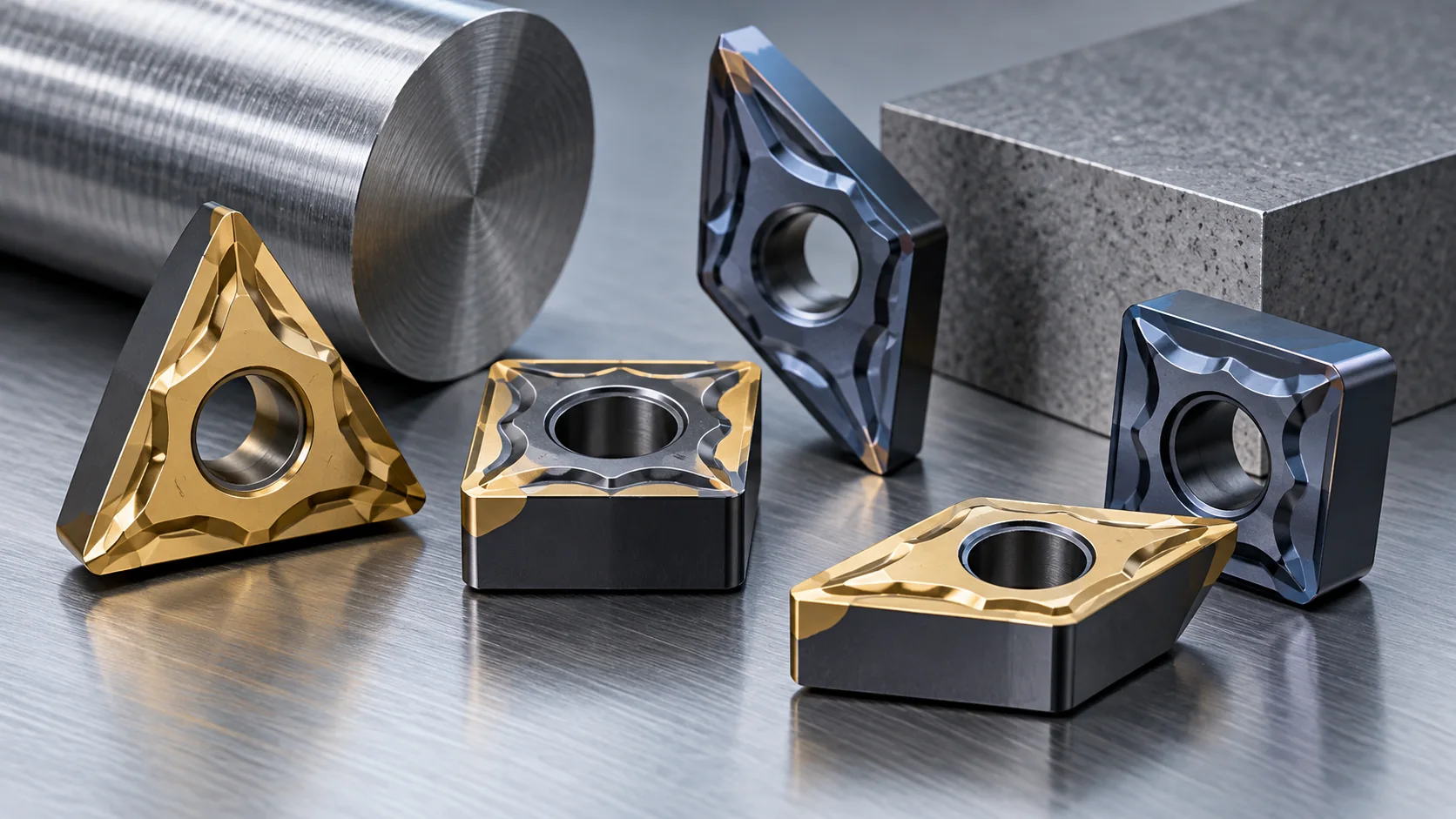
CBN Inserts vs Carbide Inserts: Key Differences
When comparing CBN inserts vs carbide inserts, compare the grade and application rather than relying on a material label alone.
| Selection factor | CBN inserts | Carbide inserts |
|---|---|---|
| Typical role | Hard turning and selected cast iron applications | A broad range of general machining operations |
| Workpiece considerations | Often considered for hardened ferrous materials; grade and application matter | Selected by workpiece group, hardness, and cutting conditions |
| Cutting conditions | Requires an application-matched grade and stable setup | Offers many grade and geometry options for different operations |
| Edge design | Edge preparation needs to suit the material and cut | Grade and geometry can be selected for roughing, finishing, or other needs |
| Cost evaluation | Consider tool life, downtime, and any finishing steps affected | Consider insert consumption, change time, and part quality |
| Main selection risk | Assuming CBN will work without checking grade, edge, or setup | Assuming one carbide grade suits every material and operation |
This is a general comparison, not a substitute for a specific insert recommendation. Match the grade and edge preparation to the workpiece and machine stability.
When Should You Consider CBN Inserts?
CBN is worth evaluating when you are turning hardened steel or machining an abrasive cast iron and need to manage wear, dimensional control, or finishing requirements. Its suitability depends on the precise material, hardness, cut type, geometry, and machine conditions.
Before selecting a CBN insert, check:
- Whether the workpiece material is within the grade’s recommended application range.
- Whether the operation is continuous or interrupted.
- Whether the machine, holder, and workholding can maintain a stable cut.
- Whether the edge preparation suits the required finish and cutting load.
- Whether the proposed cutting conditions follow the supplier’s recommendations.
A more demanding material does not automatically mean CBN is the answer. A grade chosen for one hard-turning operation may not suit another.

When Are Carbide Inserts the Better Choice?
Carbide may be the more practical option when the operation is a general turning job, when the workpiece falls within a suitable carbide grade’s range, or when you need a versatile insert for a variety of jobs. The right grade and geometry still depend on the material and operation.
Consider carbide when:
- You are machining a material covered by the selected carbide grade.
- You need a solution for general production or varied jobs.
- The operation calls for a particular geometry, coating, or chip-control feature.
- You are comparing alternatives for short runs or prototype work.
- The setup or cut type calls for a grade and edge designed for those conditions.
Check the insert manufacturer’s application data before transferring a grade or cutting condition from another material or job.
How to Compare Cost per Part
The purchase price of an insert is only one part of the cost. A useful comparison accounts for the complete machining process and the quantity of acceptable parts produced.

- Insert consumption: How many usable edges or inserts are used for the production quantity?
- Change time: How much machine time is spent indexing or replacing inserts?
- Part quality: Does the process consistently meet dimensional and surface-finish requirements?
- Scrap and rework: Are there measurable differences in rejected or reworked parts?
- Secondary operations: Does either option affect a later operation, such as grinding?
- Process stability: Does the insert perform consistently across the planned production run?
Use records from your own operation or a controlled trial. Do not assume that either insert type will reduce cost without comparing it under the same workpiece, machine, and production conditions.
A Practical Insert Selection Checklist
Before requesting a recommendation or quotation, collect:
- Workpiece material and hardness, including heat-treatment condition.
- Turning operation and whether the cut is continuous or interrupted.
- Part drawing or the relevant feature dimensions.
- Machine model, toolholder, workholding, and known stability issues.
- Current insert grade and geometry, if available.
- Required tolerance and surface finish.
- Cutting conditions currently in use.
- Production quantity and present tool-change or scrap issues.
This information helps a tooling supplier evaluate the application instead of recommending an insert based on material name alone. Hard-turning guidance also highlights the importance of a rigid setup and consistent coolant application when coolant is used.

Common Selection Mistakes
Choosing by hardness alone
Hardness matters, but so do material composition, cut type, insert grade, edge preparation, and machine stability. Use the manufacturer’s grade guidance for the actual workpiece and operation.
Comparing only the price per insert
A lower unit price does not by itself establish a lower cost per part. Compare insert consumption, change time, part quality, and secondary operations using production data.
Overlooking setup rigidity
A tool can chip or produce inconsistent results if the holder, workholding, or machine setup is unstable. Check the setup before concluding that the insert material or grade is the cause.
Applying another job’s cutting data
Cutting conditions depend on grade, geometry, workpiece, and operation. Confirm parameters with the insert supplier rather than copying values from a different application.
FAQs
What is the main difference between CBN and carbide inserts?
CBN inserts are commonly evaluated for hard turning and selected cast iron applications. Carbide inserts cover a broad range of machining jobs through different grades, coatings, and geometries. The appropriate choice depends on the specific application.
Are CBN inserts always better for hardened steel?
No. CBN may suit a hardened-steel operation, but the grade, edge preparation, cut type, machine stability, and finish requirement all matter. Confirm suitability with the insert manufacturer.
Can carbide inserts machine hardened steel?
Some carbide grades may be applicable in particular conditions, but suitability depends on the grade and the workpiece. Check the manufacturer’s data for the actual hardness and operation.
Are CBN inserts suitable for interrupted cuts?
Some CBN products are designed for interrupted cutting, but suitability depends on the insert design, grade, edge preparation, and severity of interruption. Consult the supplier before using one in a demanding cut.
How do I compare insert cost per part?
Compare insert consumption, tool-change time, part quality, scrap or rework, and any secondary operations for the same production quantity. Use actual shop data or a controlled trial.
Conclusion
When comparing CBN inserts vs carbide inserts, start with the workpiece and operation. Then check the insert grade, cut type, machine stability, quality requirements, and production economics. A supplier can assess the application more accurately when you provide the material, hardness, part details, current tooling, and target production quantity.
Explore ZIROO TOOLS CNC turning tools and inserts, or send your part drawing and machining conditions for an application review.
Technical reference: Sandvik Coromant Turning Handbook; Ingersoll CBN Inserts catalog.