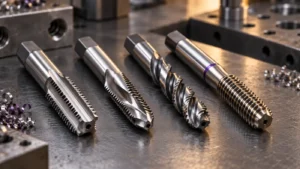
Different Types of Thread Taps: How to Choose for CNC Machining
Choosing among the different types of thread taps is mainly a question of controlling chips, matching the hole, and producing the required thread consistently. A tap that works well in a through hole may pack chips at the bottom of a blind hole. A forming tap avoids cutting chips, but it needs a suitable ductile material and a correctly prepared hole. The label alone does not tell you whether a tap fits your process.
This guide compares straight flute, spiral point, spiral flute, and thread-forming taps for machine shops, manufacturers, distributors, and OEM purchasing teams. It also explains how tap type, chamfer, substrate, coating, thread specification, and machine setup work together. Use the selection table to narrow the options, then verify the choice with the workpiece drawing and a controlled trial.
Quick Comparison of Common Thread Tap Types
| Tap type | Chip or material action | Typical starting point | Key checks |
|---|---|---|---|
| Straight flute | Flutes provide chip space; chip direction depends on the tap design and operation | General-purpose work, manual tapping, or applications where a robust conventional geometry is suitable | Hole type, material, chip space, chamfer and whether chips can clear the hole |
| Spiral point (gun tap) | Pushes chips ahead of the cutting action | Through holes with enough clearance for chips to exit | Through-hole depth, chip exit space, material and machine synchronization |
| Spiral flute | Helical flutes draw chips back toward the hole entrance | Blind holes, especially where chips must be pulled out | Blind-hole depth, flute geometry, chip length and bottom clearance |
| Thread-forming (roll) tap | Displaces ductile material to form a thread; does not cut chips | Ductile materials and processes that can support the forming load | Material ductility, pre-hole diameter, lubrication and torque capacity |
These names describe different selection dimensions. Straight flute, spiral point, and spiral flute describe cutting geometry and chip behavior. “Hand” and “machine” describe how the tap is driven. Taper, plug, and bottoming commonly describe chamfer length. A particular machine tap can therefore have a spiral flute and a bottoming chamfer at the same time. Treat these labels as overlapping classifications, not as one mutually exclusive list.
1. Straight Flute Taps: A Conventional General-Purpose Design
Straight flute taps have flutes that run along the tap without a helix. The flutes create space for chips and cutting fluid, while the chamfered lead begins the thread progressively. Their straightforward geometry makes them familiar in hand tapping and in machine operations where the material, hole, and chip path are suitable.
Where straight flute taps can make sense
- Short or relatively simple threading operations where chip evacuation is manageable.
- Manual or maintenance work that benefits from a conventional tap style.
- Materials or processes that produce short, brittle chips, provided the tap and operation are specified for them.
- Through or blind holes only when the particular geometry and chip-management method support the hole condition.
Do not assume every straight flute tap is equally suited to both through and blind holes. In a blind hole, chips can accumulate in front of the tap or within the flutes. In a through hole, chip direction and exit clearance still matter. Check the tap maker’s technical data for the exact design instead of relying on the flute name alone.
2. Spiral Point Taps: Directing Chips Forward
A spiral point tap, also called a gun tap, uses an angled cutting face at its tip to guide chips forward. This makes it a common candidate for through-hole tapping, where chips can travel ahead of the tap and leave the far side of the workpiece. MSC describes spiral point taps as being used for through holes, with the geometry directing chips ahead of the cutting action.
When evaluating a spiral point tap, check that the hole is truly through and that there is room for chips to exit without being trapped against a fixture, shoulder, or the bottom of a counterbore. Also verify the thread depth, workpiece material, entry chamfer, machine alignment, and synchronized tapping conditions. If chips cannot move forward freely, the expected benefit of the design may be lost.
A spiral point tap is not simply a faster version of every other tap. Its value comes from a chip path that fits a through-hole process. If a drawing includes a blind hole, a stepped passage, or a close obstruction at the exit, review another geometry or the process plan with the tool supplier.
3. Spiral Flute Taps: Drawing Chips Out of Blind Holes
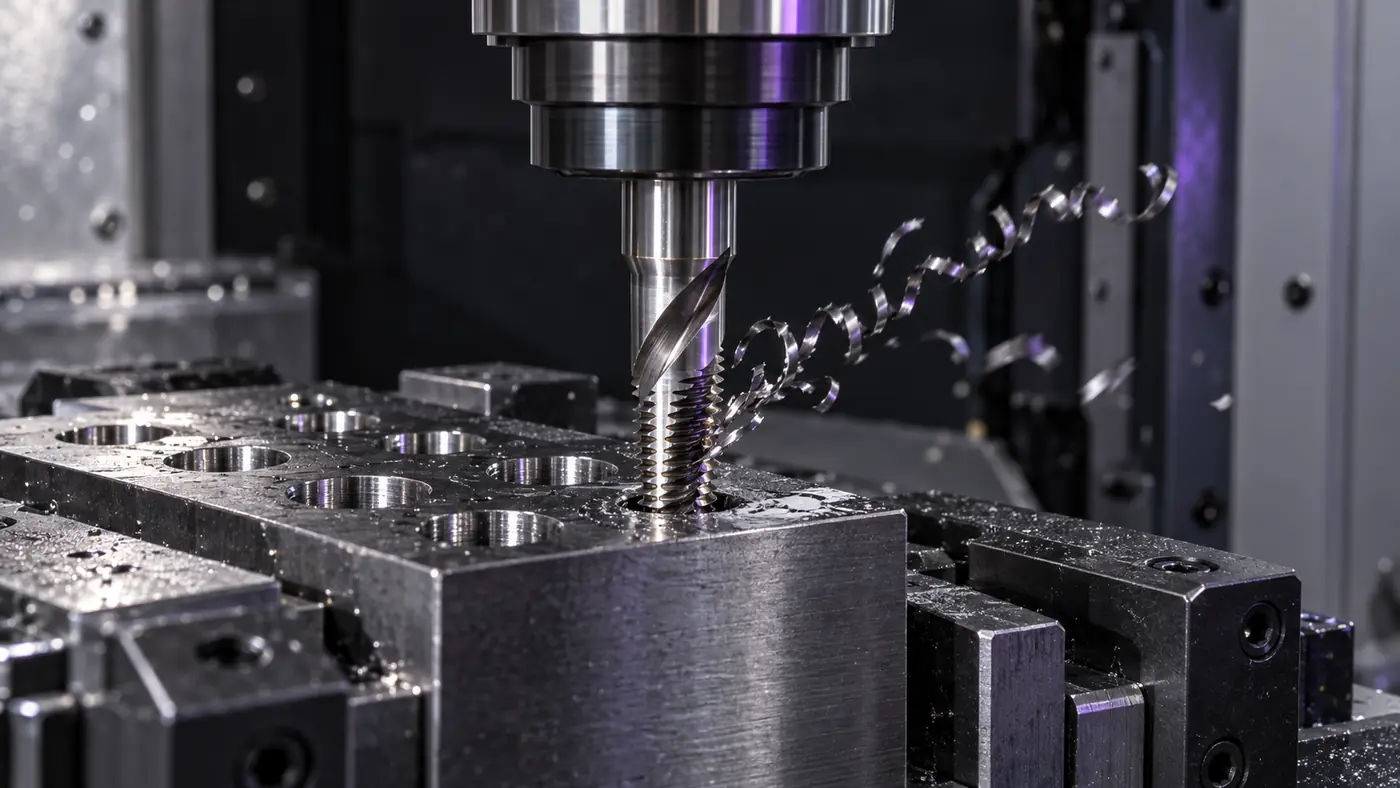
Spiral flute taps use helical flutes to pull chips back toward the entrance. This chip direction makes them a frequent option for blind holes, particularly when the workpiece produces continuous or ductile chips. MSC’s tap guide likewise describes spiral flute taps as suitable for blind holes because their flutes pull chips up and out.
Spiral flute taps are often considered for CNC machining where the tool must enter a blind hole and leave the bottom clear. The helix angle and flute design affect how the tap handles chips and how much support remains behind the cutting edge. The correct choice depends on the material, thread depth, chip form, and machine conditions; there is no single spiral angle that fits every application.
Check blind-hole depth carefully
Distinguish the drilled depth from the full-thread depth on the drawing. The tap needs room for its chamfer, and chips or a drill-point cone can take up space below the finished thread. A “bottoming” chamfer can help produce threads closer to the bottom, but it does not eliminate the need to plan the hole depth and chip space. Confirm the required usable thread length, the tap’s lead, and clearance before choosing the tap.
For deeper blind holes, review whether chip evacuation, coolant delivery, and tool reach remain practical. A spiral flute design may help move chips out, but it does not correct a poorly drilled hole, an unsuitable tap-drill diameter, misalignment, or a tapping cycle that does not match the tool.
4. Thread-Forming Taps: Making Threads Without Cutting Chips
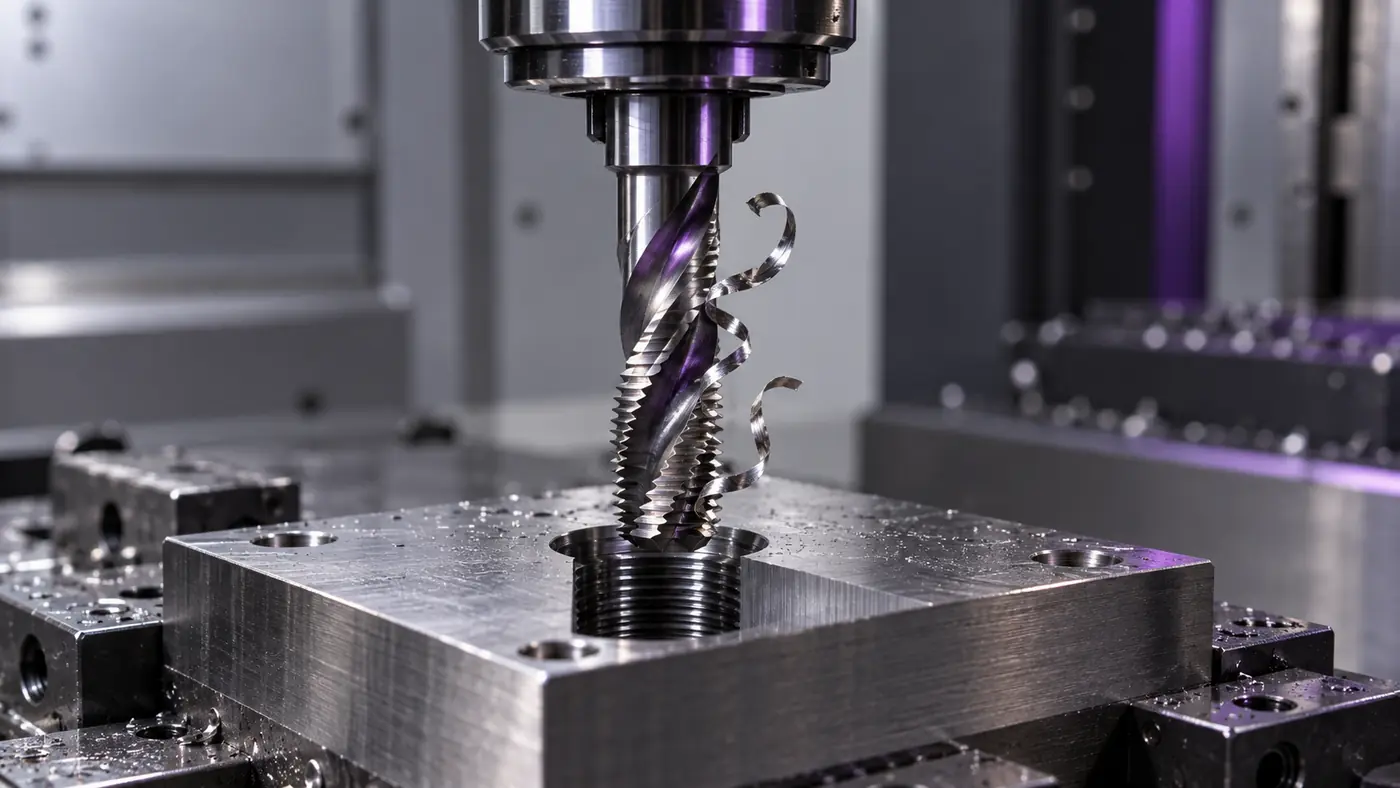
Thread-forming taps, also called roll taps, create internal threads by displacing ductile material rather than cutting it into chips. Because the process does not generate cutting chips, it can be useful when chip control is difficult and the workpiece can deform plastically under the forming load. MSC explains that forming taps displace material and produce no chips.
Forming taps are not a universal replacement for cutting taps. Material ductility, hole size, surface condition, lubrication, alignment, and machine torque all matter. The pre-hole diameter is especially important: it must be selected for the thread specification and material, using the tap manufacturer’s guidance. A hole that is too small can raise torque and risk breakage; one that is too large can leave an inadequate thread form.
Before adopting a forming tap, verify that the material and process are suitable, confirm the pre-hole size, and inspect the finished thread using the required gauge or measurement method. If your material is brittle, hard, or otherwise unsuitable for plastic deformation, evaluate a cutting tap instead.
5. Hand Taps, Machine Taps, and Chamfer Styles
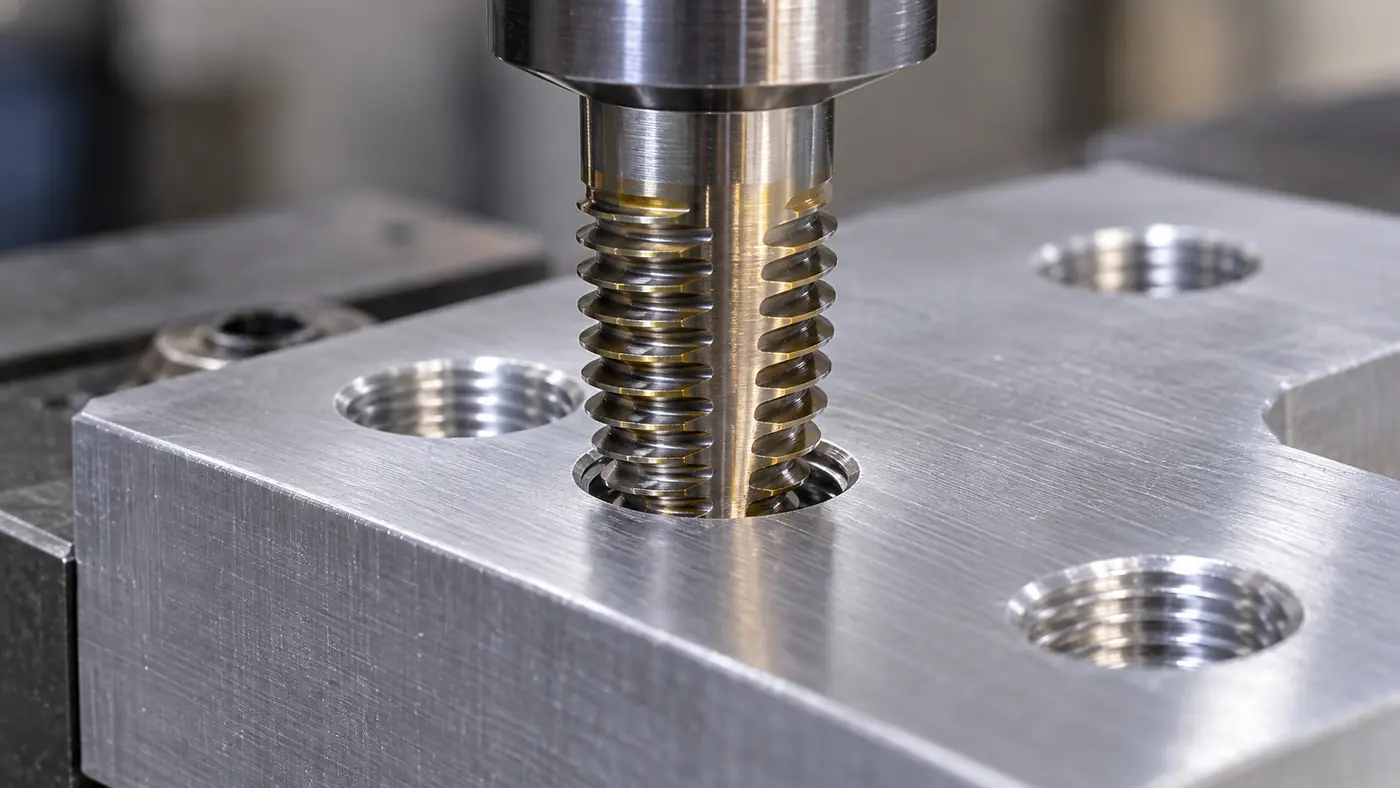
Hand taps are driven manually, often with a tap wrench. Machine taps are designed for use with a tapping head, CNC spindle, or other powered setup. This distinction is about the drive method and intended operating conditions; it does not replace the need to choose a suitable flute geometry. A machine tap may be straight flute, spiral point, spiral flute, or forming style.
Chamfer length is another independent choice. A longer chamfer engages the thread gradually and can make starting easier in some operations, while a shorter chamfer can help produce full threads nearer the bottom of a blind hole. Common shop terms include taper, plug, and bottoming, but the exact number of lead threads and product naming can vary. Check the drawing’s usable thread depth against the specific tap’s geometry.
In automated production, also confirm shank and holder compatibility, runout, spindle alignment, tapping-cycle type, speed and feed synchronization, coolant or lubricant, and the tool’s reach. A correct tap geometry can still fail when the setup does not control alignment or torque.
How Material, Thread, and Hole Conditions Affect Tap Choice
Workpiece material and chip behavior
Start with the material grade and condition, not just a broad label such as “steel” or “aluminum.” Strength, hardness, ductility, abrasiveness, and chip form influence cutting load and tool wear. Long, stringy chips raise different evacuation concerns from short, brittle chips. When considering thread forming, confirm that the material is ductile enough for the operation and that the supplier’s data covers the specific material.
Thread specification and tolerance
Record the thread standard, nominal size, pitch or threads per inch, tolerance class, and required engagement length. A tap’s thread limit and a finished thread’s fit class are related but distinct specification details. If the drawing or customer requirement is unclear, resolve it before ordering tools or releasing production. The tap must match the required thread form and tolerance, not just the nominal diameter.
Hole type and depth
Identify whether the hole is through or blind, the drilled depth, the usable thread depth, and any counterbore or cross-hole that can affect chip movement. Through holes often allow chips to exit forward when paired with an appropriate spiral point tap. Blind holes commonly require a strategy that returns chips toward the entrance or controls chip accumulation. The exact tap should be chosen for the actual geometry.
Tap-drill diameter and lubrication
The tap-drill diameter sets the material left for the thread. Confirm the value using the thread specification and the tap manufacturer’s chart, especially for forming taps where pre-hole size strongly affects torque and thread fill. Avoid selecting a drill from a generic rule alone when thread class, material, or application imposes tighter requirements.
Choose cutting fluid or lubrication according to the work material, tap material and coating, operation, and machine delivery method. Review whether lubricant reaches the cutting zone in a deep or blind hole. Keep fluid condition and concentration controlled according to the shop’s established process.
Thread Tap Selection Matrix for Production Buyers
| Application condition | Initial tap direction to evaluate | Validate before release |
|---|---|---|
| Through hole with clear chip exit | Spiral point cutting tap | Chip exit, hole depth, material, tapping synchronization and thread gauge result |
| Blind hole with chips returning to entrance | Spiral flute cutting tap | Usable thread depth, drill depth, chip form, flute geometry and bottom clearance |
| Short-chip or general operation with manageable chip space | Suitable straight flute tap | Exact tap design, material compatibility, chip accumulation and operation method |
| Ductile material where chip generation is undesirable | Thread-forming tap | Material ductility, pre-hole diameter, lubricant, torque and thread inspection |
| Thread close to the bottom of a blind hole | Short-chamfer or bottoming style, paired with suitable flute geometry | Full-thread depth, tap lead, drill point, chip space and bottom clearance |
Common Tapping Problems and What to Check
- Tap breakage: check alignment, holder runout, chip packing, hole size, bottom clearance, lubricant, tool condition, and the tapping cycle.
- Rough or torn threads: inspect tap wear, material condition, cutting speed/feed synchronization, lubrication, and whether the tap geometry matches the chip form.
- Oversize or undersize threads: verify the tap tolerance, wear, runout, material springback, pre-hole diameter, and inspection method.
- Chips trapped in a blind hole: review whether chips should be pulled out or broken, check the flute style and helix, and confirm the drilled depth and coolant path.
- High torque on a forming tap: verify the pre-hole diameter, material suitability, lubrication, alignment, and whether the tap is worn or damaged.
Change one process variable at a time during troubleshooting and record the result. Replacing the tap type without checking the hole, material, setup, and cycle can hide the root cause instead of fixing it.

Supplier RFQ Checklist for Thread Taps
Give a tooling supplier enough information to evaluate the operation rather than quote from nominal size alone. Include:
- Workpiece material, grade, hardness or condition, and chip behavior if known.
- Thread standard, size, pitch or TPI, tolerance class, and required full-thread depth.
- Through or blind hole, drilled diameter and depth, entry chamfer, and any nearby obstruction.
- Machine type, holder or tapping head, spindle interface, synchronization method, and coolant/lubricant delivery.
- Current tap style and substrate, operating conditions where available, and the failure or quality issue you want to solve.
- Expected annual or batch volume, inspection method, and whether a standard or drawing-based tool is required.
For material-specific background, see our guide to carbide taps for hardened steel. For the broader operation, review ZIROO TOOLS’ hole-making tools range. You can send the thread drawing, workpiece details, and machine setup through the ZIROO TOOLS contact page for an application review.
Frequently Asked Questions About Thread Tap Types
What are the main types of thread taps?
Common production types include straight flute, spiral point, spiral flute, and thread-forming taps. Hand or machine describes the drive method, while taper, plug, and bottoming usually describe chamfer styles, so these categories can overlap.
Which tap type is usually considered for a through hole?
A spiral point tap is a common option when chips can move forward and exit the far side of the hole. Confirm the specific tap design, material, hole geometry, and machine conditions before selecting it.
Which tap type is usually considered for a blind hole?
A spiral flute tap is often evaluated because its helical flutes can pull chips back toward the entrance. The tap’s chamfer, flute geometry, thread depth, and available chip space still need to match the hole.
Can I use a spiral point tap in a blind hole?
It depends on chip direction and whether the hole provides a safe place for chips to go. Do not assume a through-hole geometry will work in a blind hole; check the toolmaker’s application guidance and validate chip control.
What is the difference between a cutting tap and a forming tap?
A cutting tap removes material and creates chips. A forming tap displaces ductile material to create the thread without producing cutting chips, but requires a suitable material, pre-hole size, lubrication, and machine torque.
Are hand taps and machine taps different flute types?
No. Hand and machine refer to how a tap is driven and the intended operating setup. Either may be offered with different geometries, depending on the product range.
How do I choose a tap for threads close to the bottom of a blind hole?
Compare the required full-thread depth with the tap’s chamfer or lead length, drilled depth, drill-point clearance, and chip space. A bottoming-style chamfer may help, but it does not remove the need to control the hole depth and chips.
What information should I send when requesting a custom or replacement tap?
Send the drawing or thread callout, material and condition, through or blind hole details, thread depth, machine and holder, coolant method, expected quantity, and the current process problem. Include the inspection requirement where available.
Choose the Tap Around the Whole Process
The most useful way to compare the different types of thread taps is to follow the chip path and the hole condition first. Spiral point taps direct chips forward in suitable through holes; spiral flute taps pull chips back in many blind-hole applications; straight flute taps remain useful when the specific tool and process control chip management; and forming taps create threads without cutting chips in compatible ductile materials.
Then confirm the thread specification, chamfer, material, pre-hole, machine, lubrication, and inspection plan. If you are sourcing taps for a production run, share the drawing and process details with ZIROO TOOLS so the selection can be reviewed against the complete application.