For a standard 10-32 cutting tap, the usual starting drill is a #21 drill bit, which measures 0.1590 inch (about 4.04 mm). That quick answer is useful, but it is not universal. A 5/32-inch drill is slightly smaller and can raise tapping torque, while a form or roll tap normally needs a larger hole specified by the tap manufacturer.
The correct 10-32 tap drill size also depends on the workpiece material, required thread engagement, hole depth, machine condition, coolant, tap geometry, and inspection standard. For production work, choose the hole from the exact tap manufacturer's data, measure the hole you actually produce, and approve the first threaded part before releasing the job.

Quick Answer: Start With a #21 Drill for a Cutting Tap
A #21 drill is the common recommendation for a 10-32 UNF internal thread made with a conventional cutting tap. Its 0.1590-inch diameter is close to the result of the standard shop approximation for a roughly 75% thread. Haas, for example, specifies a #21 or 5/32-inch drill for a 10-32 NF service procedure. It is a practical starting point for many through-hole and blind-hole applications.
| Tap or Drill Option | Diameter in Inches | Diameter in Millimeters | Use |
|---|---|---|---|
| #21 drill | 0.1590 in | 4.04 mm | Common starting size for a 10-32 cutting tap |
| 5/32 in drill | 0.15625 in | 3.97 mm | Smaller alternative that can increase engagement and torque |
| Form or roll tap drill | Manufacturer-specific | Manufacturer-specific | Normally larger than the cutting-tap hole |
Do not choose a drill only because its nominal diameter is close to #21. Drill runout, tool wear, workpiece material, point geometry, and machine rigidity can make the finished hole different from the size marked on the tool.
What Does 10-32 Mean?
The designation 10-32 identifies a Unified fine thread. The “10” is the numbered screw size, not a diameter of 0.10 inch. A #10 fastener has a nominal major diameter of approximately 0.190 inch. The “32” means the thread has 32 threads per inch, giving a pitch of 1/32 inch, or 0.03125 inch.
Because 10-32 is the common fine-pitch series for a #10 screw, it is normally identified as 10-32 UNF. Fine threads can provide useful adjustment and engagement characteristics, but the smaller pitch also makes hole preparation, alignment, chip control, and inspection important—especially in blind holes or tougher alloys.
Why Is #21 the Common 10-32 Tap Drill Size?
A widely used approximation for an inch cutting-tap hole is:
Tap drill diameter ≈ major diameter − 1 ÷ threads per inch
For a 10-32 thread:
0.1900 − (1 ÷ 32) = 0.15875 inch
The nearest standard numbered drill is #21 at 0.1590 inch. This explains why #21 appears in many tap-drill charts. It is a starting calculation rather than a substitute for the tap supplier's recommendation. Guhring notes that a conventional one-size chart often targets about 75% thread, while a lower percentage may improve tap life in many applications. Thread form, tolerance class, coating, material behavior, and desired thread percentage can shift the preferred hole size.
More thread engagement is not automatically better. Once sufficient strength is achieved, forcing a cutting tap through an unnecessarily small hole mainly adds torque and heat. That can shorten tap life, damage the first threads, increase oversize-thread risk from deflection, or break the tap inside the part.
Can You Use a 5/32 Drill Bit for a 10-32 Tap?
A 5/32-inch drill measures 0.15625 inch, about 0.00275 inch smaller than a #21 drill. It is sometimes used when a #21 drill is unavailable, but it should not be treated as an equal replacement. The smaller hole leaves more material for the tap to remove and generally increases the percentage of thread.
That extra material can noticeably increase torque in stainless steel, work-hardening alloys, deep holes, and poorly lubricated operations. In a hand-tapping repair, an experienced machinist may accept the tradeoff after evaluating the material and fit. In repeat CNC production, using the closest available fractional drill without validation can create an avoidable process risk.
If you consider 5/32 inch, check the actual drilled diameter, use the recommended cutting fluid, control alignment, and inspect the first thread with the specified gauge. When tap life or cycle consistency matters, purchasing the correct #21 drill is usually less expensive than troubleshooting broken taps and rejected parts.
Cutting Tap vs. Form Tap: The Hole Size Is Not the Same
Cutting Taps Remove Material
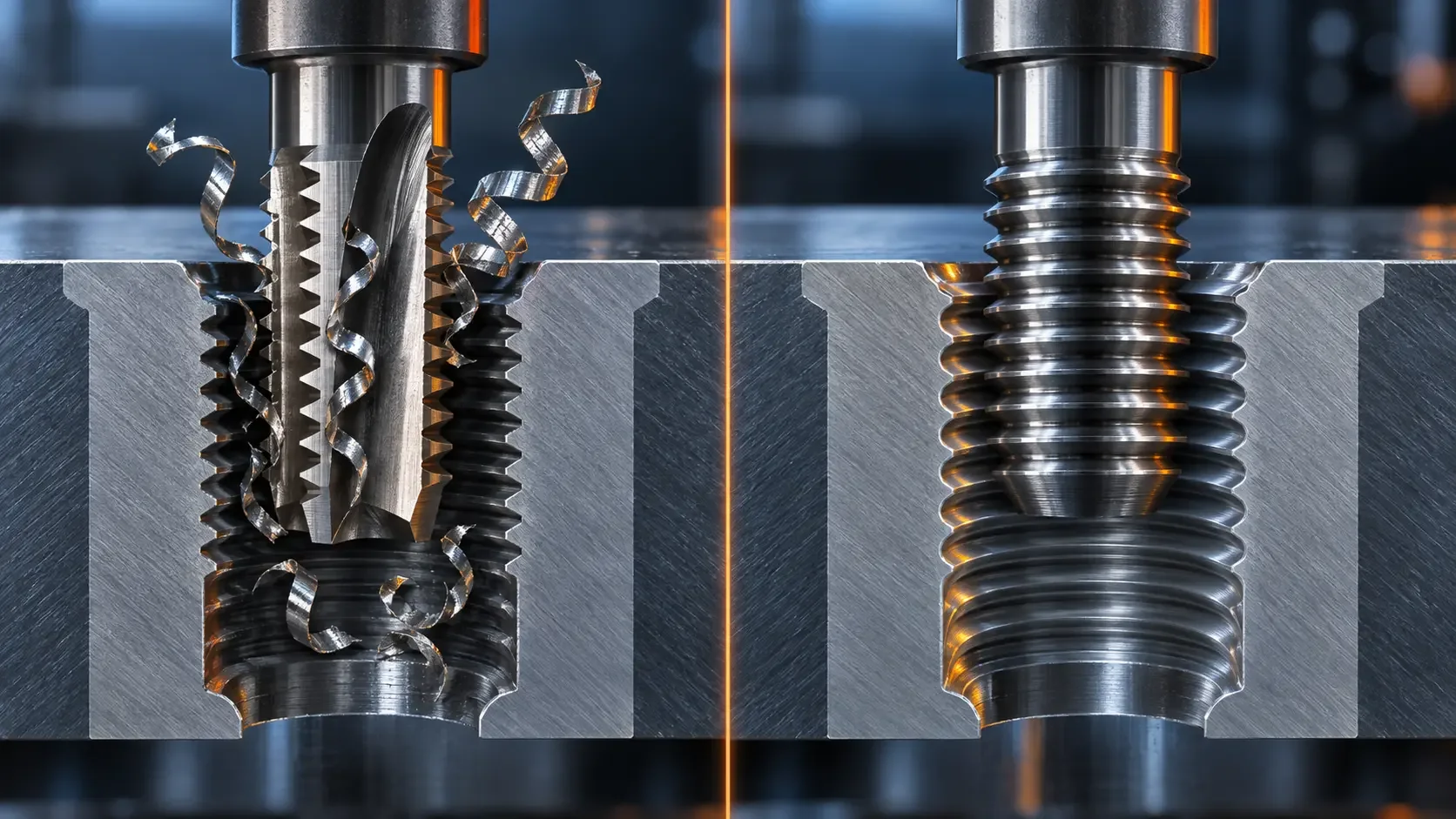
A cutting tap creates the thread by shearing material and producing chips. The flute style should suit the hole: spiral-point taps commonly push chips forward in through holes, while spiral-flute taps are often selected to lift chips out of blind holes. For a standard 10-32 cutting tap, #21 is the conventional starting drill.
Form Taps Displace Material
A form tap, also called a roll tap or thread-forming tap, does not produce normal cutting chips. It displaces ductile material into the thread profile. Because material flows inward during forming, the prepared hole must normally be larger than a cutting-tap hole. The acceptable diameter window can also be narrower. A Haas roll-tap chart, for example, lists 4.4 mm for one 10-32 roll-tap starting condition and recommends drilling and reaming the hole; that value should not be generalized to every form tap.
Why You Must Check the Exact Tap Data
Using a #21 hole for a 10-32 form tap can overload the tap or create an unacceptable thread crest. Conversely, using a form-tap hole for a cutting tap may leave insufficient thread engagement. Consult the manufacturer's chart for the exact tap, material, tolerance requirement, and desired thread percentage. Then verify the formed thread on the actual part.
How Workpiece Material Changes the Decision
The drill size printed in a general chart does not describe how the material will behave. Some materials drill close to nominal size, while others produce oversize holes, built-up edge, work hardening, or elastic recovery. These effects change tapping torque and the finished thread.
| Material | Main Tapping Concern | What to Verify |
|---|---|---|
| Aluminum | Built-up edge, chip packing, or material pickup | Lubricity, flute choice, actual hole size, and thread crest |
| Mild steel | Chip control and tool wear in repeated production | Tap geometry, coolant delivery, torque trend, and gauge result |
| Stainless steel | High torque, heat, and work hardening | Sharp tools, rigid setup, suitable lubricant, and no dwell |
| Brass | Grabbing or geometry mismatch | Tap design, breakthrough condition, and thread finish |
| Cast iron | Abrasive wear and fine debris | Tool condition, dust control, and measured thread quality |
| Engineering plastics | Heat, elastic recovery, and distortion | Hole recovery, cutting heat, clamping pressure, and final fit |
For critical work, avoid choosing a smaller drill merely to maximize thread percentage. Base the decision on the required load, material strength, thread class, tap supplier guidance, and inspection result. A stable process with adequate engagement is more valuable than a theoretical maximum.
Through Holes and Blind Holes Need Different Planning
In a through hole, the drill and tap can pass beyond the required thread, and a spiral-point tap can push chips ahead when the setup allows it. You still need clearance beneath the thread and must prevent long chips from damaging the exit or interfering with fixtures.
A blind hole requires additional depth for the drill point, tap chamfer, chip space, and any incomplete threads near the bottom. The drawing's thread depth is not the same as drilling depth. If the hole is drilled only to the nominal full-thread depth, the tap may bottom out before producing enough usable thread.
Before machining a blind 10-32 hole, calculate the total depth from the required full thread, tap lead, drill-point geometry, bottom clearance, and chip-management method. Verify that the selected tap and holder can reach the depth without contacting the bottom.
How to Drill and Tap a 10-32 Thread
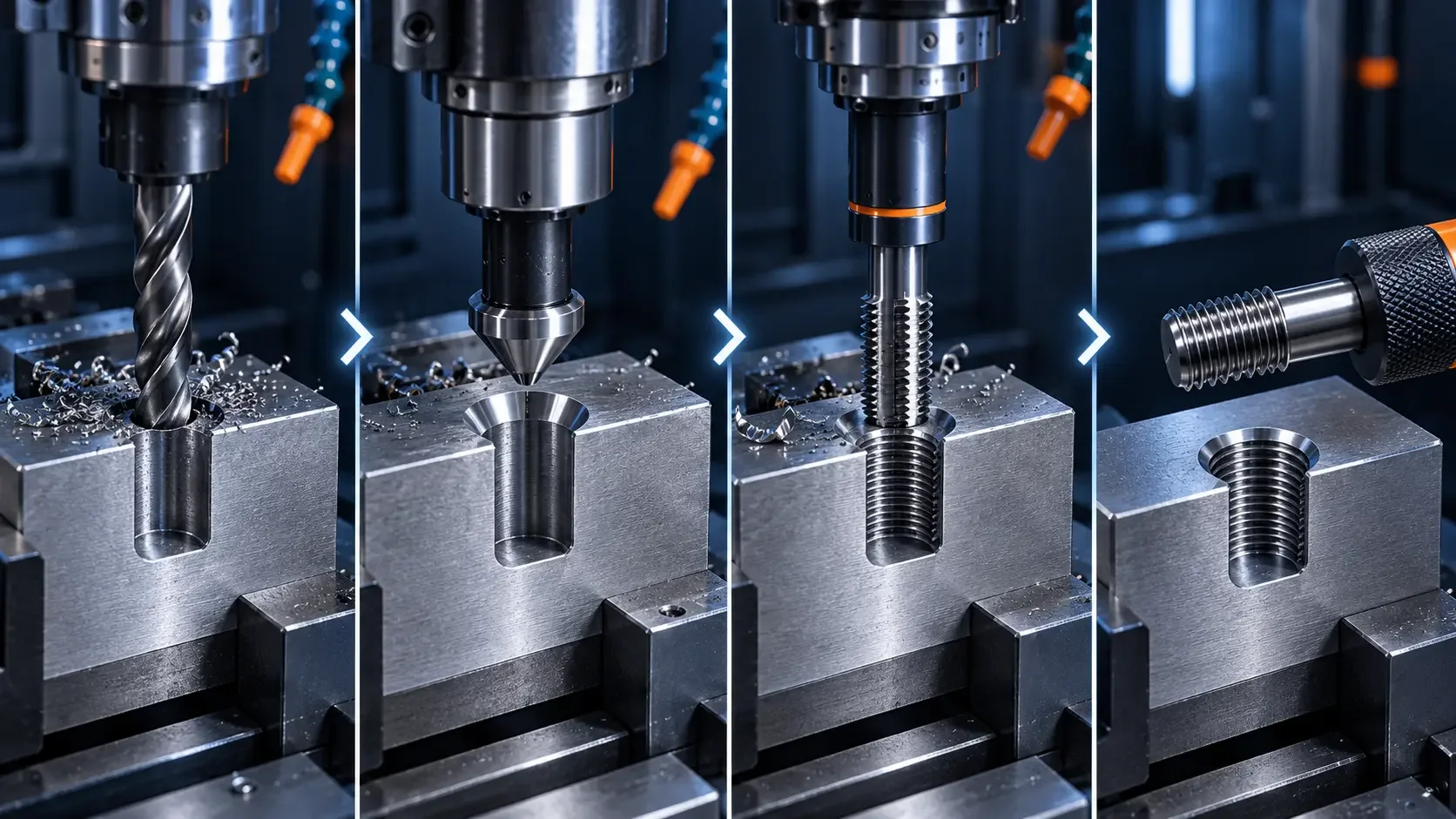
- Confirm the thread specification. Check 10-32 UNF, thread class, usable depth, and inspection requirement on the drawing.
- Identify the tap type. Determine whether the tool is a cutting tap or a form tap before choosing a drill.
- Check the tap manufacturer's data. Use #21 as a cutting-tap starting point only when it agrees with the exact tool and application.
- Inspect the drill and setup. Check tool condition, runout, holder grip, machine rigidity, and workholding.
- Drill to sufficient depth. Include drill-point allowance and additional clearance for blind holes.
- Measure the hole. Do not assume that a #21 drill automatically produced a 0.1590-inch hole.
- Chamfer or deburr when required. A controlled entrance helps the tap start while protecting the first thread.
- Apply the correct tapping process. Use appropriate lubrication, alignment, speed, synchronization, and chip evacuation.
- Inspect the first part. Use the specified GO/NO-GO gauge or approved mating component and check thread depth.
- Release production only after validation. Record the approved hole size, tools, offsets, coolant, and inspection result.
Common 10-32 Tapping Problems
| Problem | Possible Cause | Corrective Check |
|---|---|---|
| Tap breaks | Hole too small, misalignment, bottoming, chip packing, or worn tap | Measure the hole; check depth, holder, tap wear, and chip path |
| Very high torque | Excessive thread engagement, work hardening, or poor lubrication | Review drill size, material condition, cutting fluid, and cycle |
| Weak or incomplete thread | Hole too large, wrong tap, insufficient depth, or damaged cutting edges | Confirm the tool, actual hole diameter, usable depth, and gauge result |
| Oversize or inconsistent thread | Tap runout, holder error, built-up edge, or unstable reversal | Inspect alignment, holder condition, tap coating, and synchronization |
| Poor blind-hole finish | Chips trapped at the bottom or inadequate clearance | Review tap style, drill depth, chip evacuation, and coolant delivery |
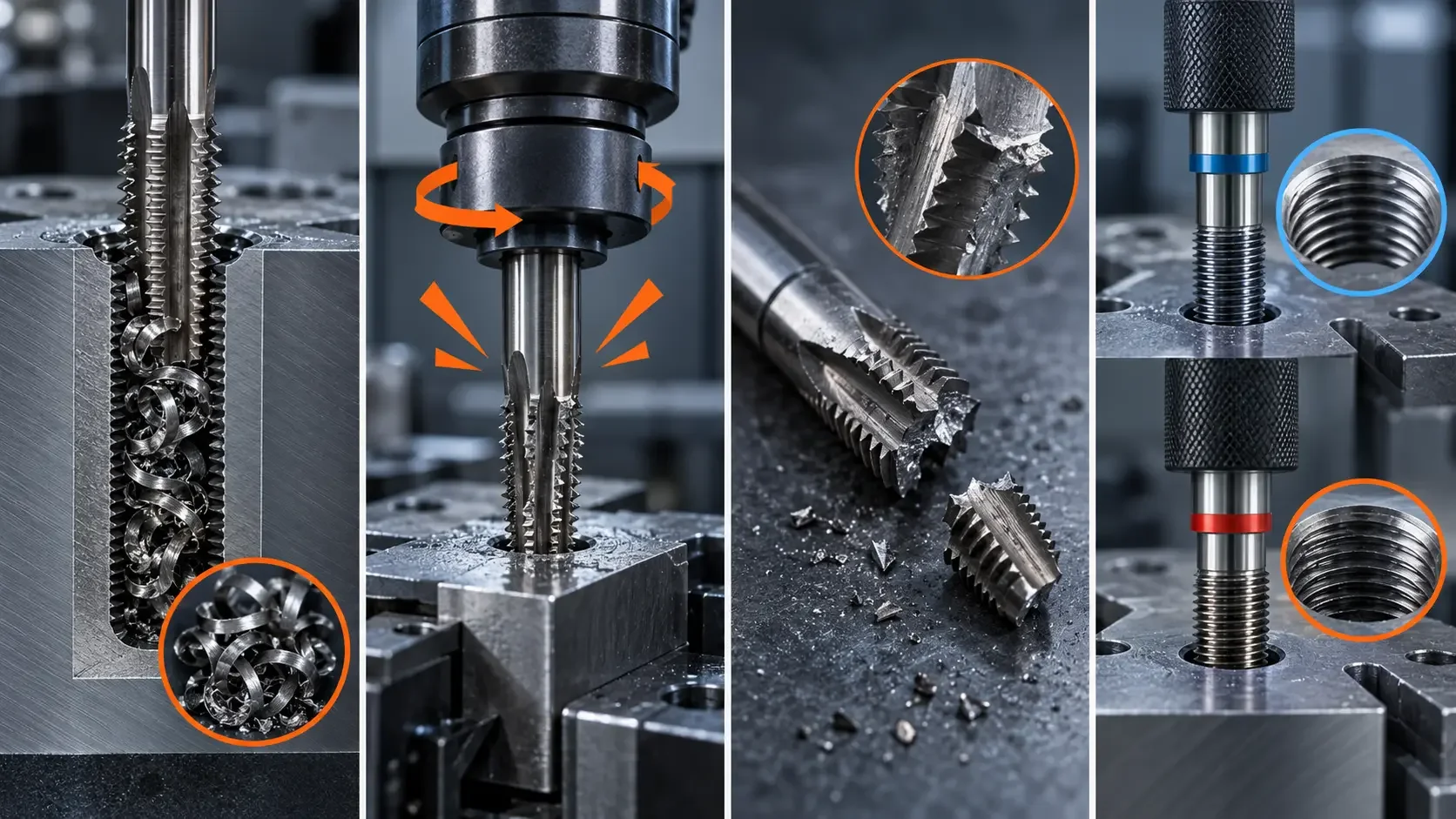
Verify the Hole Before Releasing Production
The most important check is the finished hole, not the drill label. A worn or poorly held #21 drill may cut larger or smaller than expected. Measure representative holes with a suitable gauge method, and investigate changes caused by tool wear, material lot, machine spindle, or coolant condition.
Next, inspect the thread with the gauge and procedure specified by the drawing or quality plan. A mating screw can confirm basic assembly, but it does not replace a defined thread-gauge requirement. For repeat production, record tap life, torque or spindle-load trends, hole size, and nonconformance history so the process can be corrected before taps fail.
How ZIROOTOOLS Can Support Your Tapping Application
Choosing the drill diameter is only one part of a reliable tapping process. Tool material, geometry, coating, flute direction, holder, coolant, hole depth, and inspection method must work together. ZIROOTOOLS can evaluate the application information and help you discuss a suitable custom cutting-tool solution without treating a general chart as a production guarantee.
For a more useful recommendation or quotation, send the following details:
- Workpiece material and hardness
- Cutting tap or form tap
- Through hole or blind hole
- Required thread depth and total hole depth
- Drawing, tolerance class, and inspection requirement
- Machine, holder, coolant, and current cutting conditions
- Current problem, such as high torque, short life, or thread rejection
- Required quantity
Frequently Asked Questions
What size drill bit should I use for a 10-32 tap?
Use a #21 drill bit, 0.1590 inch or about 4.04 mm, as the common starting size for a standard 10-32 cutting tap. Confirm it against the tap manufacturer's data and your material, thread class, and inspection requirement.
What is a #21 drill bit in millimeters?
A #21 drill has a nominal diameter of 0.1590 inch, which converts to approximately 4.04 mm.
Can I use a 5/32 drill instead of a #21?
Possibly, but 5/32 inch is smaller than #21. It can increase thread engagement and tapping torque. Validate it in the actual material and avoid treating it as an automatic substitute in CNC production.
Is the drill size different for a 10-32 form tap?
Yes. A form or roll tap normally needs a larger prepared hole because it displaces material instead of cutting chips. Use the exact tap manufacturer's drill-size chart.
Is 10-32 a fine or coarse thread?
10-32 is the common Unified fine-thread designation for a #10 screw and is generally identified as 10-32 UNF. The common coarse series for the same nominal size is 10-24 UNC.
Why does my 10-32 tap keep breaking?
Frequent causes include an undersize hole, poor alignment, tap bottoming, chip packing, inadequate lubrication, work hardening, excessive speed, holder problems, or a worn tap. Measure the hole and review the complete setup before changing only the tap.
How deep should I drill for a blind 10-32 thread?
The drill must go deeper than the required full thread. Add space for the drill point, tap chamfer, incomplete threads, chips, and bottom clearance. Calculate the depth from the actual drill and tap geometry rather than applying one universal allowance.
Should I countersink the hole before tapping?
A small controlled chamfer is often useful for removing burrs, guiding the tap, and protecting the first thread. Its size must match the drawing and should not remove more of the first full thread than permitted.
How should I inspect a finished 10-32 thread?
Use the thread class and inspection method specified by the drawing or quality plan. GO/NO-GO plug gauges are commonly used for internal threads. Also verify usable thread depth and any entrance or bottom defects.
Is #21 always the best drill for 10-32 threads?
No. It is the standard starting point for many cutting-tap applications. Form taps, special thread percentages, difficult materials, coatings, tolerance requirements, and production conditions may require a different hole size.
Final Recommendation
For a conventional cutting tap, begin with a #21 drill at 0.1590 inch (4.04 mm). Do not automatically substitute 5/32 inch in a demanding production process, and never apply the cutting-tap size to a form tap without checking the manufacturer's data.
Follow the same tap-type-first approach used for selecting a 1/4-20 tap drill size: confirm the tap, material, hole style, depth, and thread requirement; measure the drilled hole; inspect the first completed thread; and release production only after the process is stable. If you need help evaluating a 10-32 application, send your application details to ZIROOTOOLS, including the drawing, workpiece material, tap type, machine setup, problem description, and required quantity.