Choosing the right #10 wood screw pilot hole size is not just a matter of picking the closest drill bit. The right hole depends on whether you are fastening into softwood or hardwood, whether the screw must pass through a first part freely, and whether a countersunk head needs to sit flush.
For production teams, a pilot hole that is too small can split wood, increase driving torque, and damage screw heads. A hole that is too large can reduce thread grip and weaken the joint. This guide gives you a practical way to select, test, and document the right drill bit size for #10 wood screws.
The Short Answer: #10 Wood Screw Pilot Hole Size
For a typical #10 wood screw using a straight pilot drill, common starting points are:
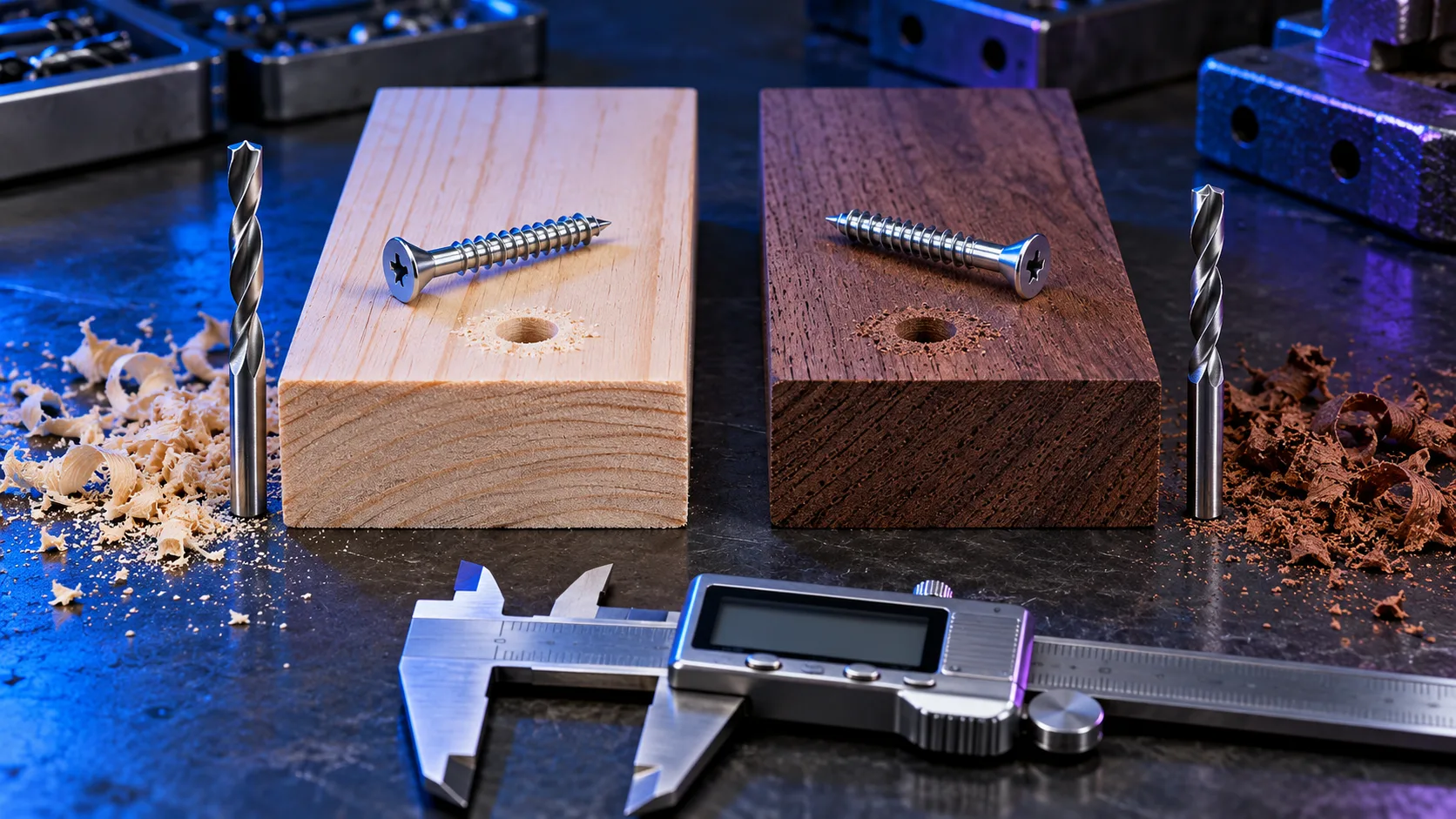
- Softwood: 1/8 in. (about 3.18 mm)
- Hardwood: 9/64 in. (about 3.57 mm)
These are starting points, not universal guarantees. Screw geometry, wood density, moisture, edge distance, and whether you use a straight or tapered drill can change the best result. Always run a first-piece test with the actual screw and material before batch assembly.
Why #10 Wood Screw Pilot Hole Size Changes by Application
A #10 designation describes the screw size, but it does not fully define the drilling process. The same screw can be used in pine, maple, plywood, MDF, or laminated panels. These materials react differently when a screw is driven into them.
Softwood can compress around the threads, so it often accepts a smaller pilot hole. Hardwood creates higher resistance, so it normally needs more room around the screw core to reduce splitting and driving torque. A pilot hole near a board edge or end grain also needs more careful testing than one in the center of a wide panel.
Before selecting a drill, identify whether you need a pilot hole, a clearance hole, or a countersink. They are not the same operation.
#10 Wood Screw Drill Bit Size Chart
| Application | Hole purpose | Common straight-drill starting size | Metric equivalent | Validation note |
|---|---|---|---|---|
| #10 screw in softwood | Pilot hole | 1/8 in. | 3.18 mm | Check screw grip and driving torque |
| #10 screw in hardwood | Pilot hole | 9/64 in. | 3.57 mm | Check for splitting and head seating |
| #10 screw through a first component | Clearance hole | Set by screw body and assembly tolerance | Project-specific | The threads should engage the second component, not the first |
| Flat-head #10 screw | Countersink | Match head geometry | Project-specific | Use after the pilot or clearance hole |
The values above apply to common straight pilot-hole practice. Tapered wood screws and tapered pilot drills can require different dimensions. Use the fastener manufacturer’s specification and a controlled sample run as the final approval method. For a reference table, see this wood screw pilot-hole guide.
Pilot Hole, Clearance Hole, and Countersink: Know the Difference
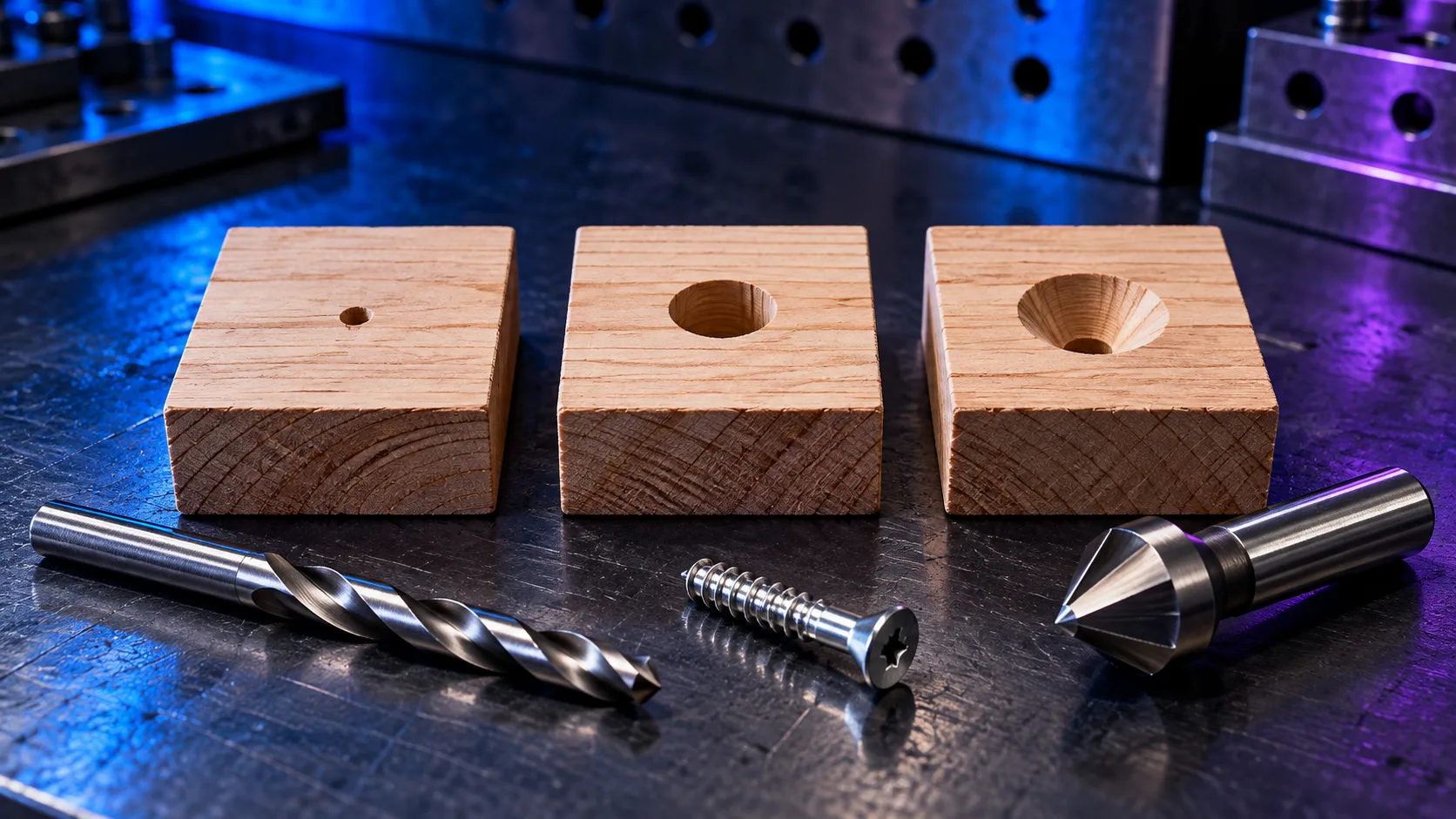
Pilot hole
A pilot hole guides the screw and leaves enough material for the threads to grip. It is used when the #10 screw will engage the same workpiece.
Clearance hole
A clearance hole lets the screw shank pass through the first component freely. The screw threads then pull the first component tightly against a second component. Do not use a pilot-hole value automatically as a clearance-hole value.
Countersink
A countersink creates a conical seat for a flat-head screw. It does not replace the pilot hole. Drill the pilot or clearance hole first, then create the countersink only as deep as needed for correct head seating.
How to Select a Drill Bit for Softwood and Hardwood
Start with the screw, then the material. Hold the drill and screw side by side. For a pilot hole, the drill should generally relate to the screw core rather than the outer thread diameter, but this visual check is only a starting point. Use a verified drill size and test piece for production release.
In softwood, test whether the screw seats without excessive torque while still holding securely. In hardwood, inspect closely for cracking around the head, at the edge, and near end grain. If driving torque is high or splitting appears, review the pilot-hole diameter, screw design, drill sharpness, and material condition.
For repetitive drilling, use suitable hole making tools that match the material, hole depth, and required finish. Drill condition and runout matter because a worn or unstable drill can create burrs, oversized holes, and inconsistent assembly results.
How to Choose the Right Drill Bit Type
For general wood pilot holes, a sharp HSS drill can be suitable. Brad-point drills can improve location and entry quality on visible wood surfaces. Tool selection should also consider the board material, coating, production quantity, and machine setup.
Harder wood products, laminated panels, and abrasive engineered boards can increase wear. If hole consistency matters across large quantities, verify tool life and hole condition at planned inspection intervals instead of waiting for assembly problems to appear.
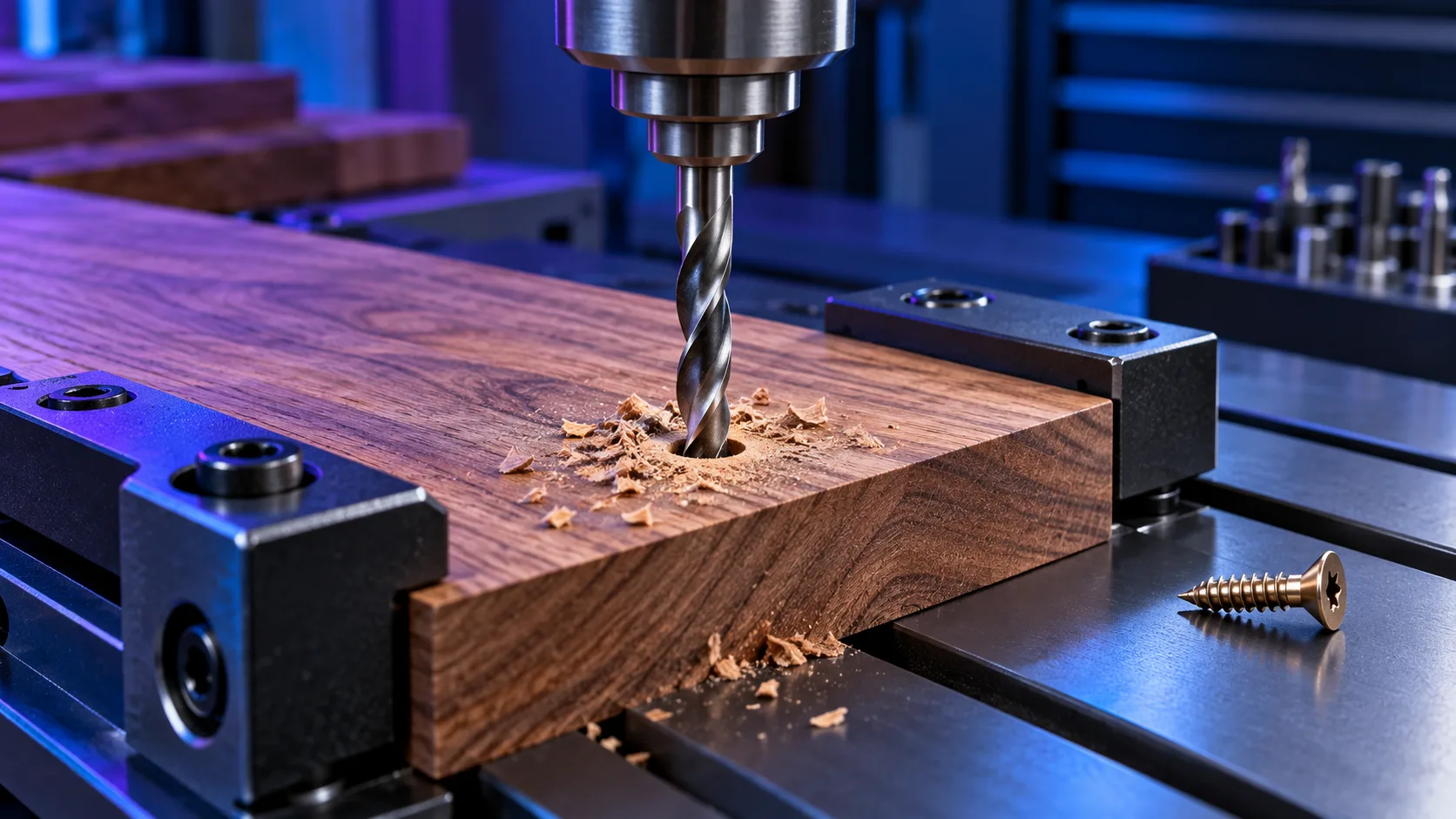
For special materials, deep holes, or non-standard dimensions, a standard catalog drill may not be the best answer. ZIROO TOOLS can assess a drawing, material, hole depth, tolerance, and production quantity through its OEM/ODM service.
A Five-Step Process for Choosing #10 Wood Screw Pilot Holes
- Confirm the fastener. Verify that it is a #10 wood screw, not a 10-24 or 10-32 machine screw.
- Define the hole purpose. Choose pilot, clearance, or countersink before selecting a drill size.
- Identify the material. Record wood species, board construction, thickness, and condition.
- Select a starting size. Use the #10 wood screw pilot hole size chart as a controlled starting point.
- Run and approve a test. Measure the hole, install the actual screw, check torque, grip, and appearance, then document the approved setup.
Common Mistakes in #10 Wood Screw Assembly
| Problem | Likely cause | Corrective action |
|---|---|---|
| Wood splits during fastening | Pilot hole too small, insufficient depth, or drilling too close to an edge | Test a larger pilot hole, drill to suitable depth, and review edge distance |
| Screw is difficult to drive | Dense material, dull drill, or undersized pilot hole | Inspect the drill and validate the pilot size in a sample part |
| Joint feels loose | Pilot hole too large or wrong hole type | Confirm thread engagement and separate clearance-hole requirements |
| Head sits proud of the surface | No countersink or mismatched countersink | Add a matching countersink operation after drilling |
| Batch quality changes over time | Drill wear, runout, or material variation | Use first-off approval and periodic hole checks |
When a #10 Screw Is Actually a 10-24 or 10-32 Machine Screw
A #10 wood screw pilot-hole guide does not apply to a threaded machine-screw hole. If the drawing specifies 10-24 or 10-32, first confirm whether you need a clearance hole or a tap drill. The two thread pitches require different tap-drill sizes and process controls.
For a full machining reference, see ZIROO TOOLS’ 10-32 tap drill size guide. Keeping threaded-hole guidance separate from wood-screw guidance helps your team avoid using the wrong drill table.
How to Verify a #10 Screw Hole in Production
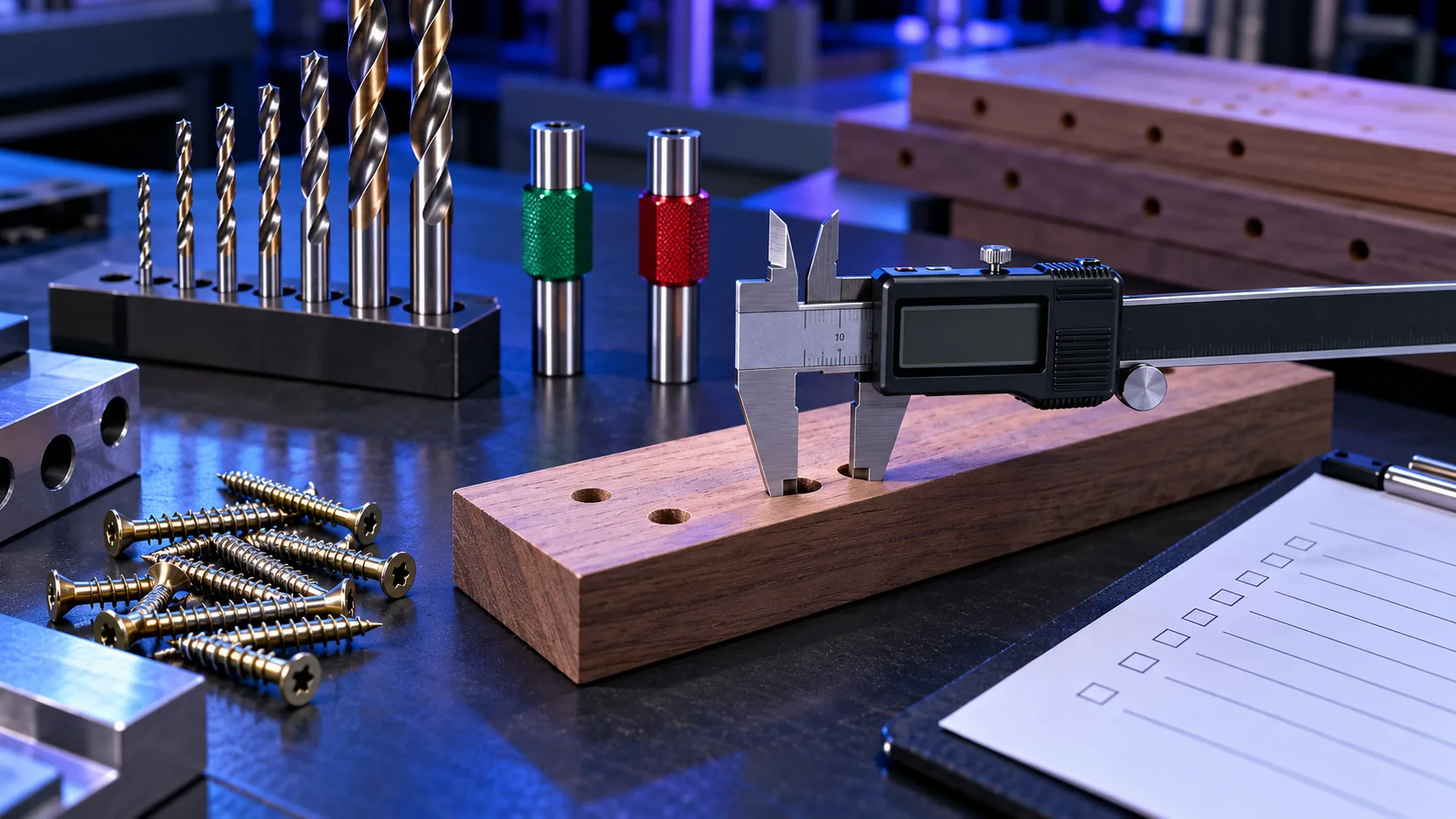
Do not release a batch based only on a nominal drill size. Drill several first pieces using the intended machine, drill, screw, and material. Check the hole diameter, burr condition, screw driving torque, head seating, and joint strength. Repeat the check after tool changes or at defined production intervals.
Record the approved screw type, material, drill size, hole depth, countersink settings, machine setup, and inspection method. This gives purchasing, quality, and production teams a clear specification for repeat orders.
Get a Drill Recommendation from ZIROO TOOLS
Need a standard or custom drill for a #10 screw application? Send ZIROO TOOLS your screw specification, workpiece material, hole purpose, hole depth, drawing, target tolerance, machine type, and expected quantity. We can help you evaluate a suitable drill geometry and specification for the application.
FAQs About #10 Wood Screw Pilot Hole Size
What drill bit size should I use for a #10 wood screw?
Common straight-pilot starting points are 1/8 in. for softwood and 9/64 in. for hardwood. Confirm with the actual screw, material, and a test piece before production.
Can I use the same drill size in hardwood and softwood?
Usually not. Hardwood often needs a larger pilot hole because it creates more driving resistance and has a higher risk of splitting.
Is a pilot hole the same as a clearance hole?
No. A pilot hole allows the screw to grip the same material. A clearance hole lets the screw pass freely through one part before it threads into a second part.
When should I countersink a #10 wood screw?
Use a countersink when a flat-head screw must sit flush or below the surface. Drill the pilot or clearance hole first.
Why does my #10 screw split the wood?
The pilot hole may be too small, too shallow, too close to an edge, or drilled with a dull tool. Test the hole size and inspect the material condition.
Does this chart apply to a 10-32 machine screw?
No. A 10-32 machine screw uses a thread-specific clearance or tap-drill process. Refer to the dedicated 10-32 tap drill guide.