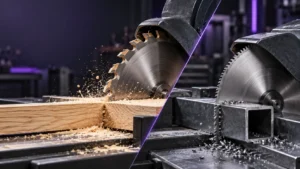
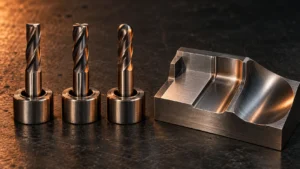
Choosing between a bull nose end mill vs ball nose end mill is not simply a question of which tool produces a rounded edge. The correct choice depends on the feature geometry, required surface, available toolpath, machine rigidity, and the amount of stock left for finishing. A cutter that is excellent for a free-form 3D surface can be inefficient on a flat cavity floor, while a corner-radius tool can be the better production choice when a part needs a flat wall, a fillet, and a stable semi-finishing pass.
For most CNC buyers, the practical answer is straightforward: use a bull nose end mill—also called a corner radius end mill—when you need a flat bottom with a specified internal radius and a strong cutting corner. Use a ball nose end mill when the machined surface is continuously curved and a spherical tool tip is required to reach the geometry. This guide explains how to make that decision before you release a tool order or CAM program.
Bull Nose End Mill vs Ball Nose End Mill: Quick Decision Table
| Selection factor | Bull nose end mill | Ball nose end mill |
|---|---|---|
| End geometry | Flat bottom with a corner radius | Fully hemispherical end |
| Best-fit features | Floors, walls, pockets, fillets, semi-finishing | Free-form surfaces, 3D contours, cavities and blends |
| Internal corner capability | Must match or be smaller than the part’s specified radius | Creates a radius tied to the tool radius |
| Flat-area machining | Usually more productive and stable | Usually less efficient because the tool tip is not ideal for broad flat areas |
| Surface-control focus | Corner quality, floor finish and strong edge support | Scallop control on curved surfaces |
| CAM priority | Feature accessibility, corner radius and step-over | Surface normal, tilt strategy, scallop height and step-over |
What Is a Bull Nose End Mill?
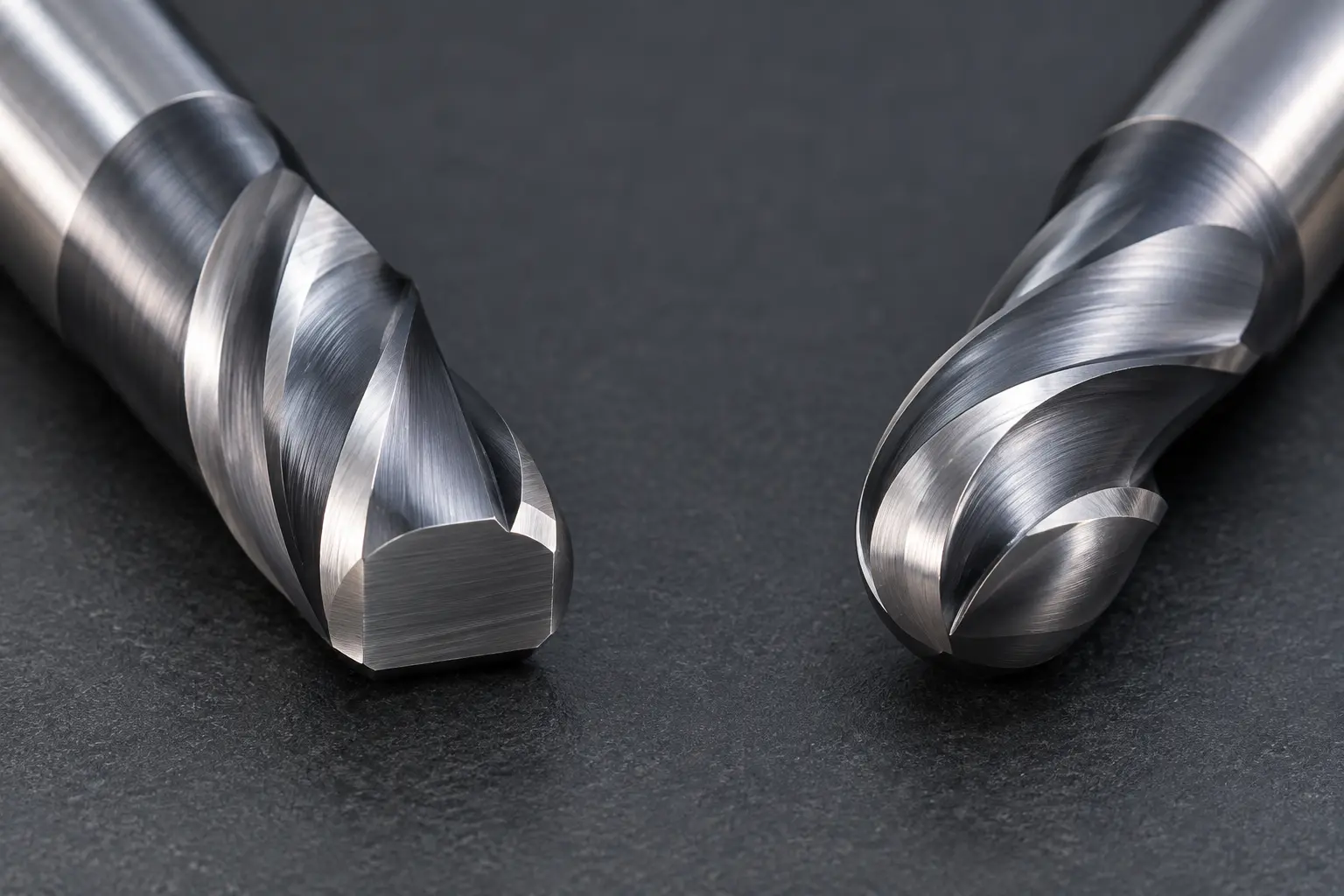
A bull nose end mill has a flat cutting bottom and rounded cutting corners. In many machining shops, the terms bull nose and corner radius end mill are used for the same tool family. The corner radius is smaller than the tool radius, so the tool can machine a floor while leaving a controlled fillet where a wall meets that floor.
This geometry is useful when a sharp 90-degree corner would be weak at the tool edge or unacceptable on the finished component. The radius spreads the transition between the bottom and peripheral cutting edges. In real production, the selection still depends on the cutter diameter, flute count, projection, workpiece material, toolholder runout, and the actual corner radius shown on the drawing.
What Is a Ball Nose End Mill?
A ball nose end mill has a spherical end, with the ball radius equal to half of the tool diameter. It is made for surfaces that do not contain a simple flat floor and vertical wall relationship: mould cavities, sculpted electrodes, impellers, medical components, turbine-style forms, and other 3D shapes are typical examples.
Its strength is geometric reach. A ball nose cutter can follow a continuously changing surface without creating the sharp transitions associated with square tools. However, a smooth result comes from the complete process, not from the tool shape alone. Toolpath direction, step-over, tool inclination, surface curvature, cutter runout, and machine dynamics all influence the final finish.
When a Bull Nose End Mill Is the Better Choice
Flat floors with engineered fillets
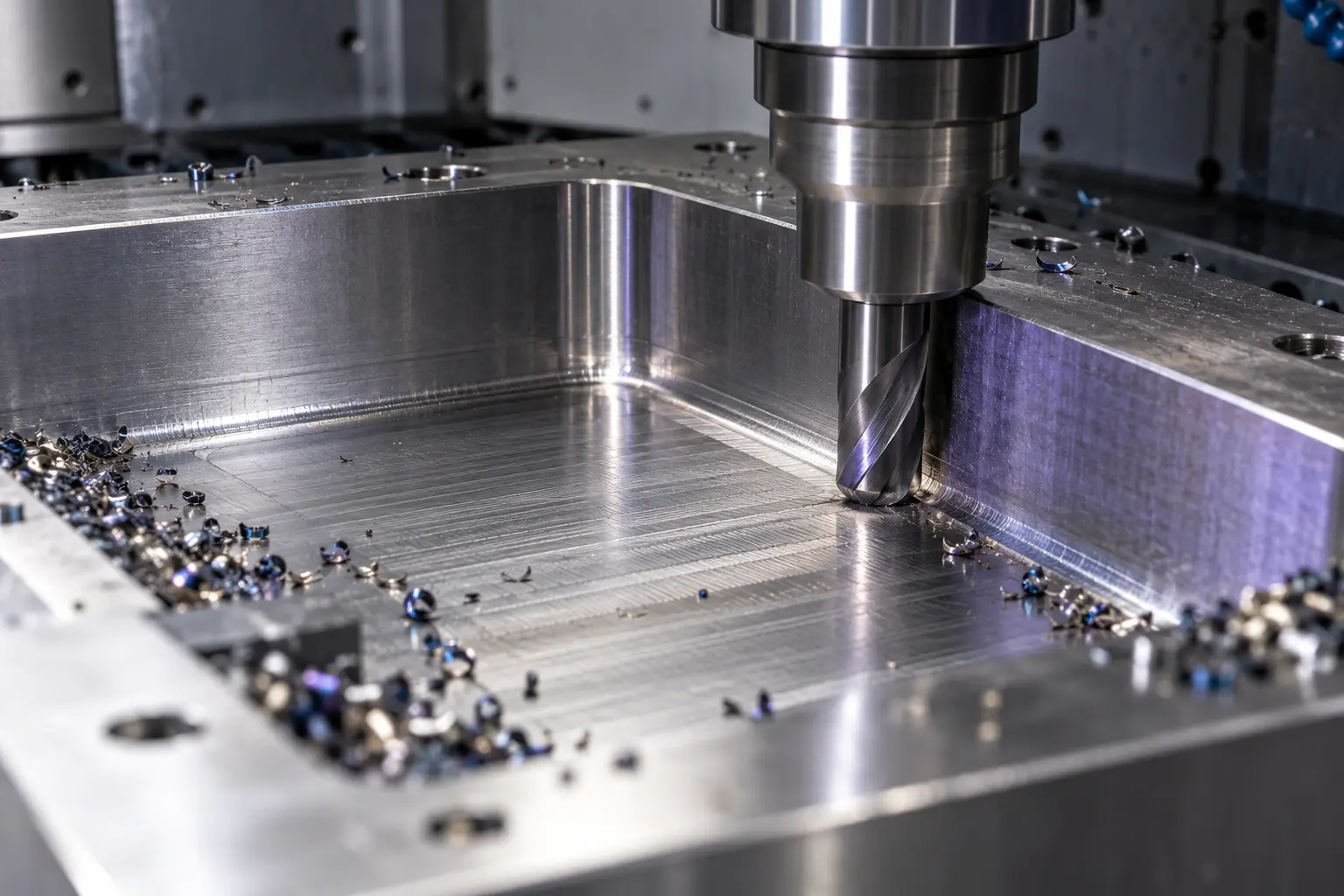
Choose a bull nose end mill when the part needs a floor that is genuinely flat but the internal corners include a defined radius. This is common in mould inserts, fixture pockets, die details, structural aluminium parts, and milled steel components. The selected corner radius must be no larger than the smallest radius permitted by the drawing; otherwise the cutter will not reach the feature correctly.
Semi-finishing before a final contour pass
A corner-radius cutter is often an efficient semi-finishing tool. It can remove stock from floors and walls while leaving a uniform allowance for the final tool. This makes the final ball-nose path more predictable on a true 3D surface. The exact allowance and cutting conditions should be proven on the customer’s material and machine rather than copied from a generic program.
Features that need a stronger cutting corner
For interrupted cuts, hard materials, or long-running pocket operations, a sharp-corner flat end mill can be vulnerable at the bottom edge. A suitable corner radius may improve edge support, but it does not replace good clamping, correct runout, chip evacuation, or controlled engagement. If the radius gets too large for the feature, geometry accuracy is lost, so strength and feature access must be evaluated together.
When a Ball Nose End Mill Is the Better Choice
Continuous 3D contours
A ball nose end mill is usually the natural choice for free-form surfaces. When a CAD surface changes direction continuously, the spherical profile lets the CAM system create a consistent finishing path without forcing a flat-bottom tool into an unsuitable contact condition. Typical work includes mould cavities, blended fillets, formed surfaces, and prototype components with complex curvature.
Finishing a radius that a corner-radius tool cannot reach
If the component contains a concave radius smaller than the bull nose cutter’s corner radius, the bull nose tool cannot reproduce that detail. A ball nose cutter of the appropriate diameter can reach the area, provided the flute length and shank clearance are also adequate. Buyers should check the entire tool assembly in CAM, not just the cutting diameter.
Controlled surface texture on curved geometry
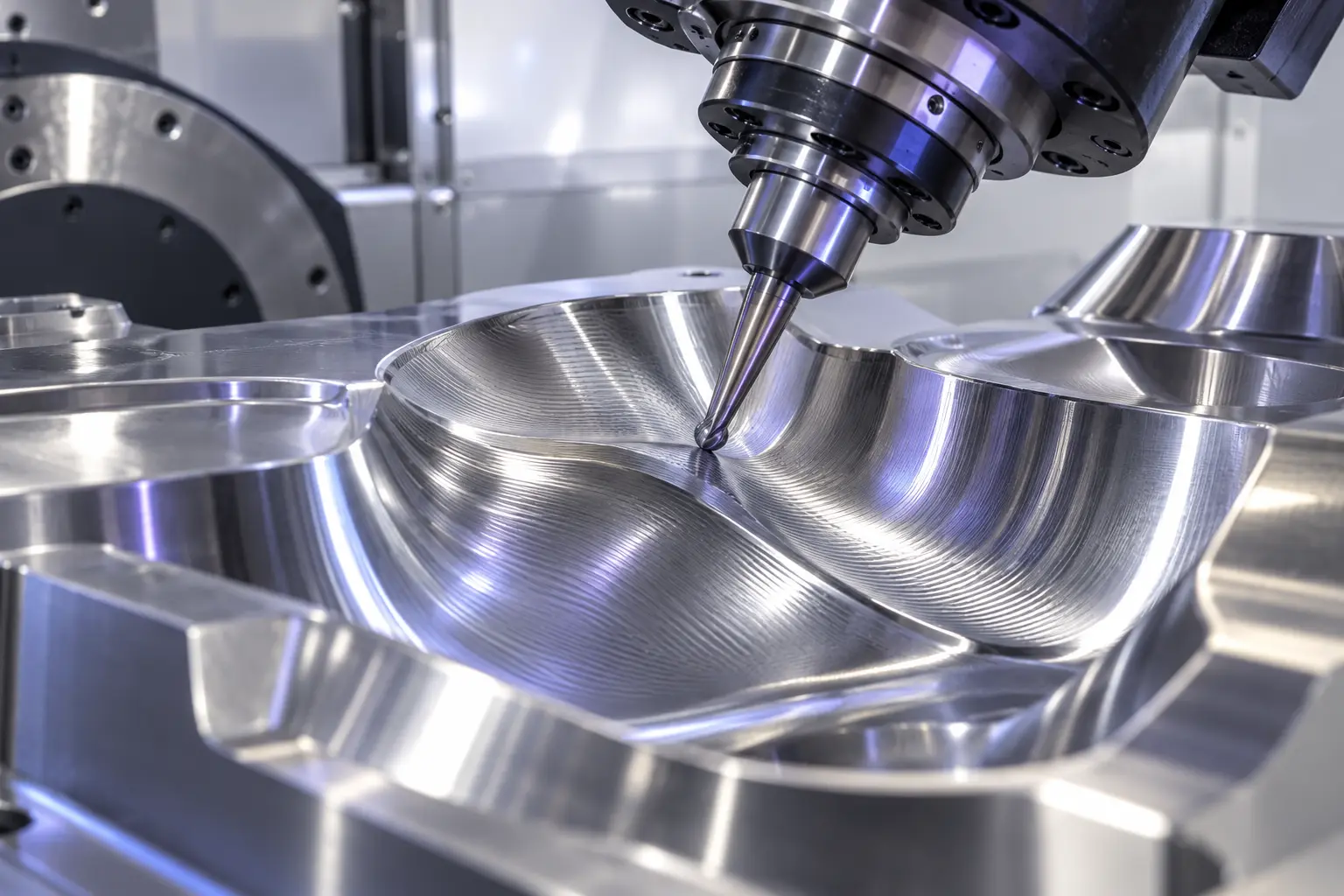
Ball nose finishing produces a pattern of residual cusps between passes. The size of those cusps is controlled principally by the local surface shape, ball radius, and step-over. A smaller step-over may improve the visible finish, but it also adds machining time. The correct value is therefore a cost-and-quality decision, not a universal recommendation.
Surface Finish, Scallop Height, and Toolpath Strategy
Surface finish is one of the most misunderstood areas of the bull nose end mill vs ball nose end mill comparison. A ball nose tool can create very smooth 3D surfaces, but a ball end moving across a nearly flat surface may work close to its center, where effective cutting speed is low. A suitable tilt strategy in multi-axis machining can move the contact point away from the center and improve cutting behavior.
A bull nose end mill can produce a stable floor finish and a controlled blend at the corner, provided the corner radius matches the part. For both tool types, verify step-over, cutter engagement, radial runout, holder condition, coolant or air strategy, and the remaining stock from the previous operation. Tool selection alone cannot correct a poor toolpath or an unstable setup.
Rigidity, Tool Life, and the Complete Tool Assembly
Tool rigidity comes from more than end geometry. Diameter, flute length, neck design, stick-out, holder type, spindle condition, and workholding have a major influence on deflection and vibration. A short, well-supported tool is generally easier to control than a long-reach version of the same diameter, whether it has a bull nose or ball nose profile. See our guide to choosing the right carbide end mill for a broader selection framework.
For hardened steel or demanding mould work, discuss the tool substrate, coating, edge preparation, and coolant method with the supplier. Do not treat a coating name as a complete solution: its suitability depends on the workpiece, cutting temperature, machine capability, and whether the process is wet, dry, or air-assisted. A controlled trial is the safest way to establish a repeatable production window.
Material and Operation Selection
- Steel and alloy steel: Select geometry and edge preparation around the operation, stock condition, and stability. Corner-radius tools are often considered for strong floor-and-wall transitions; ball nose tools are used where the surface requires them.
- Stainless steel: Prioritize stable engagement and chip evacuation. Avoid treating either tool form as a shortcut around heat control or work-hardening risk.
- Hardened steel: Check the required radius, finishing allowance, rigidity, coating suitability, and CAM strategy. Small-radius detail may force a smaller ball nose finish tool.
- Aluminium and non-ferrous materials: Geometry, flute configuration, polished surfaces, chip evacuation, and workholding can matter as much as the end profile.
B2B Buying Checklist for CNC End Mills
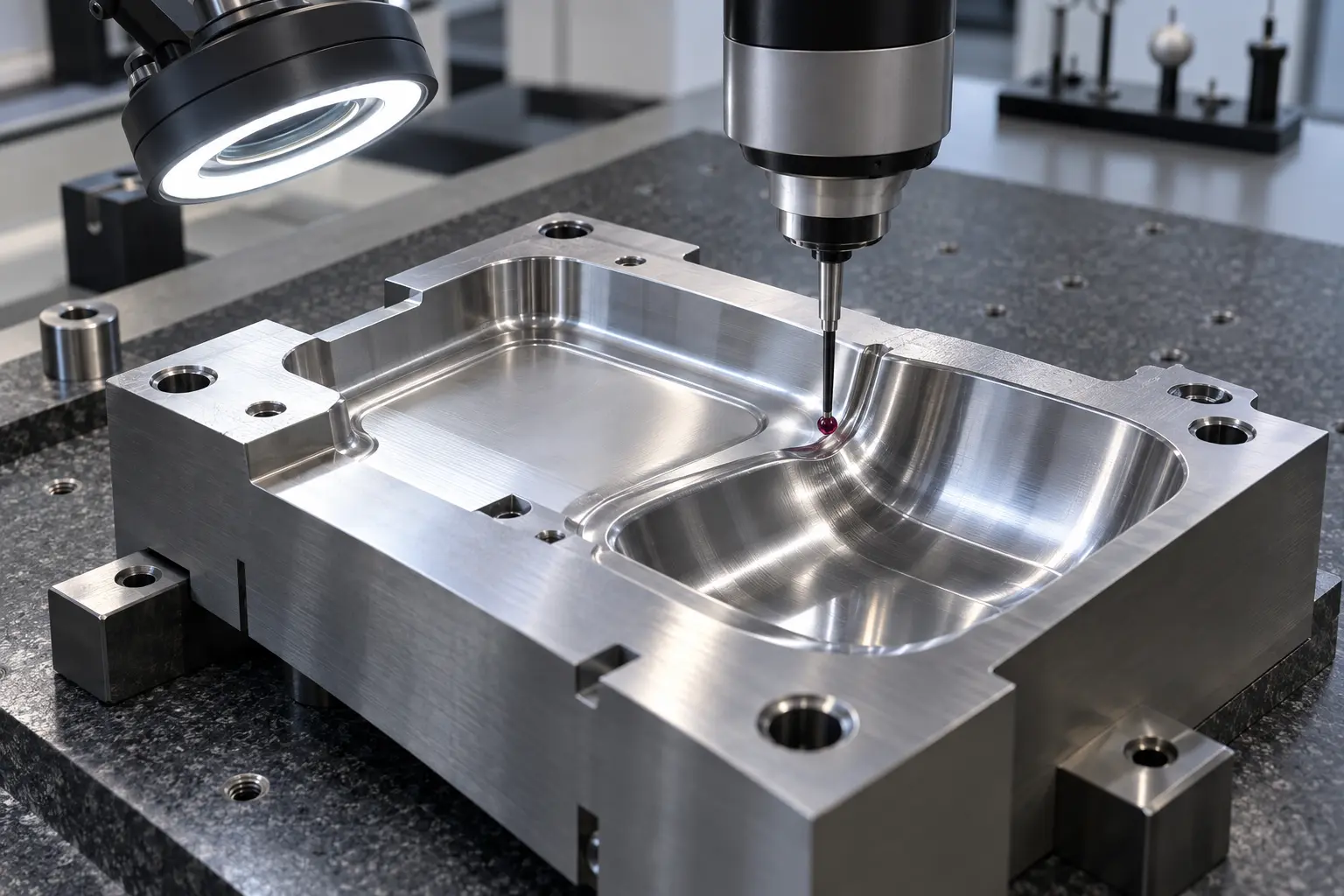
Before requesting a quotation for a standard or custom end mill, provide the information that determines whether the tool will actually fit your process. If you are comparing broader cutter families first, review our end mill types for CNC machining guide.
- Part drawing or CAD model: identify the smallest internal radius, wall height, cavity depth, and surfaces to be finished.
- Workpiece: state the material grade, hardness range if known, and stock condition.
- Machine and holder: specify spindle type, available speed range, holder style, and practical tool projection.
- Operation: clarify roughing, semi-finishing, finishing, or a combined operation.
- Quality target: describe dimensional tolerance, surface requirement, burr limits, and the part feature that matters most.
- Production plan: include prototype, batch, or repeat production volume so the supplier can balance flexibility, cycle time, and tool-life expectations.
Common Selection Mistakes
- Selecting by tool name only: “bull nose” does not define the required corner radius, flute length, or neck clearance.
- Using a ball nose tool for broad flat finishing by default: inspect the effective contact condition and cycle time before committing to the path.
- Ignoring the smallest part radius: a strong larger-radius bull nose tool is not useful if it cannot enter the required feature.
- Assuming surface finish is only a tool issue: CAM strategy, step-over, tool runout, and setup rigidity may be the actual cause of visible tool marks.
- Comparing only the tool purchase price: include programming time, machine time, rework, tool changes, and inspection results in the comparison.
FAQ
Is a bull nose end mill the same as a corner radius end mill?
In most CNC machining contexts, yes. Both terms normally describe an end mill with a flat bottom and rounded corners. Always verify the drawing, catalogue geometry, and corner-radius value because naming conventions can vary by supplier.
Can a ball nose end mill replace a bull nose end mill?
Only when the part geometry and finish requirement allow it. A ball nose tool can machine curved surfaces, but it cannot produce the same flat floor and defined small corner-radius relationship as a correctly selected bull nose tool.
How do I choose the corner radius of a bull nose end mill?
Start with the smallest internal radius allowed by the part. The tool radius must fit that feature, then be checked against edge strength, required surface, tool projection, and the machine’s stability.
Which tool is better for mould machining?
Many mould programs use both. A bull nose end mill can be practical for floors, walls, and semi-finishing, while a ball nose end mill handles continuous 3D surfaces and smaller concave details. The CAD geometry decides the sequence.
Why does a ball nose end mill leave visible scallops?
Scallops are residual material between adjacent tool passes. They are affected by ball radius, step-over, surface curvature, toolpath direction, and setup accuracy. Reduce them through the complete finishing strategy rather than by changing the tool alone.
What should I send a supplier for a custom end mill recommendation?
Send the part drawing or CAD file, material, hardness if known, machine and holder information, available projection, operation, required surface, and expected quantity. This allows the supplier to assess a standard tool or a custom geometry.
Final Takeaway
Bull nose and ball nose end mills are complementary tools, not interchangeable defaults. Choose a bull nose end mill for stable machining of flat features with specified radiused corners. Choose a ball nose end mill when the part requires continuous 3D contouring or access to curved geometry. In either case, validate the tool with the actual CAM path, assembly, material, and quality requirement before scaling production. For standard cutter options, explore our CNC end mills.
ZIROO TOOLS supports B2B buyers with end-mill selection for defined materials, part features, and machining processes. Contact ZIROO TOOLS with your drawing, workpiece information, machine details, and target result to discuss a suitable standard or custom tooling approach.