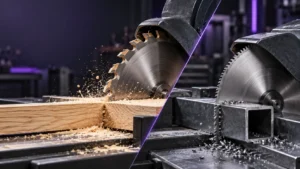
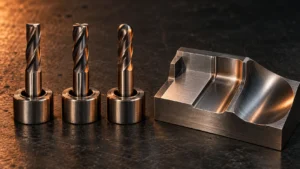
Choosing between cobalt and titanium drill bits is not a question of which one is universally better. It is a question of workpiece material, heat, hole depth, production volume, machine rigidity and whether the tool must be reground. For metalworking buyers, confusing a cobalt alloy drill with a titanium-coated drill can lead to premature wear, inconsistent holes and unnecessary tool cost.
This guide explains the practical difference between cobalt drill bits and titanium drill bits, where each belongs in production drilling, and when a solid carbide drill should be evaluated instead. It is written for machining shops, fabricators, distributors and OEM buyers—not as a DIY tool review.
What Is the Difference Between Cobalt and Titanium Drill Bits?
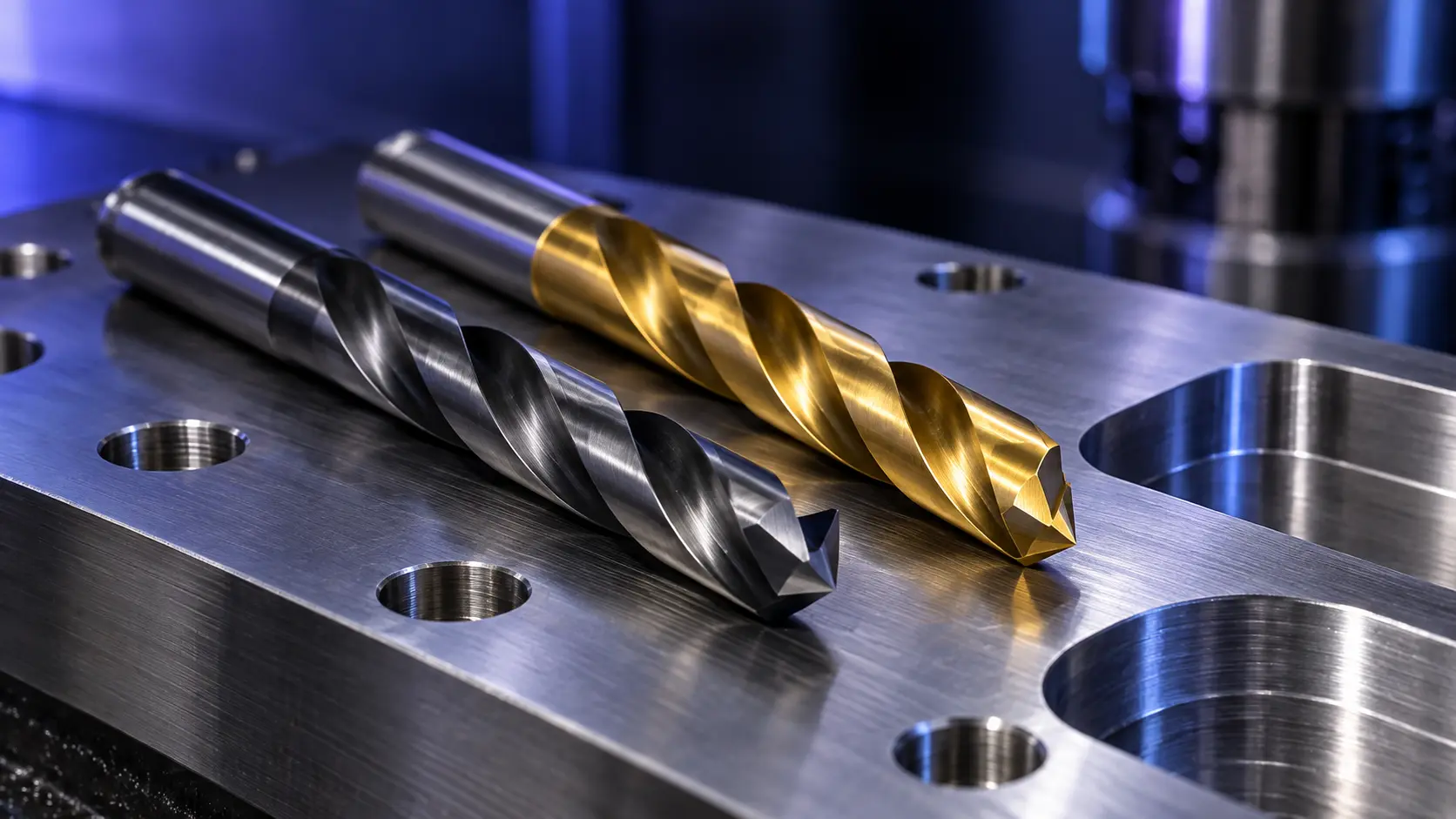
The main difference is where the performance comes from. A cobalt drill bit is normally made from high-speed steel alloyed with cobalt. M35 and M42 are common cobalt-HSS designations; suppliers often specify them with roughly 5% and 8% cobalt respectively, but buyers should confirm the exact material specification. Cobalt is part of the drill material throughout the tool, helping it retain hardness as cutting temperatures rise.
A “titanium drill bit” is usually a conventional HSS drill with a thin surface coating, commonly titanium nitride (TiN). The coating can reduce friction and improve wear resistance while it remains intact, but it does not turn the HSS substrate into a cobalt alloy. Once a drill is repeatedly sharpened or the coating wears away at the cutting edge, that coating benefit is reduced.
| Factor | Cobalt HSS drill | Titanium-coated HSS drill |
|---|---|---|
| Performance source | Cobalt is alloyed through the HSS material | TiN or similar coating on an HSS substrate |
| Heat resistance | Generally better for heat-intensive metal drilling | Improved while coating remains intact |
| Regrinding | Can be reground; material characteristics remain | Regrinding removes coating at the sharpened edge |
| Typical use | Stainless steel and tougher alloy-steel work | General-purpose drilling in common metals |
| Initial cost | Usually higher | Usually lower |
| Important limitation | More brittle than standard HSS under poor setup conditions | Coating cannot compensate for overheating or incorrect feeds |
Both tool types still require a stable setup, suitable speed and feed, reliable clamping and effective chip evacuation. Tool material alone cannot correct runout, a dull cutting edge, insufficient coolant or a workpiece that is not securely held.
What Are Cobalt Drill Bits?
Cobalt drills are HSS drills designed for applications where heat is a key cause of tool failure. They are often selected for stainless steel, alloy steel, cast iron and other materials that generate more heat or work-harden when drilled incorrectly. The cobalt content helps the cutting edge retain its hardness at elevated temperature, which can support more consistent drilling when the process is properly controlled.
M35 vs M42 Cobalt Drill Bits
M35 and M42 are often grouped together as cobalt drills, but they should not be treated as interchangeable. M35 is commonly used for demanding general metal drilling. M42 has a higher cobalt content and is often considered when more hot hardness is required. The right choice depends on the material, hole geometry, drill diameter, machine capability and production target—not cobalt percentage alone.
For an OEM buyer, the useful question is not simply “Do you have M35?” It is: What material is being drilled, how hard is it, how deep is the hole, what coolant is available, and what failure is occurring today? Those details determine whether an M35 or M42 HSS drill is appropriate, or whether the process should move to solid carbide.
Where Cobalt Drills Fit Best
- Stainless steel parts where heat and work hardening are concerns.
- Alloy-steel components that exceed the comfort zone of ordinary HSS.
- Lower- to medium-volume production where regrinding remains valuable.
- Operations where the machine is stable but a solid-carbide solution is not yet justified.
A cobalt drill is not automatically the right tool for every “hard metal.” Very high hardness, deep holes, tight positional tolerances or continuous CNC production may require a different geometry, coolant delivery method or solid carbide substrate.
What Are Titanium Drill Bits?
Titanium drill bits are typically HSS drills with a titanium-based coating. TiN is the familiar gold-colored coating, but color is not a complete specification: coating type, thickness, substrate, edge preparation and drilling conditions all affect real results.
In suitable applications, a titanium coating can reduce friction and delay wear compared with uncoated HSS. It is commonly used for general drilling in mild steel, aluminum, copper, brass, plastics and other less demanding workpieces. It can be a cost-effective choice where drilling heat is controlled and holes are not excessively deep or demanding.
The Regrinding Question
A titanium-coated drill can be sharpened, but sharpening exposes the underlying HSS at the cutting edge. The drill may still be usable, yet it no longer has the same coated cutting edge. This is why buyers planning a regrinding program should assess total tool life rather than only the purchase price.
For production work, do not select a TiN-coated HSS drill simply because it is marked “titanium.” Confirm the substrate, coating, point geometry, flute design and intended material. A coating is an application-specific engineering feature, not a guarantee of long life in every metal.
Cobalt vs Titanium Drill Bits: 30-Second Selection Matrix
| Your application | Starting point | Why |
|---|---|---|
| Aluminum, brass or mild steel; routine holes | Titanium-coated HSS | Often provides economical general-purpose performance. |
| Thin sheet metal | TiN-coated HSS with suitable point geometry | Control burrs, walking and breakthrough rather than over-specifying the substrate. |
| Stainless steel or tougher alloy steel | M35 or M42 cobalt HSS | Better heat resistance may support more stable edge life. |
| Cast iron | Cobalt HSS or carbide after process review | Abrasiveness, hole count and machine stability determine the better path. |
| High-hardness, deep-hole or continuous CNC drilling | Evaluate solid carbide | Higher rigidity and production demands often exceed conventional HSS capability. |
| Tool must be reground repeatedly | Cobalt HSS | Its alloy properties remain after correct regrinding. |
This matrix is a starting point, not a substitute for testing. Hole diameter, depth-to-diameter ratio, interrupted entry, stack-up materials and coolant access can change the tool recommendation.
Which Drill Bit Is Better for Stainless Steel?
For many stainless-steel jobs, cobalt HSS is the more suitable starting point than a basic titanium-coated HSS drill. Stainless steel can generate significant heat and may work-harden if the drill rubs rather than cuts. A cobalt alloy drill can better retain edge hardness in this environment, but it still needs a positive, controlled feed so it cuts beneath the work-hardened surface.

Common mistakes include running the drill too fast, pausing while the drill is in contact, using a worn edge, or allowing chips to pack in the flute. These mistakes can overheat either tool type. Use an appropriate cutting fluid or coolant strategy, minimize runout, clamp the workpiece securely and select a point geometry suited to the material and hole requirement.
For high-volume stainless drilling, deep holes, close tolerances or demanding cycle-time targets, a production tooling strategy may require solid carbide drills and a review of the complete machine-tool interface. Do not assume that upgrading from TiN HSS to cobalt HSS alone will resolve a process-capability problem.
When Should You Upgrade to Solid Carbide Drills?
Solid carbide drills are generally considered when the application demands greater rigidity, higher production efficiency, more consistent hole quality or improved performance in difficult materials. They are not simply “better cobalt drills”; they are a different tooling category that depends more heavily on a capable, rigid machine and controlled process.
Evaluate solid carbide when one or more of the following conditions apply:
- You are drilling high volumes and need predictable cycle time.
- Holes are deep relative to diameter and chip evacuation is becoming a limiting factor.
- Hole location, roundness or finish requirements are tight.
- The workpiece is hard, abrasive or consistently damaging cobalt HSS drills.
- The CNC machine, holder and coolant system can support a carbide process.
Carbide can be less forgiving of poor setup. Runout, weak workholding and unstable entry conditions can quickly damage a carbide edge. Before changing tools, inspect the complete system: spindle condition, holder quality, collet or hydraulic interface, coolant method, workholding and program strategy. See our guide to carbide tool selection for the same system-level principle.
Can You Sharpen Cobalt and Titanium Drill Bits?
Both types can be sharpened, but the result is different. A cobalt HSS drill retains its cobalt alloy through the body of the tool, so correct regrinding restores a usable cutting edge without removing its basic material property. Geometry still matters: point angle, lip relief, web thinning and edge symmetry affect hole quality and drill life.
Sharpening a titanium-coated HSS drill removes coating at the new cutting edge. The drill may remain useful for less demanding work, but its original coated-edge benefit is no longer the same. For this reason, a buyer should calculate the cost per acceptable hole, including regrinding, downtime and scrap—not only the price per drill.
Drill Geometry Matters as Much as Drill Material
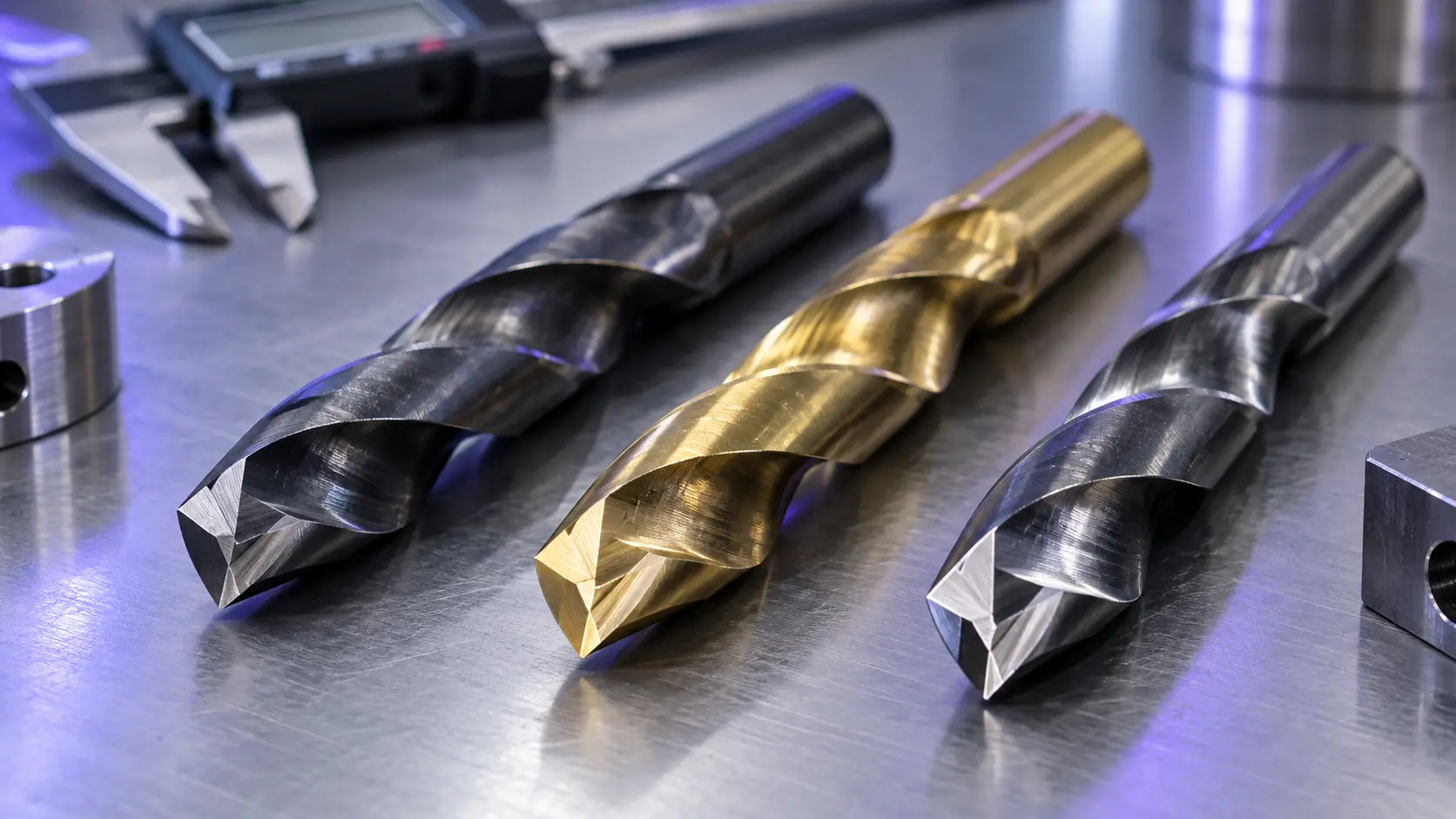
A useful cobalt-versus-titanium comparison must not stop at the substrate. Two drills made from the same grade of HSS can behave very differently if their point, flute and margin geometry are different. The cutting edge has to enter the workpiece cleanly, form a manageable chip and guide the drill without excessive rubbing. If geometry is wrong for the application, neither a cobalt alloy nor a TiN coating will deliver consistent performance.
Point Geometry and Entry Conditions
Point angle and split-point design influence centering, thrust and chip formation. A drill used on a flat, stable surface has a different entry condition from one used on an angled, interrupted or curved surface. For difficult entry conditions, a spot operation, fixture adjustment or purpose-designed point geometry may be more valuable than simply selecting a more expensive drill grade.
When a hole begins inaccurately, the result can include drill walking, uneven lip loading and early breakage. This is particularly important with smaller diameters and with carbide tools, which are less tolerant of lateral load. Buyers should specify whether the tool enters a flat surface, a casting skin, a weld area, a cross hole or an inclined surface.
Flutes, Chip Control and Hole Depth
Flutes carry chips away from the cutting zone. In shallow through holes, chip evacuation may be straightforward. In deeper blind holes, chips can pack, recut and increase heat rapidly. A cobalt drill with suitable flute geometry and a controlled peck cycle may outperform a poorly matched coated drill; equally, an internal-coolant carbide drill may be the better production choice where depth and volume demand it.
Always state the depth-to-diameter relationship when requesting a tool recommendation. “A 10 mm drill” is not enough information if one job is a shallow clearance hole and another is a deep blind hole in stainless steel. The same nominal diameter can require a different flute length, coolant approach and process plan.
Margins, Runout and Hole Quality
The margin guides the drill in the hole, while the holder and spindle control runout. Excessive runout causes one cutting lip to carry more load than the other, which shortens tool life and can create oversize holes. It is common to replace an HSS drill repeatedly when the real problem is a worn collet, contaminated taper or an unstable holder.
For repeat production, inspect the toolholding system before escalating tool material. A stable holder, clean interface and sensible projection protect both cobalt and titanium-coated drills. This system approach is particularly relevant in aerospace and other controlled applications, where tooling consistency affects downstream operations. See ZIROO’s aerospace tooling solutions for an example of application-led tool planning.
How Heat, Speed and Feed Affect Drill Life
Heat is one of the main reasons buyers compare cobalt with titanium. Yet heat is generated by the process, not just the workpiece. Excessive speed, insufficient feed, poor lubrication, chip recutting and a dull edge all increase rubbing. Rubbing creates heat without producing an effective chip, and that condition can quickly damage a coating or soften a conventional HSS edge.
A controlled feed is important because the drill must cut rather than polish the surface. This is especially relevant in stainless steel, which can work-harden locally when the drill dwells or rubs. A cobalt drill offers more heat resistance, but it should be paired with an appropriate speed-and-feed plan validated on the actual material grade.
Do not copy cutting data blindly from a different drill diameter, machine or material condition. Use supplier guidance as a starting point, then confirm the process through a controlled trial. Record tool life, hole quality, chip behavior, cycle time and failure mode. This creates a reliable basis for comparing cobalt HSS, coated HSS and carbide options.
How to Run a Fair Tool Trial
When a shop is deciding whether to replace titanium-coated HSS drills with cobalt drills, a small structured trial is more useful than changing tools based on appearance or a single operator impression. Test comparable tools under the same material, holder, coolant and programmed cycle. Changing several variables at once makes the result difficult to interpret.
- Define the material grade, condition and hardness for the test batch.
- Use the same hole diameter, depth, fixture and coolant method for each tool.
- Measure runout before the test and use the same holder condition.
- Record holes completed, cycle time, edge wear, hole size and visible finish.
- Note chips, noise, heat discoloration, burr formation and breakage events.
- Compare total usable output and process stability—not just whether one drill finished the first hole.
For a distributor or OEM program, this test record helps avoid generic claims and supports a repeatable recommendation for the end customer. It can also identify when the actual opportunity is a revised geometry, a different coating or a holder/process correction rather than an upgrade in substrate alone.
Common Purchasing Errors to Avoid
- Buying by color: gold appearance is not a full technical specification. Confirm the substrate and coating.
- Buying by diameter only: include tolerance, usable length, flute length, point style and shank requirement.
- Calling every tough job “hardened steel”: provide the actual grade and hardness; these determine feasibility.
- Ignoring the holder: runout and clamping can determine whether either drill performs consistently.
- Comparing price per piece only: compare cost per acceptable hole, downtime, regrinding and scrap exposure.
- Overlooking production volume: a tool suitable for maintenance work may not be suitable for an automated CNC cell.
Common Drilling Problems: Causes and Corrective Actions
| Symptom | Likely causes | What to check first |
|---|---|---|
| Blue or burnt drill | Excessive speed, insufficient feed, poor coolant, dull edge | Confirm speed/feed, coolant delivery and chip formation. |
| Rough hole wall | Runout, damaged cutting lips, vibration, chip recutting | Measure runout; inspect holder, drill edge and evacuation. |
| Drill breaks at entry | Walking, weak clamping, interrupted surface, excessive feed | Review spot/entry condition, workholding and alignment. |
| Rapid wear in stainless steel | Rubbing and work hardening, heat buildup, wrong drill grade | Check feed consistency and evaluate cobalt or carbide geometry. |
| Oversize or off-location hole | Runout, flexible setup, worn drill, incorrect cycle | Check spindle/holder runout and fixture rigidity before changing material. |
Many drill failures that appear to be a “material problem” are actually system problems. A premium drill can fail quickly when the setup is unstable; a correctly selected HSS drill can provide stable value when process fundamentals are in place.
How to Choose Drill Bits for Production Drilling
Use a structured selection process rather than ordering by diameter and material name alone.
- Identify the workpiece: material grade, hardness, condition and whether it work-hardens.
- Define the hole: diameter, tolerance, depth, blind or through-hole requirement, entry surface and exit condition.
- Review the equipment: manual or CNC machine, spindle speed range, holder type, runout level and workholding.
- Confirm coolant and chip evacuation: external coolant, internal coolant, peck cycle and chip-control requirements.
- Set the production target: prototype, recurring batch or continuous production; target cycle time and acceptable tool-change frequency.
- Evaluate total cost: tool price, regrinding, machine downtime, scrap exposure and process consistency.
If drilling is part of a larger machining route, tool selection should also fit the next operation. For example, reaming, threading or milling may impose requirements on hole size, finish or positional accuracy. Our overview of CNC cutting-tool types can help teams align the drill with the wider process plan.
B2B Buying Checklist for Cobalt and Titanium Drill Bits
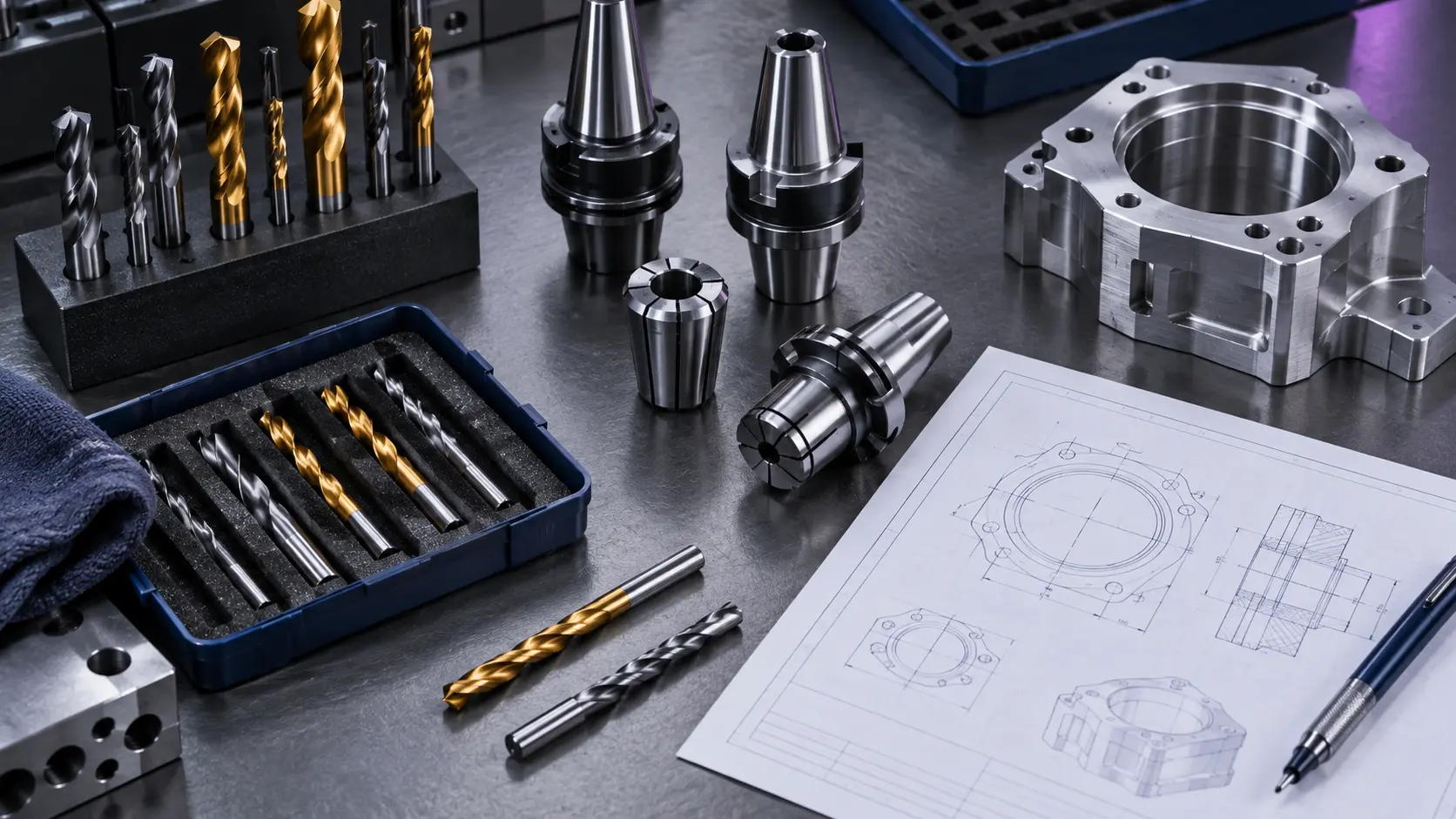
Send the following information when requesting a quote or custom recommendation:
- Workpiece material grade and hardness, if known.
- Hole diameter, tolerance, depth and blind/through-hole type.
- Machine type, spindle interface and holder style.
- Coolant method and current cutting problem.
- Expected quantity, production volume and target tool life.
- Drawing, existing tool specification or sample part where available.
This information allows a supplier to recommend the appropriate substrate, coating, point design and flute geometry. For non-standard requirements, explore ZIROO’s OEM/ODM custom tooling process before committing to a production order.
Frequently Asked Questions
Are cobalt drill bits better than titanium drill bits?
Not in every application. Cobalt HSS is generally more suitable where drilling heat and difficult metals are the main concern. Titanium-coated HSS can be an economical choice for general drilling in less demanding materials.
Can titanium drill bits drill stainless steel?
They may drill some stainless applications under controlled conditions, but cobalt HSS is often the more appropriate starting point for stainless steel. The final choice depends on grade, hardness, hole geometry and production requirements.
What is the best drill bit for hardened steel?
There is no single answer based on a material label alone. For higher hardness or demanding CNC work, solid carbide drills with suitable geometry and coating may be required. Verify the workpiece hardness and process conditions first.
Do cobalt drill bits need cutting fluid?
Many metal-drilling applications benefit from appropriate cutting fluid or coolant. It helps manage heat, improve lubrication and move chips. The correct approach depends on material, machine and hole design.
Why do cobalt drill bits break?
Typical causes include excessive runout, poor workholding, inadequate chip evacuation, incorrect feed, unstable entry and using a drill geometry that does not match the job.
Does the gold color mean a drill bit is titanium?
Gold color is commonly associated with TiN coating, but appearance alone does not confirm coating specification, thickness or tool quality. Check the supplier’s technical details.
Can a titanium-coated drill be reground?
Yes, but grinding removes the coating at the sharpened cutting edge. Its performance after regrinding should be evaluated as uncoated HSS at that edge.
What information is needed for a custom drill recommendation?
Provide material and hardness, hole size and depth, tolerance, machine, holder, coolant method, annual or batch volume, and details of the current tooling issue.
Choose by Process, Not by Marketing Label
Cobalt and titanium drill bits serve different roles. Titanium-coated HSS can be a sensible, economical option for routine drilling in common metals. Cobalt HSS is often a stronger choice when heat resistance, stainless-steel drilling and regrinding value matter. When production, hardness, hole depth or precision requirements rise, solid carbide should be evaluated as part of a complete process solution.
Need a drill recommendation for your material and production target? Send ZIROO TOOLS your workpiece material, hardness, hole size, hole depth, machine and coolant details. Our team can review the application and discuss standard or custom tooling options.