Drilling hardened steel is rarely a simple question of choosing the hardest available drill. A tool that performs well in a rigid CNC setup may chip quickly in a less stable machine. A cobalt drill that is economical for a short production run may not be the right choice for a hardened tool-steel component with tight hole-quality requirements.
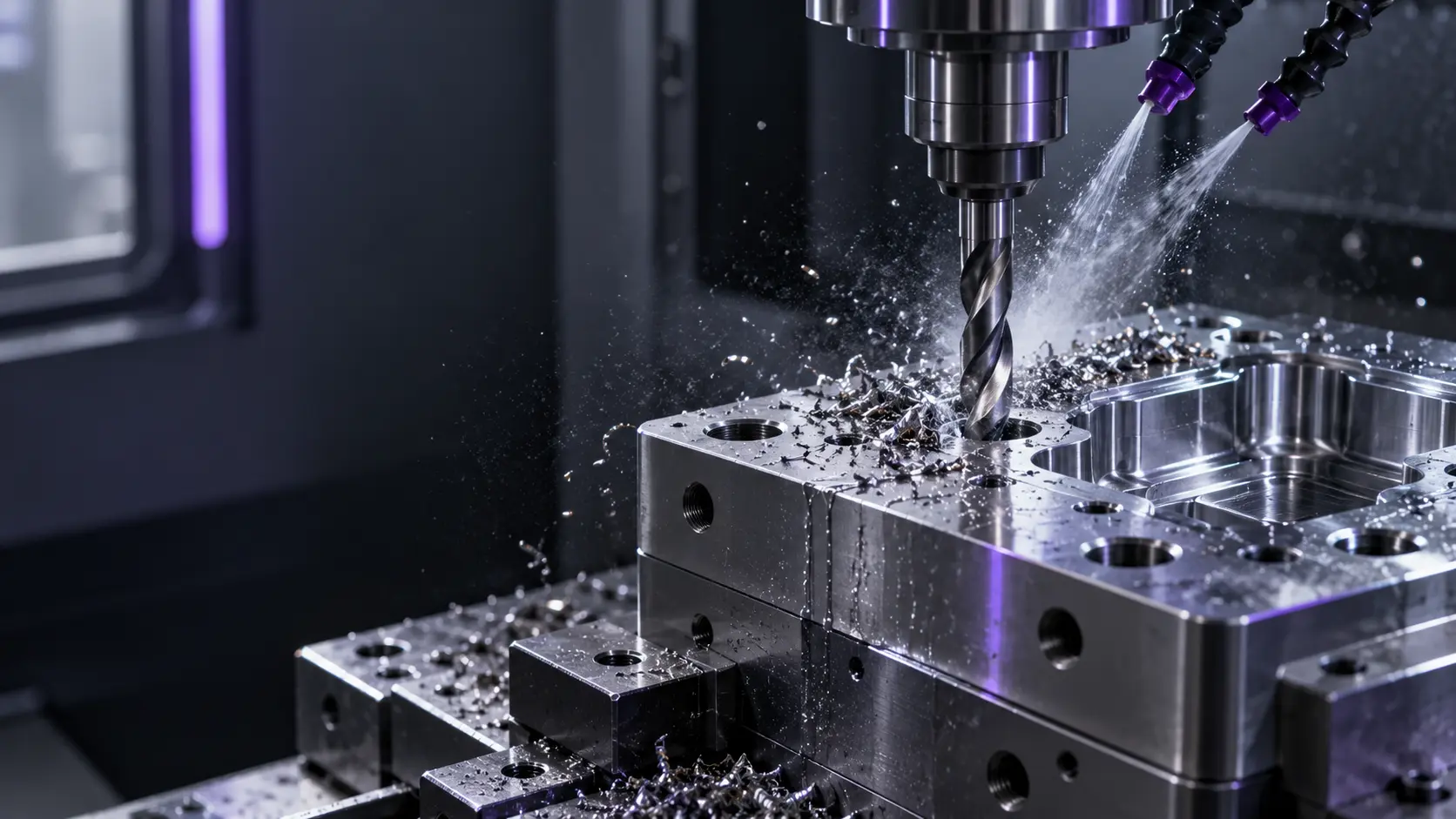
The right drill bits for hardened steel depend on the workpiece, the hole, and the drilling setup together. Before selecting a tool, review material hardness, hole diameter and depth, through-hole or blind-hole design, machine rigidity, runout, clamping, coolant delivery, and production volume.
Start With the Workpiece and the Drilling Setup
“Hardened steel” is a broad description, not a complete tool specification. Parts may be pre-hardened, through-hardened, case-hardened, or heat-treated after machining. Their behavior in drilling can vary even when their names sound similar.
Start with the material grade and confirmed hardness whenever possible. Then define the feature you need to produce. A short through-hole, a deep hole, a small-diameter hole, and a blind hole do not place the same demands on a drill.
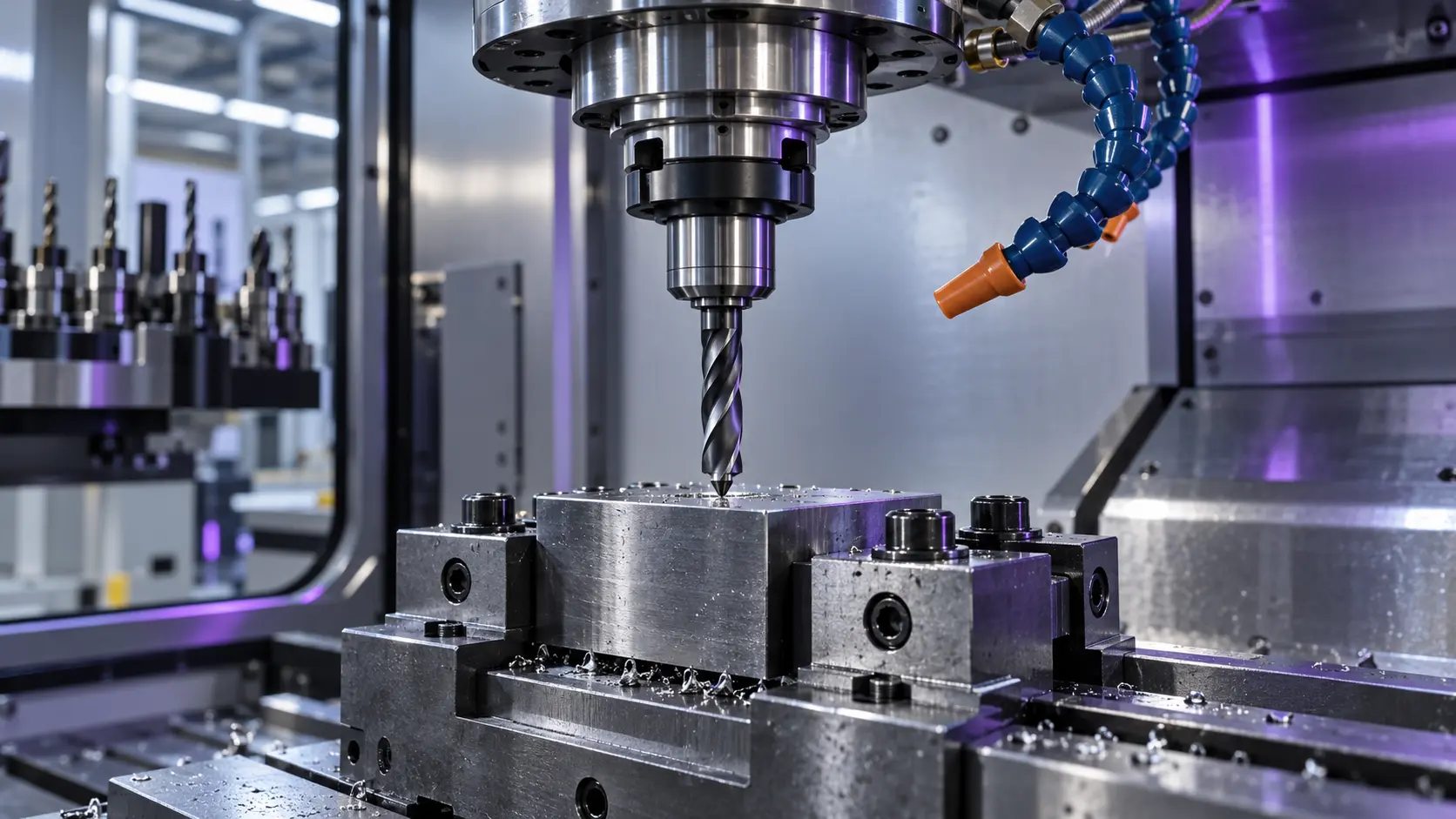
The machine setup is equally important. Solid carbide has excellent wear resistance, but it is less forgiving of vibration and excessive runout than tougher tool materials. A rigid spindle, stable holder, accurate clamping, and repeatable coolant delivery often matter as much as the drill material itself.
- Workpiece material and hardness condition
- Hole diameter, tolerance, depth, and whether it is through or blind
- Available spindle, holder, and workholding method
- Coolant type and delivery method
- Required batch size and expected process consistency
Cobalt vs. Carbide Drill Bits for Hardened Steel
Cobalt and carbide drills solve different problems. Neither is automatically the right answer for every hardened-steel job.
Cobalt drill bits
Cobalt drill bits are generally chosen when toughness, cost control, and some tolerance for less-than-perfect setup are important. They can be a practical option for suitable pre-hardened steels, repair work, and lower-volume applications. Their ability to tolerate minor instability can be useful where the machine or holder cannot provide the rigidity required by a carbide drill.
However, cobalt does not remove the need for disciplined process control. Rubbing instead of cutting creates heat, and heat can shorten tool life quickly. A dull tool, inadequate cooling, or chips trapped in the flute can lead to poor hole quality and accelerated wear.
Solid carbide drill bits
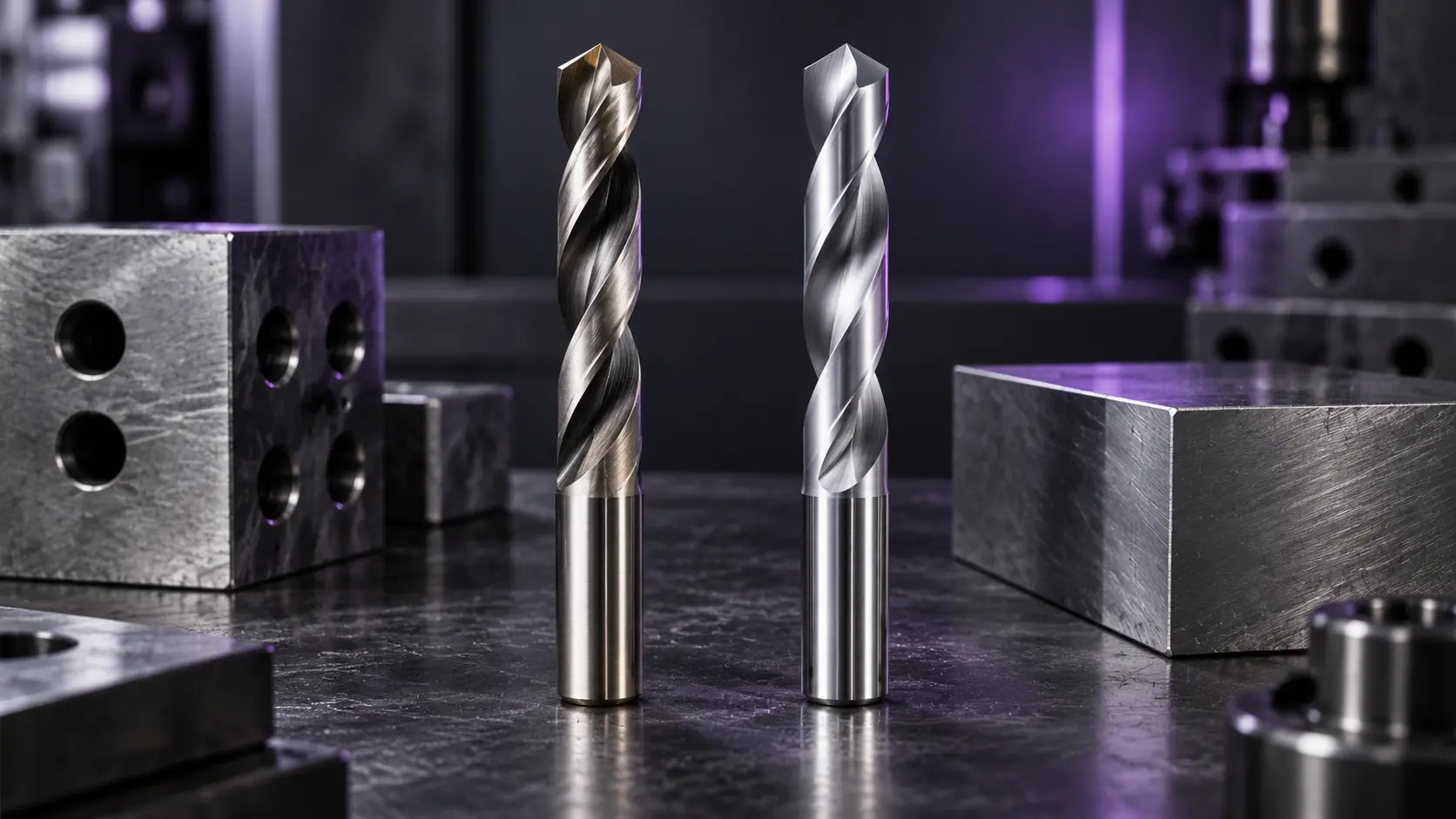
Solid carbide drill bits are typically selected where wear resistance, consistent geometry, and repeatable production are priorities. They are well suited to rigid CNC applications and demanding materials, provided that spindle condition, clamping, runout, and coolant are controlled.
The tradeoff is sensitivity. Carbide can chip or fracture if the drill enters an unstable setup, encounters interrupted contact, or is forced to operate with excessive vibration. For this reason, solid carbide is a system choice: the drill, holder, machine, coolant, and program must work together.
| Selection factor | Cobalt drill | Solid carbide drill |
|---|---|---|
| Relative toughness | More forgiving | More sensitive to vibration |
| Wear resistance | Moderate | High when the setup is stable |
| Best fit | Suitable lower-volume or less-rigid applications | Rigid CNC and repeatable production |
| Cost consideration | Lower initial tool cost | Higher initial cost, potential value in stable production |
Drill Geometry That Matters
Point geometry and starting stability
A suitable point geometry helps the drill engage the part predictably. Split-point or self-centering styles can reduce walking at the start of the hole when used in the right application. The final selection should consider the workpiece surface, required position accuracy, and whether spot drilling is used.
Flute design and chip evacuation
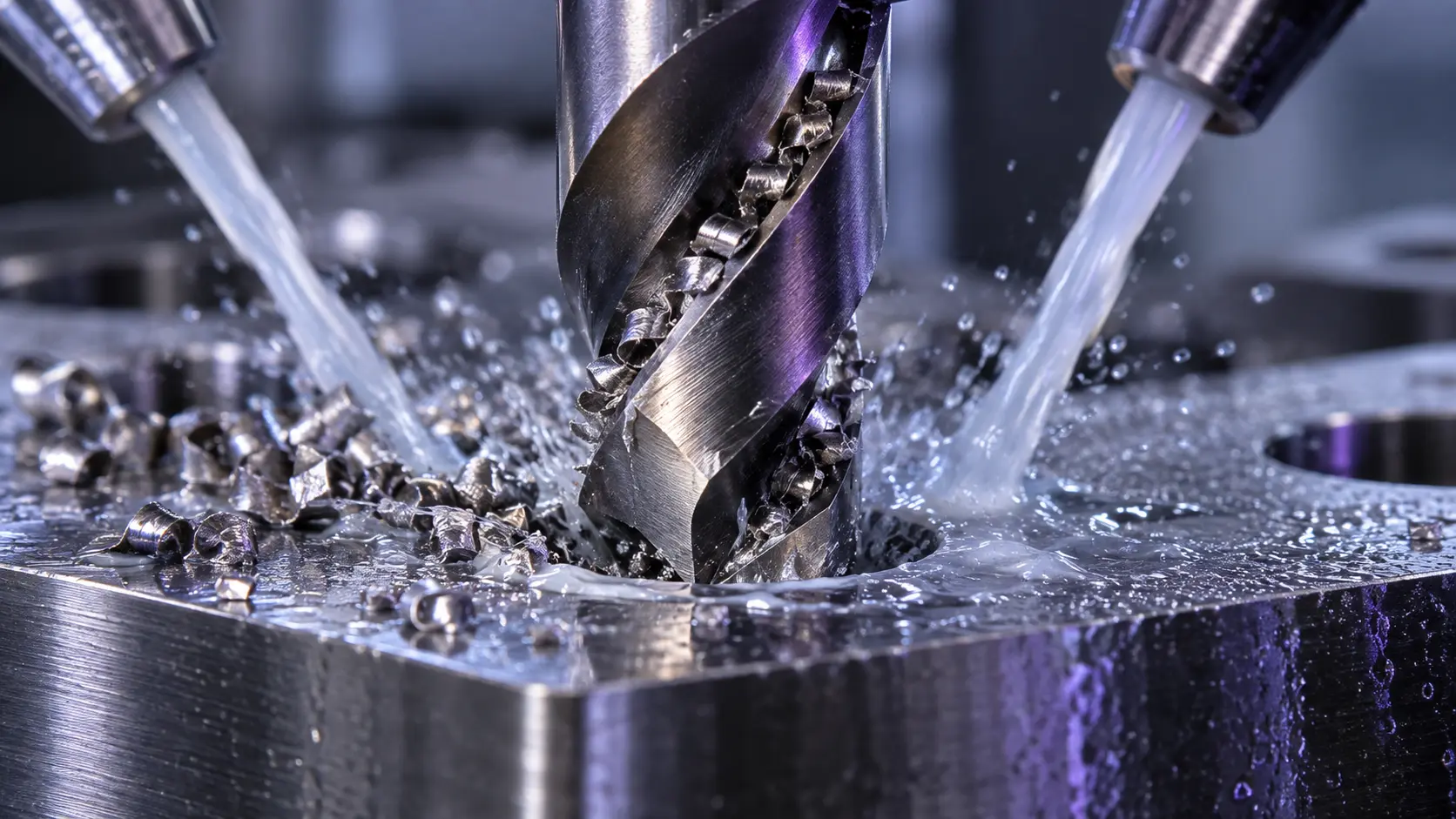
Hardened-steel chips can become a problem when they remain in the cutting zone. Poor evacuation increases rubbing, temperature, and the risk of chip packing. Hole depth, coolant method, and peck strategy should be considered together with the flute form. For deeper or blind holes, chip control becomes more important.
Coatings and coolant design
Heat-resistant coatings may help reduce friction and protect the cutting edge in appropriate conditions. They are not a substitute for correct speed, feed, and coolant. A poorly supported drill will still fail even when the coating is selected well.
Choose by Application, Not Material Alone
Short through-holes
For short through-holes, the primary risks are poor location, excessive runout, and exit burrs. Start with stable workholding and an appropriate entry strategy. If hole finish or diameter control is critical, plan the finishing step instead of expecting drilling alone to provide the final result.
Blind holes
Blind holes require space for chip accumulation and a controlled approach to depth. Bottom clearance, chip evacuation, and the drill-point form affect the usable depth and the shape left at the bottom of the hole.
Deep holes and small diameters
As hole depth increases or diameter becomes smaller, process tolerance narrows. Tool deflection, coolant access, chip transport, and runout become more influential. These applications deserve a dedicated technical review rather than a standard-drill selection based only on diameter.
Precision holes requiring finishing
When hole size, roundness, or surface quality is critical, drilling may be a preparation step rather than the final operation. A later carbide reaming tool or finishing process can help achieve the target result when it is matched to the material and required tolerance.
Why Drill Bits Fail in Hardened Steel
| Visible issue | Likely process area to inspect |
|---|---|
| Edge chipping | Runout, vibration, unstable entry, interrupted cut |
| Rapid wear or discoloration | Heat control, coolant direction, rubbing, unsuitable cutting conditions |
| Drill breakage | Chip packing, excessive depth demand, poor clamping, deflection |
| Oversize or irregular hole | Holder condition, runout, tool deflection, worn cutting edges |
Do not simply replace a failed drill with a harder one. First inspect the holder, spindle condition, part clamping, coolant path, chip behavior, and machining sequence. A process correction can be more valuable than changing to a more expensive grade.
A Practical Process for Better Hole Quality
- Confirm the material and its hardness condition.
- Define hole diameter, depth, tolerance, and surface requirement.
- Check clamping and holder condition; minimize runout before choosing a carbide solution.
- Select the drill material, geometry, and coolant strategy for the actual setup.
- Run a controlled first-piece trial and inspect tool wear, chips, and hole quality.
- Adjust the process based on evidence, then document the approved setup for repeat orders.
Avoid using a universal RPM or feed figure copied from an unrelated application. The correct cutting conditions depend on drill diameter, tool construction, coating, material condition, machine capability, coolant, and hole depth. Use the tool supplier’s recommendation as a starting point, then validate it in your own process.
When a Standard Drill Is Not Enough
A catalog tool can be effective for common diameters and shallow, stable holes. Custom engineering becomes more relevant when the part includes unusual diameter requirements, long reach, small diameters, blind-hole constraints, difficult chip evacuation, special entry surfaces, or a material condition that produces repeated failures. Explore ZIROO hole-making tools when reviewing available drilling and finishing options.
For a custom hardened-steel drilling project, provide the material grade and hardness, drawing, hole diameter, depth, tolerance, hole type, machine model, holder, coolant method, and annual or batch quantity. These custom tooling requirements allow the tooling team to evaluate geometry, substrate, coating, and process recommendations in context.
Information to Prepare Before Requesting a Quote
- Material grade and hardness, if known
- Hole diameter, depth, tolerance, and through/blind-hole condition
- Drawing or CAD file, where available
- Machine type, spindle, holder, and clamping method
- Coolant method and production quantity
- Current tool issue: wear, chipping, breakage, burrs, or hole-quality concern
FAQs
Can cobalt drill bits drill hardened steel?
Cobalt drills can be appropriate for certain hardened or pre-hardened steel applications, especially where toughness and cost control are important. Their suitability depends on actual hardness, the machine setup, cooling, and hole requirements.
Are solid carbide drill bits better for hardened steel?
Solid carbide can offer strong wear resistance and repeatability in a rigid, stable CNC process. It is not automatically better in every setup because it is more sensitive to vibration and runout.
Why does a drill bit burn when drilling steel?
Burning or discoloration usually indicates excess heat. Check whether the drill is cutting rather than rubbing, whether coolant reaches the cutting zone, whether chips are clearing, and whether the tool is already worn or unstable in the holder.
Do I need a pilot hole for hardened steel?
That depends on drill geometry, hole size, machine stability, and positioning requirement. Evaluate it as part of the full drilling strategy.
Can drilling alone meet a tight hole tolerance?
Drilling may not be the final process for a tight-tolerance or high-finish hole. Depending on the drawing and material, a finishing operation such as reaming may be considered after drilling.
What information should I send for a custom drill quote?
Send the part material and hardness, hole details, drawing, machine and holder information, coolant method, quantity, and the problem you are trying to solve.
Choose the Drill Around the Process
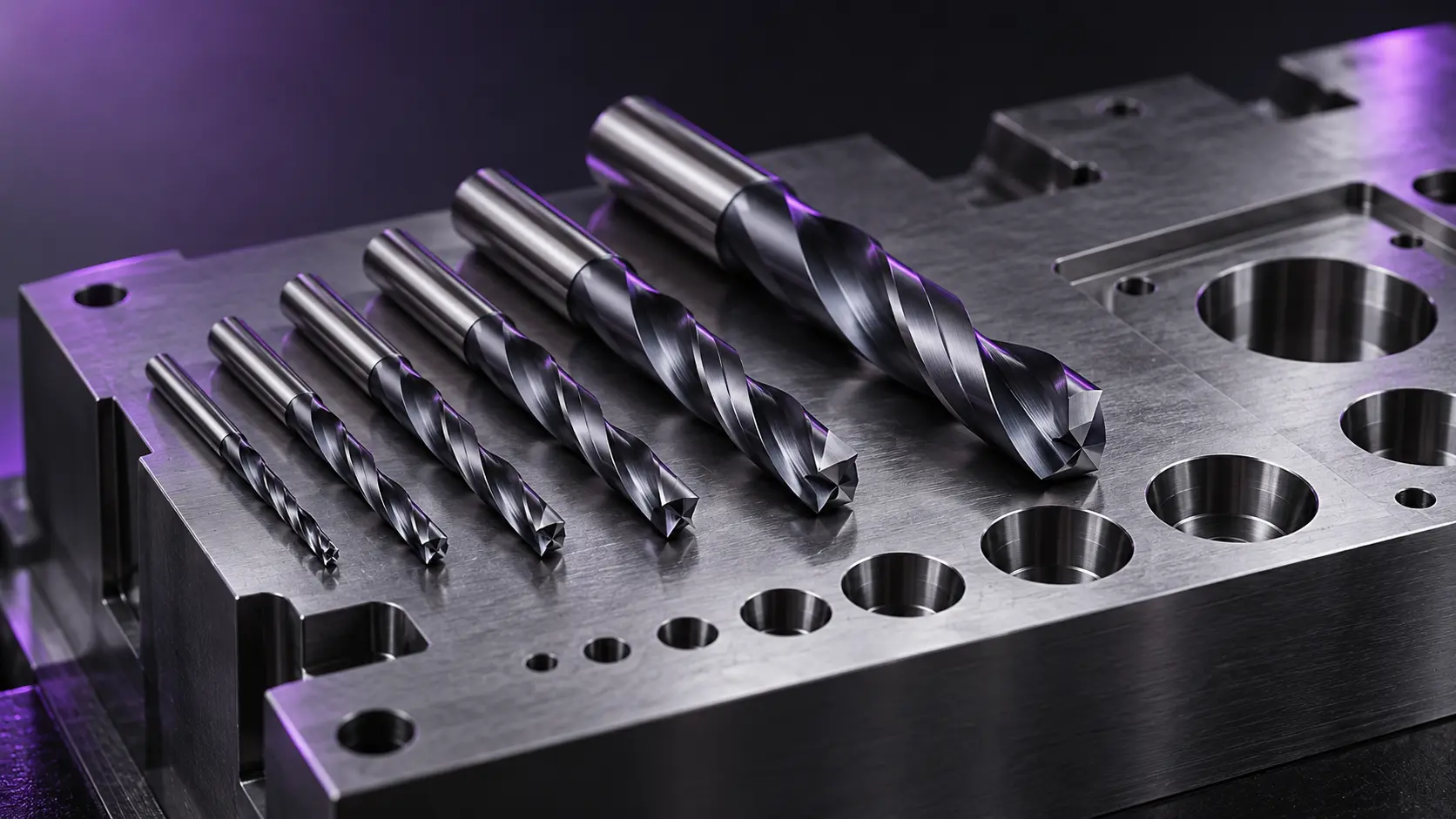
The best drill bits for hardened steel are selected around the complete process, not just the word “hardened.” Define the part, the hole, the machine, and the production requirement first. Then choose a cobalt or carbide solution with the geometry, coolant strategy, and stability the application requires.
For a tooling recommendation, prepare your drawing and machining details. ZIROO TOOLS can review the application and help you identify a practical drilling solution for your production conditions. For hardened components in mold production, see our mold machining solutions, or talk with our tooling team about your application.