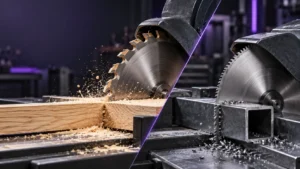
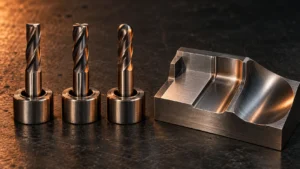
Choosing the right wood lathe turning tools affects far more than how quickly you can remove material. Tool geometry, edge condition, workpiece orientation, and presentation angle all influence control, surface quality, and the likelihood of a catch. A tool that works well for a furniture spindle may be unsuitable for the end grain inside a bowl, while a cutter that simplifies repetitive roughing may not produce the same surface as a freshly sharpened gouge.
This guide explains the main types of woodturning tools, how to identify them, where each one is normally used, and how high-speed steel tools compare with replaceable carbide-insert tools. It also provides a practical selection chart, troubleshooting guidance, maintenance points, and a B2B purchasing checklist for distributors, woodworking factories, equipment suppliers, and private-label buyers.
What Are Wood Lathe Turning Tools?
A wood lathe rotates the workpiece while the operator presents a supported tool to the moving wood. Unlike many stationary cutting systems, successful woodturning depends on the relationship between the rotating grain, the tool rest, the cutting edge, and the operator's controlled movement. For this reason, tools that look similar can behave very differently in use.
Cutting Tools vs. Scraping Tools
Traditional gouges and skew chisels are generally used as cutting tools. When their bevel and cutting edge are presented correctly, they slice wood fibers and can leave a clean surface. Scrapers use a prepared burr or edge to refine shapes and work areas that may be difficult to reach with a gouge. Carbide-insert tools are commonly presented in a scraping or controlled cutting action, depending on cutter geometry and tool design.
Neither method is automatically superior. A sharp cutting edge can reduce sanding on suitable work, while a stable scraper or carbide tool can simplify shaping, difficult grain, internal profiles, and repeatable production. The correct choice depends on the workpiece and the required finish.
Spindle Turning vs. Faceplate Turning
In spindle turning, the grain normally runs parallel to the lathe bed and the blank is supported between centers or held for a long-axis operation. Furniture legs, handles, pens, balusters, and rolling pins are common examples. In faceplate or bowl turning, the grain orientation and cutting forces differ because the work is commonly mounted from one end and shaped across side grain and end grain.
This distinction matters. A spindle roughing gouge is designed for long-grain spindle work and should not be treated as a bowl roughing tool. Bowl gouges have a stronger round-section shaft and deeper flute suited to the forces involved in bowl and vessel work.
Hand-held turning tools also differ from machine-mounted woodworking router bits and woodworking milling cutters. If your process uses a CNC router rather than a lathe, compare the cutting direction and material requirements in our guide to the types of wood router bits.
Quick Selection Chart for Wood Lathe Turning Tools
| Machining task | Typical tool | Main purpose | Important limitation |
|---|---|---|---|
| Turn a square spindle blank round | Spindle roughing gouge | Rapid stock removal on long-grain spindle work | Not intended for bowl or faceplate work |
| Create beads, coves, and spindle details | Spindle gouge | Controlled profiling and detail work | Not designed for heavy roughing |
| Shape bowls and platters | Bowl gouge | Exterior curves, interiors, and hollow forms | Flute and grind must suit the cut and access |
| Produce a fine spindle surface | Skew chisel | Planing cuts, beads, shoulders, and V-cuts | Requires careful edge presentation |
| Cut grooves, establish diameters, or separate work | Parting tool | Depth control, shoulders, tenons, and parting | Narrow cuts can bind if clearance is poor |
| Refine internal curves or difficult grain | Scraper | Shape correction and finishing | A dull or poorly prepared edge increases heat and tear-out |
| Reach deep vessels | Hollowing tool | Internal material removal with extended reach | Requires suitable support and controlled overhang |
| Use replaceable cutting edges | Carbide-insert turning tool | Repeatable roughing, shaping, or detailing | Cutter shape, mounting, and presentation must match the task |
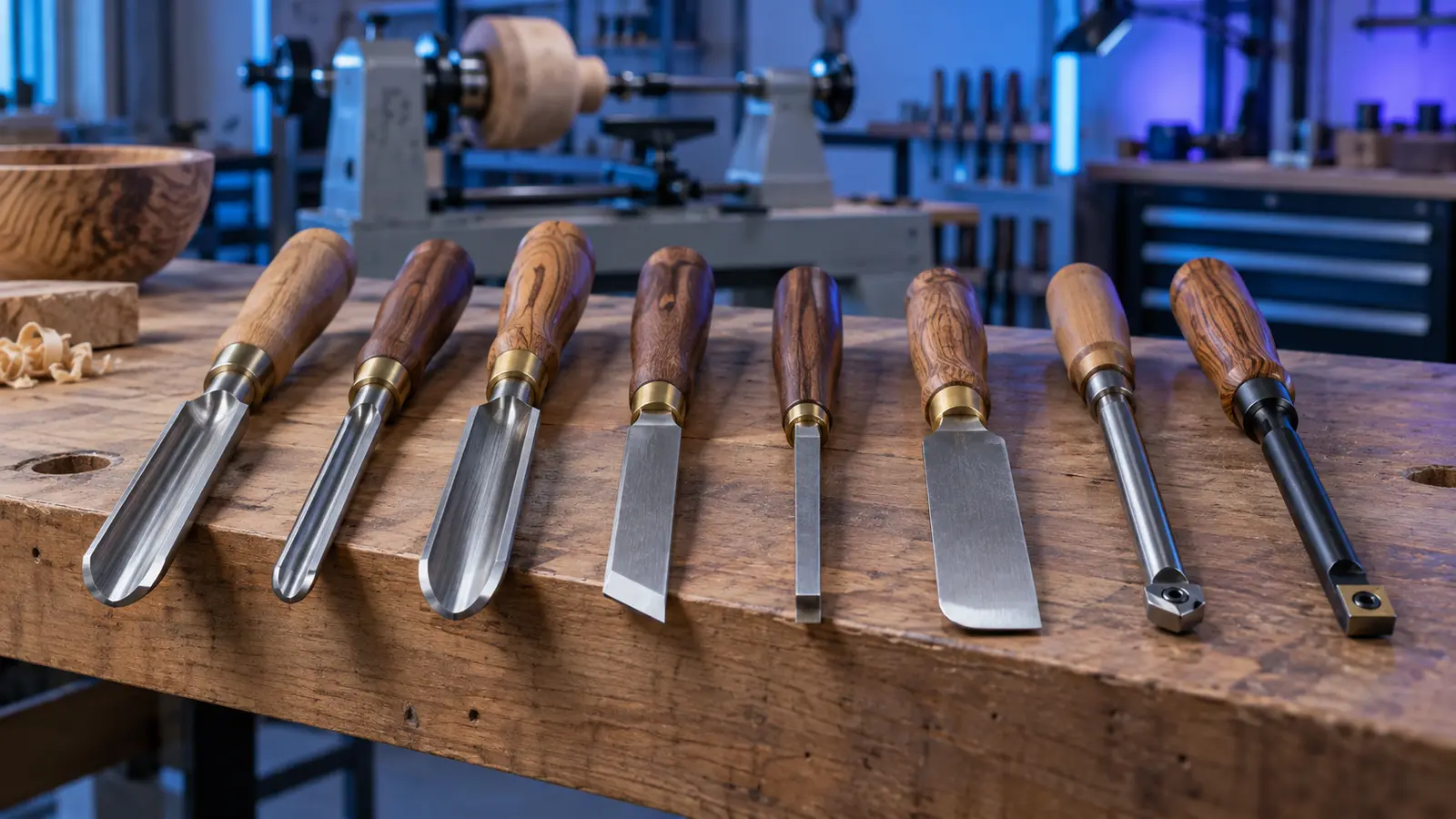
Eight Common Types of Wood Lathe Turning Tools
1. Spindle Roughing Gouge
A spindle roughing gouge has a wide flute and a broad cutting edge. Its primary job is to remove the corners from a square or irregular spindle blank and establish a cylinder. The wide profile can remove material efficiently while the tool is supported close to the work.
Use it only for appropriate long-grain spindle work. It is not a bowl gouge, and its tang and cross-section are not designed for the lateral forces of faceplate turning. Buyers should compare flute width, wall thickness, steel specification, handle length, and the consistency of the factory grind.
2. Spindle Gouge
A spindle gouge is normally made from round bar with a shallower flute than a bowl gouge. It is used for controlled details such as beads, coves, transitions, and decorative profiles on furniture components and other spindle work.
The nose shape and wing profile influence how easily the tool enters tight curves. A spindle gouge is more precise than a roughing gouge, but it should not be expected to remove large volumes of material with the same stability. When specifying a product, confirm the nominal bar diameter, flute profile, grind style, usable length, handle, and sharpening requirements.
3. Bowl Gouge
A bowl gouge has a deep flute machined in a round, comparatively strong shaft. It can shape the outside of bowls and platters, form curves, and remove material from interiors. U-shaped, V-shaped, and parabolic flutes behave differently, and the grind can be adjusted for general bowl work, swept-back profiles, or access to steeper walls.
No single bowl gouge profile is ideal for every vessel. A buyer should consider bowl diameter and depth, green or dry wood, entry clearance, expected surface quality, shaft diameter, flute shape, and how the end user will reproduce the grind. For production supply, consistent flute geometry matters because it affects sharpening and tool behavior from batch to batch.
4. Skew Chisel
The skew chisel has a flat blade with an angled cutting edge. On spindle work it can make planing cuts, form beads, establish shoulders, and cut V-grooves. When controlled correctly, it can leave a surface that needs little sanding.
The same geometry that produces a clean surface also makes presentation important. Bringing the edge into the work too aggressively or allowing an unsupported portion of the edge to engage can cause a catch. Buyers should assess blade width and thickness, rectangular or oval section, edge straightness, bevel consistency, handle control, and steel quality.
5. Parting Tool
A parting tool is a narrow tool used to cut grooves, establish reference diameters, form shoulders, prepare tenons, and separate finished spindle work from waste. Thin tools reduce material loss, while wider beading-and-parting tools provide additional control for sizing and decorative features.
The cut must have enough clearance to prevent the blade from binding as it moves deeper. For purchasing, confirm blade thickness, profile, relief geometry, steel, handle length, and whether the tool is intended for thin parting, sizing, beading, or a combination of operations.
6. Woodturning Scrapers
Scrapers are commonly made from flat bar and supplied with square, round-nose, radiused, or specialized profiles. A properly prepared burr removes fine material and helps refine bowl interiors, boxes, goblets, end grain, and complex curves.
A scraper is not simply a blunt tool pushed against the wood. Edge preparation, tool-rest support, presentation angle, and contact area affect heat, vibration, and surface quality. A larger contact area can generate more force, so the cross-section and handle must provide adequate stiffness.
7. Hollowing Tools
Hollowing tools are designed to remove material from the inside of vessels where a standard gouge cannot maintain useful support or visibility. Designs may use an HSS cutter, scraper tip, carbide insert, articulated head, or a captured system for demanding overhang.
Internal depth increases leverage on the operator and tool. The required shaft size, cutter geometry, handle length, tool-rest arrangement, and maximum practical overhang should therefore be evaluated together. For custom sourcing, a drawing of the vessel profile and the smallest access opening is more useful than a general request for a “deep hollowing tool.”
8. Carbide Insert Woodturning Tools
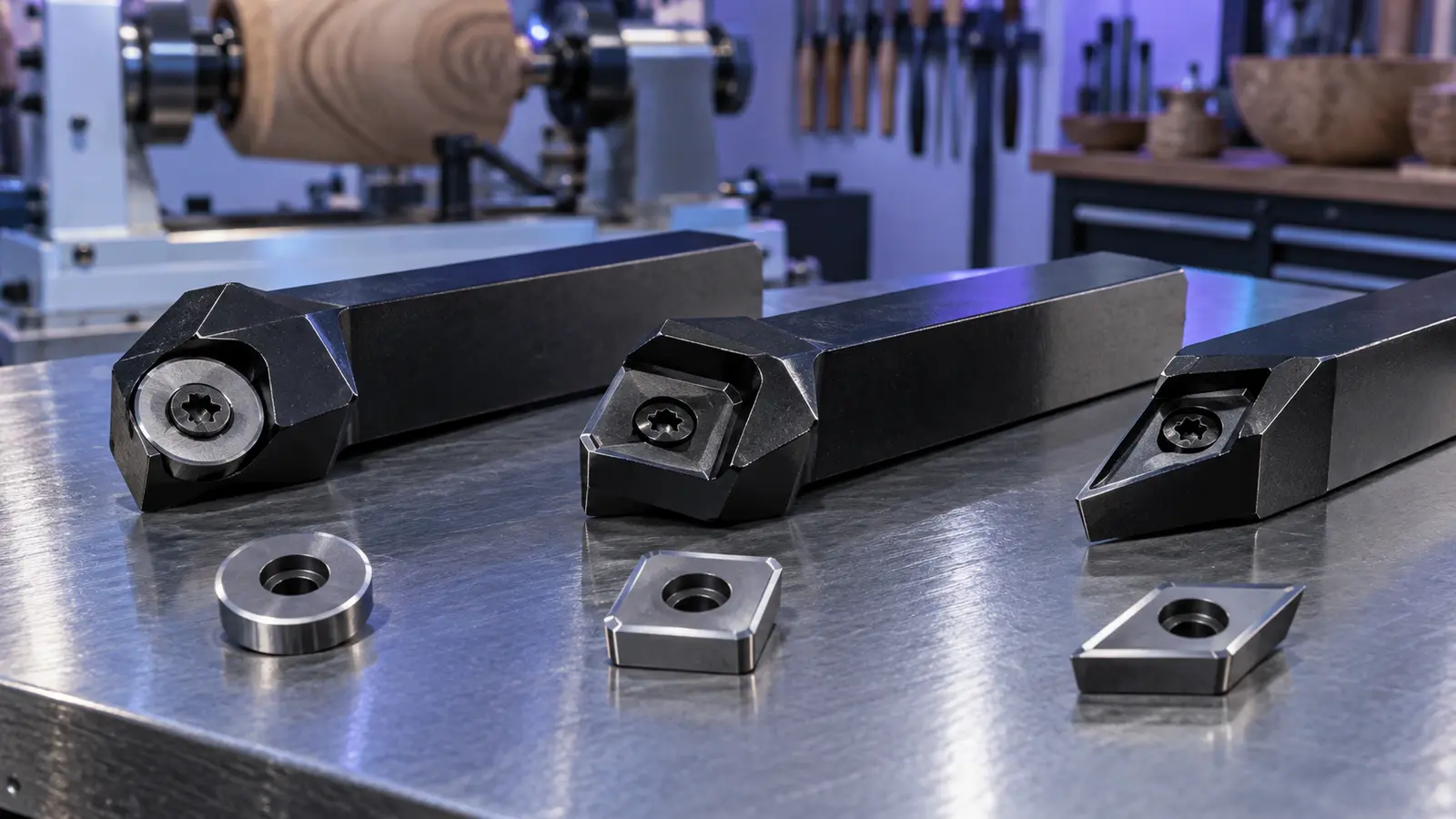
Carbide woodturning tools use a replaceable insert secured to a steel shaft. When one cutting section becomes worn, many inserts can be indexed to expose another edge. This reduces the need to recreate a traditional grind and can support consistent maintenance routines in training environments or batch production.
Round inserts are commonly selected for curved profiles and finishing passes, square inserts for stable stock removal and straight features, and diamond- or detail-shaped inserts for narrow grooves and fine access. These are general categories rather than universal rules. Clearance angle, rake, edge preparation, insert seat, screw, shaft orientation, and wood material all affect performance.
How to Identify Woodturning Tools
Look at the Flute
Gouges are easiest to distinguish by flute depth and cross-section. A spindle gouge normally has a relatively shallow flute for detailed long-grain work. A bowl gouge has a deeper flute in a round shaft. A spindle roughing gouge is broader and is often formed from a different blank shape. Do not identify a tool only by its width; inspect how the flute, shaft, and tang are constructed.
Examine the Cutting-Edge Profile
A straight angled edge suggests a skew chisel. A very narrow double-bevel edge suggests a parting tool. A flat bar with a square, radiused, or round end is likely a scraper. On carbide tools, round, square, radiused-square, and diamond inserts provide another quick visual reference. Gouge grinds can vary widely, so the edge profile should always be considered together with the flute.
Check the Shaft, Tang, and Handle
Longer handles and larger shafts help resist leverage during heavier cuts or extended reach. Detail tools may use smaller profiles for access. The tang must be securely fitted to the handle, and an insert tool must have a clean, stable cutter seat and compatible screw. Tool identification should therefore include the entire assembly, not just the visible edge.
HSS vs. Carbide Woodturning Tools
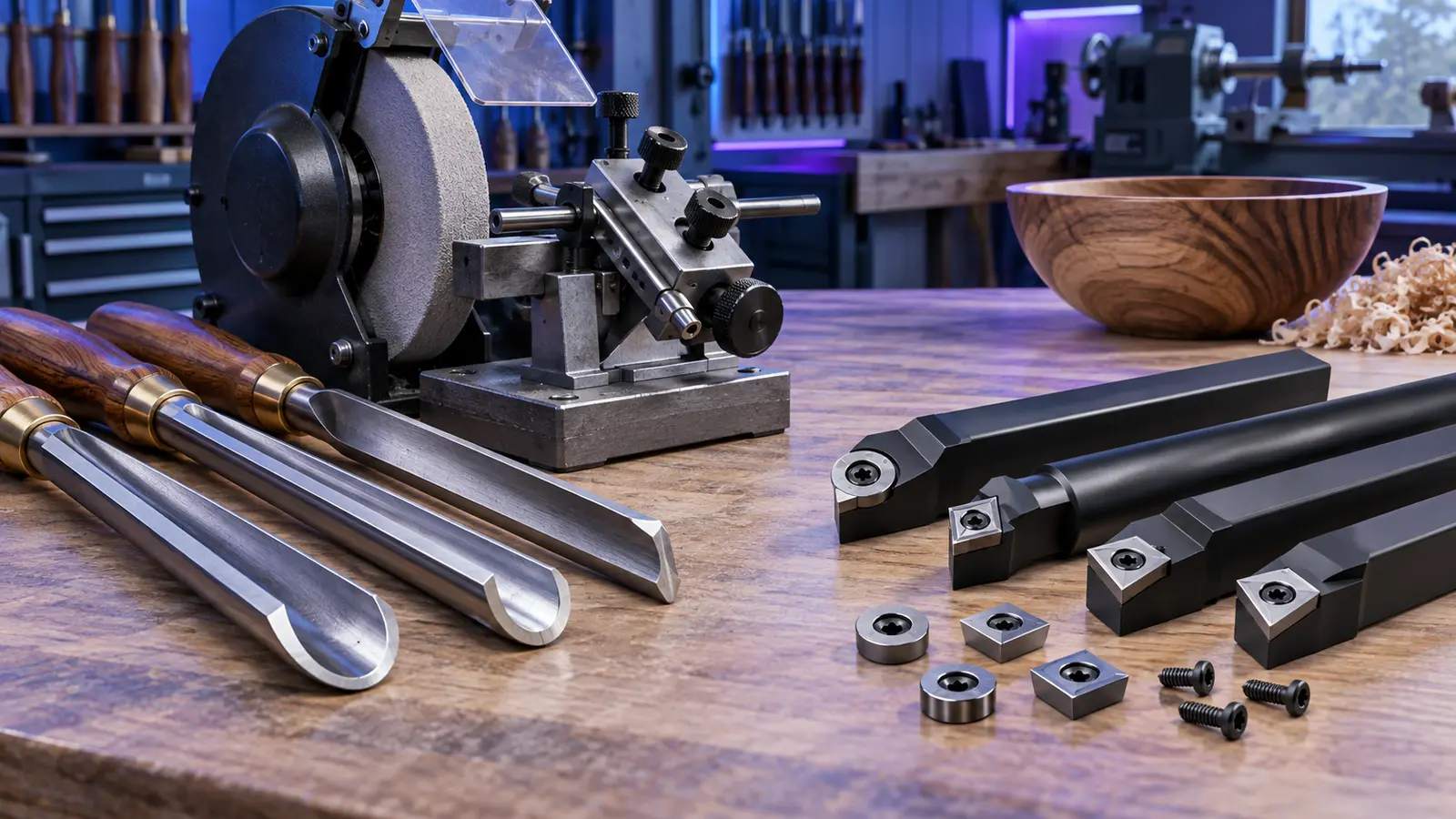
| Decision factor | HSS turning tools | Carbide-insert turning tools |
|---|---|---|
| Edge maintenance | Requires periodic sharpening and grind control | Insert is normally indexed or replaced |
| Operator skill | Requires bevel control and sharpening knowledge | Often simplifies routine edge replacement, but still requires correct presentation |
| Surface generation | Capable of a fine slicing cut with a sharp, suitable grind | Depends strongly on insert geometry, edge preparation, and cutting method |
| Support equipment | Usually needs a sharpening system and consistent setup | Needs compatible inserts, screws, and clean seating surfaces |
| Production control | Performance can vary with sharpening consistency | Replacement edges can simplify standardized tool changes |
| Cost analysis | Include sharpening time, abrasive use, and tool consumption | Include insert price, number of usable edges, and replacement availability |
When HSS Is the Better Choice
HSS is often preferred when an experienced operator wants a specific grind, a slicing cut, and the flexibility to reshape the edge for different work. It can be a strong choice for spindle details, controlled bowl cuts, and applications where the best possible off-tool surface reduces later sanding.
When Carbide Is the Better Choice
Carbide inserts can be attractive when a team wants repeatable edge changes, limited sharpening work, easily stocked replacement cutters, or a range of cutter shapes on a common handle system. They are also useful for difficult access and applications where a stable scraper-style presentation is appropriate.
Why Neither Material Is Always Better
Material alone does not determine the result. A poorly matched carbide insert can produce excessive force or tear-out, while an incorrectly sharpened HSS tool can be difficult to control. Compare the full system: edge geometry, workpiece, operator, maintenance method, replacement availability, and required finish.
How to Use Wood Lathe Turning Tools Safely
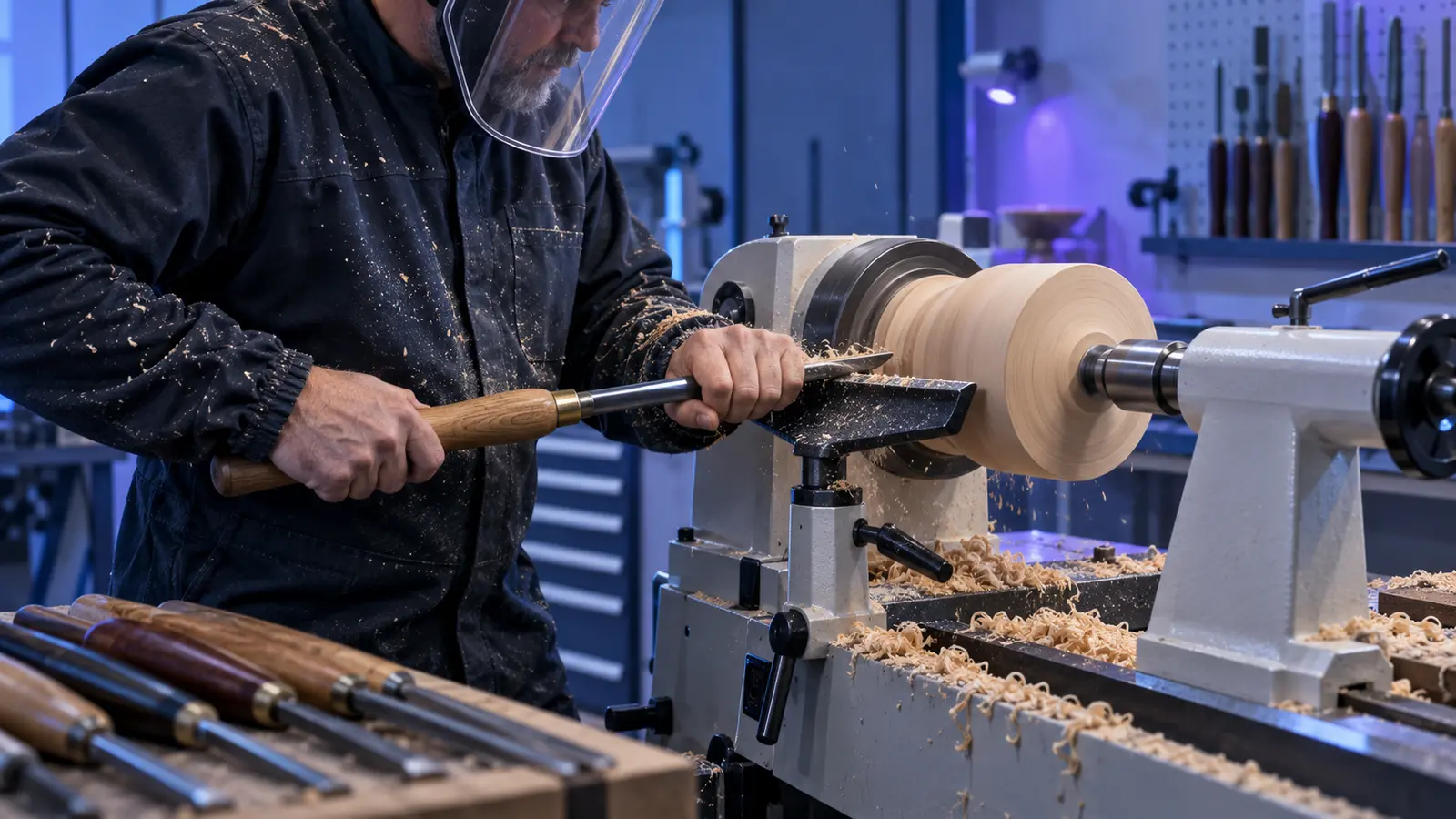
Woodturning involves a rotating workpiece and exposed cutting edges. The following points are general guidance only. Operators should follow the lathe manufacturer's manual, applicable workplace rules, and qualified training. Wear eye and face protection appropriate to lathe work, secure loose clothing and long hair, and use guards and dust controls specified for the machine and material.
Inspect the Blank and Workholding
Check the blank for cracks, loose bark, embedded metal, unstable glue joints, and other defects. Confirm that the chuck, centers, faceplate, or other workholding method is appropriate and secure. Rotate the workpiece by hand before starting to make sure it clears the tool rest and machine components.
Set the Tool Rest Correctly
Position the rest close enough to provide stable support without contacting the rotating blank. Stop the machine before moving or locking the rest. As the workpiece diameter changes, reset the support position instead of allowing unnecessary tool overhang.
Present the Edge Gradually
Place the tool securely on the rest before engaging the wood. For a conventional cutting tool, establish stable bevel support and introduce the edge gradually. For a scraper or carbide tool, follow the presentation intended for that cutter and holder. Avoid sudden, unsupported contact.
Respect Grain Direction and Machine Limits
Cutting direction should support the fibers rather than lift them whenever the shape permits. Start cautiously with an irregular or unbalanced blank and use a speed appropriate for the machine, workpiece diameter, mounting, balance, and material. A single universal speed value cannot safely cover every setup.
How to Choose the Right Tool for Your Project
Furniture Legs, Handles, and Spindles
Begin with a spindle roughing gouge to establish a cylinder, then use a spindle gouge and skew chisel for curves, beads, shoulders, and finishing. A parting tool establishes reference diameters and separates waste. For production, use gauges or templates so tool selection and finished dimensions remain consistent across operators.
Bowls and Platters
Use a bowl gouge or suitable carbide tool for the main exterior and interior shape. Scrapers can refine internal curves and difficult areas. Match shaft size and flute or cutter geometry to the bowl depth, access angle, and expected cutting force.
Vases and Deep Hollow Forms
Deep vessels require a dedicated hollowing system with enough stiffness and handle leverage. Provide the supplier with the maximum depth, opening diameter, internal profile, wood type, and support arrangement. These dimensions help determine shaft diameter, cutter angle, and holder design.
Detailed Profiles and Decorative Features
A spindle gouge, narrow parting tool, skew chisel, or diamond-shaped carbide insert may be appropriate depending on access and grain orientation. Prioritize edge visibility and control instead of choosing the smallest cutter without considering shaft stiffness.
Repetitive or Batch Production
For repeated parts, compare tool-change time, sharpening consistency, insert indexing, replacement stock, dimensional repeatability, and operator training. The lowest purchase price may not provide the lowest cost per finished part if the tool causes extra sanding, frequent setup changes, or unplanned downtime.
Need help matching a cutting tool to your wood material, machine, or drawing? Send ZIROO TOOLS your application details for an initial tooling review.
Common Woodturning Problems and Solutions
| Problem | Possible causes | What to check |
|---|---|---|
| Tool catch | Aggressive engagement, unsupported edge, excessive overhang, or the wrong tool for the grain orientation | Tool-rest position, support, cutter presentation, and tool type |
| Tear-out | Dull edge, cutting against unsupported fibers, excessive feed, or unsuitable geometry | Edge condition, cutting direction, pass depth, and cutter profile |
| Chatter or ripples | Unbalanced work, weak mounting, long overhang, flexible shaft, or interrupted cutting | Workholding, blank balance, support, shaft stiffness, and feed continuity |
| Rough surface | Worn edge, inconsistent motion, large contact area, or incorrect tool selection | Sharpen or index the edge and reduce the cut before changing abrasives |
| Heat or burnishing | Dull edge, rubbing, excessive pressure, or poor chip clearance | Edge preparation, cutter contact, and feed |
| Damaged carbide insert | Impact, loose screw, contaminated seat, excessive force, or unsuitable insert | Insert, seat, screw condition, tightening method, and application match |
Maintenance of Woodturning Tools
Sharpening HSS Tools
Maintain a repeatable bevel and grind suited to the application. A jig can help standardize the setup across operators. Remove only enough material to restore the edge, check for overheating, and inspect the flute and shaft for damage. In a factory, record the approved grind or use a reference tool to reduce variation.
Rotating and Replacing Carbide Inserts
When performance declines, inspect the active edge before rotating the insert. Clean the insert seat, examine the screw, and make sure the cutter sits flat and in the intended orientation. Replace damaged hardware rather than compensating with excessive tightening. Use only inserts and screws that match the holder design.
Storage and Inspection
Protect edges from contact with other tools, keep steel parts dry, and store cutters so operators can identify them without handling exposed edges. Before use, inspect the shaft, handle, tang, insert seat, screw, and cutting edge. Separate questionable tools until they have been evaluated.
B2B Buying Checklist for Wood Lathe Turning Tools
For a distributor, brand owner, or woodworking factory, a useful quotation needs more than a tool name. Confirm the following points before approving a sample or production order:
- Application: spindle, bowl, platter, hollow vessel, detailing, roughing, or finishing.
- Wood material: species, hardness, moisture condition, glued blank, coating, or contamination risk.
- Workpiece information: drawing, dimensions, grain orientation, internal profile, and access restrictions.
- Machine and holder: lathe type, tool-rest arrangement, handle system, shank section, and available clearance.
- Tool specification: HSS grade or carbide insert geometry, shaft material, dimensions, flute or edge profile, and handle.
- Replacement system: insert code, screw compatibility, number of usable edges, and reorder availability.
- Quality verification: dimensional inspection, edge consistency, flute or seat geometry, assembly fit, and sample testing.
- Production consistency: how the supplier controls material, geometry, grinding, marking, and packaging between batches.
- OEM and custom tooling requirements: drawings, private labeling, packaging, cutter shape, shaft, handle, and prototype process.
- Commercial terms: sample quantity, MOQ, production lead time, replacement parts, packing, and shipment protection.
- Nonconformance process: evidence required, traceability, response procedure, and replacement terms.
- Total cost: purchase price, usable edges, sharpening, tool-change time, sanding, reject rate, and downtime.
When requesting a custom tool, send the wood type, machine information, workpiece drawing, current tool specification, problem description, desired finish, and expected quantity. Photos or a short machining video can clarify access, chip behavior, and tool presentation, but they should complement rather than replace dimensional information.
Frequently Asked Questions
What are the essential wood lathe turning tools?
A practical core set normally includes a spindle roughing gouge, spindle gouge, bowl gouge, skew chisel, parting tool, and scraper. The correct set depends on whether you produce spindles, bowls, hollow forms, or repeated industrial parts. Carbide tools may supplement or replace some operations when their geometry suits the work.
What is the difference between a bowl gouge and a spindle gouge?
A bowl gouge generally has a deeper flute and stronger round shaft for bowl and faceplate work. A spindle gouge has a shallower flute suited to beads, coves, and details on long-grain spindle work. They are not interchangeable simply because their cutting edges look similar.
Can a spindle roughing gouge be used for bowls?
No. A spindle roughing gouge is intended for long-grain spindle work. Its construction is not designed for the lateral forces and grain orientation involved in bowl turning. Use a bowl gouge or another tool specifically designed for faceplate work.
Are carbide woodturning tools better than HSS tools?
Not in every application. Carbide inserts simplify edge replacement and can support standardized maintenance. HSS tools allow specialized grinds and can produce excellent slicing cuts. Compare finish, operator skill, maintenance, replacement availability, and cost per finished part.
Which carbide insert shape should I choose?
Round cutters are commonly used for curves, square or radiused-square cutters for stable material removal, and diamond-shaped cutters for narrow details. The correct choice also depends on rake, clearance, edge preparation, holder orientation, wood, and required surface quality.
Why does a wood lathe tool catch the workpiece?
Common causes include unsupported edge contact, an aggressive entry, excessive overhang, incorrect tool-rest position, unsuitable cutting direction, or the wrong tool for the operation. Stop the machine and review the complete setup rather than repeating the same cut with more force.
How often should woodturning tools be sharpened or replaced?
There is no universal interval. Inspect the surface finish, required cutting pressure, edge condition, heat, vibration, and consistency. Sharpen HSS before a dull edge affects control. Rotate or replace a carbide insert when its active edge is worn, chipped, or no longer produces the required result.
What information should I send when ordering custom woodturning tools?
Send the workpiece drawing, wood material, grain orientation, machine and tool-rest information, current tool or insert specification, machining problem, required finish, and expected quantity. Include internal profiles and access dimensions for hollowing tools.
Conclusion
No single set of wood lathe turning tools can cover every operation equally well. Start with the workpiece orientation and desired shape, then select the tool type, shaft, edge geometry, and material. For production use, also consider maintenance consistency, replacement availability, operator training, surface quality, and total cost per part.
Contact ZIROO TOOLS with your drawing, wood material, machine information, current tooling specification, and expected quantity. Our team can review the application and discuss a suitable standard or custom tooling approach.