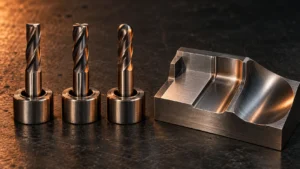
Knowing how to choose the right drill bit can reduce tool changes, broken edges, poor hole quality, and unnecessary machining cost. For metalworking, the most common material choices are high-speed steel (HSS), cobalt-alloy HSS, and carbide. Each substrate has a different balance of toughness, heat resistance, wear resistance, speed, and price.
The correct choice is not simply “the hardest drill is the best.” You should match the drill bit to the workpiece, hole diameter and depth, machine rigidity, workholding, coolant, production volume, and tolerance. This guide gives B2B buyers and CNC engineers a practical way to choose between HSS, cobalt, and carbide drill bits.
Quick Selection: HSS vs Cobalt vs Carbide
| Factor | HSS | Cobalt HSS | Carbide |
|---|---|---|---|
| Initial cost | Low | Medium | High |
| Toughness | Highest | Good | Lowest; needs a rigid setup |
| Heat resistance | Moderate | Better than HSS | Very high |
| Wear resistance | Moderate | Good | Excellent |
| Typical use | General work and softer materials | Stainless steel and tougher metals | High-volume CNC and hard or abrasive materials |
| Machine requirement | Flexible | Stable setup preferred | High rigidity and low runout |
As a starting rule, use HSS for general-purpose work, cobalt when you need more heat resistance in tougher metals, and carbide when a rigid CNC setup can take advantage of higher speed, wear resistance, and hole repeatability.
What Are HSS Drill Bits?
High-speed steel is an alloyed tool steel designed to retain hardness while cutting at elevated temperatures. HSS drills are tough, easy to source, and relatively economical to replace or regrind. They are often the most practical choice for maintenance, repair, prototypes, low-volume jobs, and general workshop drilling.
Advantages of HSS
- Low purchase cost and broad availability.
- Good resistance to shock, vibration, and less-than-perfect alignment.
- Suitable for mild steel, aluminum, brass, copper, plastics, and general fabrication.
- Can be resharpened economically in many workshop environments.
Limitations of HSS
- Lower hot hardness and wear resistance than cobalt or carbide.
- More likely to lose edge life during long, high-speed production cycles.
- Usually not the first choice for hardened steel, abrasive alloys, or demanding deep-hole production.
What Are Cobalt Drill Bits?
Cobalt drill bits are cobalt-alloyed HSS tools. M35 and M42 are common examples; the cobalt addition improves hot hardness and heat resistance compared with standard HSS. Cobalt drills remain tougher than solid carbide, but they are harder and more heat-resistant than ordinary HSS.
When Cobalt Is a Good Upgrade from HSS
Cobalt is useful when a standard HSS drill wears too quickly but a solid carbide drill would be excessive for the machine or production volume. It is commonly considered for stainless steel, heat-resistant alloys, cast iron, harder steels, and jobs where higher heat is generated.
Cobalt is also a practical compromise for job shops. It offers better performance than HSS without requiring the same level of machine rigidity and runout control expected by carbide. The tool supplier’s grade, coating, geometry, and cutting data should still be followed for the actual material.
What Are Carbide Drill Bits?
Carbide drill bits use cemented tungsten carbide for the cutting body or cutting tip. Carbide has very high hardness and wear resistance, which allows higher cutting conditions and stable hole quality when the setup is rigid. Solid carbide drills are commonly used for small and medium diameter precision holes in CNC machining; indexable and modular formats are also available for larger holes.
When Carbide Is Worth the Higher Price
- The machine and holder can maintain accurate alignment and low runout.
- Production volume makes cycle time and tool life commercially important.
- The workpiece is hardened, abrasive, or difficult to cut.
- Hole straightness, position, roundness, or repeatability is critical.
- Coolant delivery and chip evacuation are controlled.
Carbide is less forgiving than HSS. Vibration, radial loading, poor workholding, an unstable breakthrough, or an intersecting hole can chip or break the tool. Selecting carbide without correcting the setup often increases cost instead of reducing it.
HSS vs Cobalt vs Carbide: Performance Comparison
Hardness and Wear Resistance
HSS provides a useful balance of hardness and toughness. Cobalt-alloy HSS raises hot hardness and wear resistance. Carbide offers the highest hardness and is usually the strongest choice when abrasive wear or long production runs dominate the decision.
Toughness and Shock Resistance
HSS generally tolerates vibration and interrupted conditions best. Cobalt is less forgiving than HSS but still has useful toughness. Carbide resists wear extremely well, yet its brittleness means that machine rigidity, workholding, and tool alignment must be controlled.
Cutting Speed and Productivity
Carbide normally supports the highest cutting speed and feed potential, followed by cobalt and then standard HSS. The exact value depends on drill diameter, coating, geometry, material hardness, coolant, and machine capability. Never use a generic speed chart as a substitute for the tool manufacturer’s recommendation.
Hole Quality
In a stable CNC setup, carbide can produce excellent straightness and repeatability. Cobalt can deliver accurate holes in many applications, but deflection becomes more influential as the hole gets deeper, the drill gets longer, or the workpiece is less supported. HSS remains suitable when tolerance and production rate are moderate.
Tool Cost and Cost per Accepted Hole
HSS is usually cheapest per tool, cobalt costs more, and carbide has the highest initial price. However, the purchasing decision should include tool life, cycle time, regrinding, scrap, tool-change time, and the cost of a broken drill. In high-volume work, carbide may have a lower cost per accepted hole even when its purchase price is higher.
How to Choose the Right Drill Bit by Workpiece Material
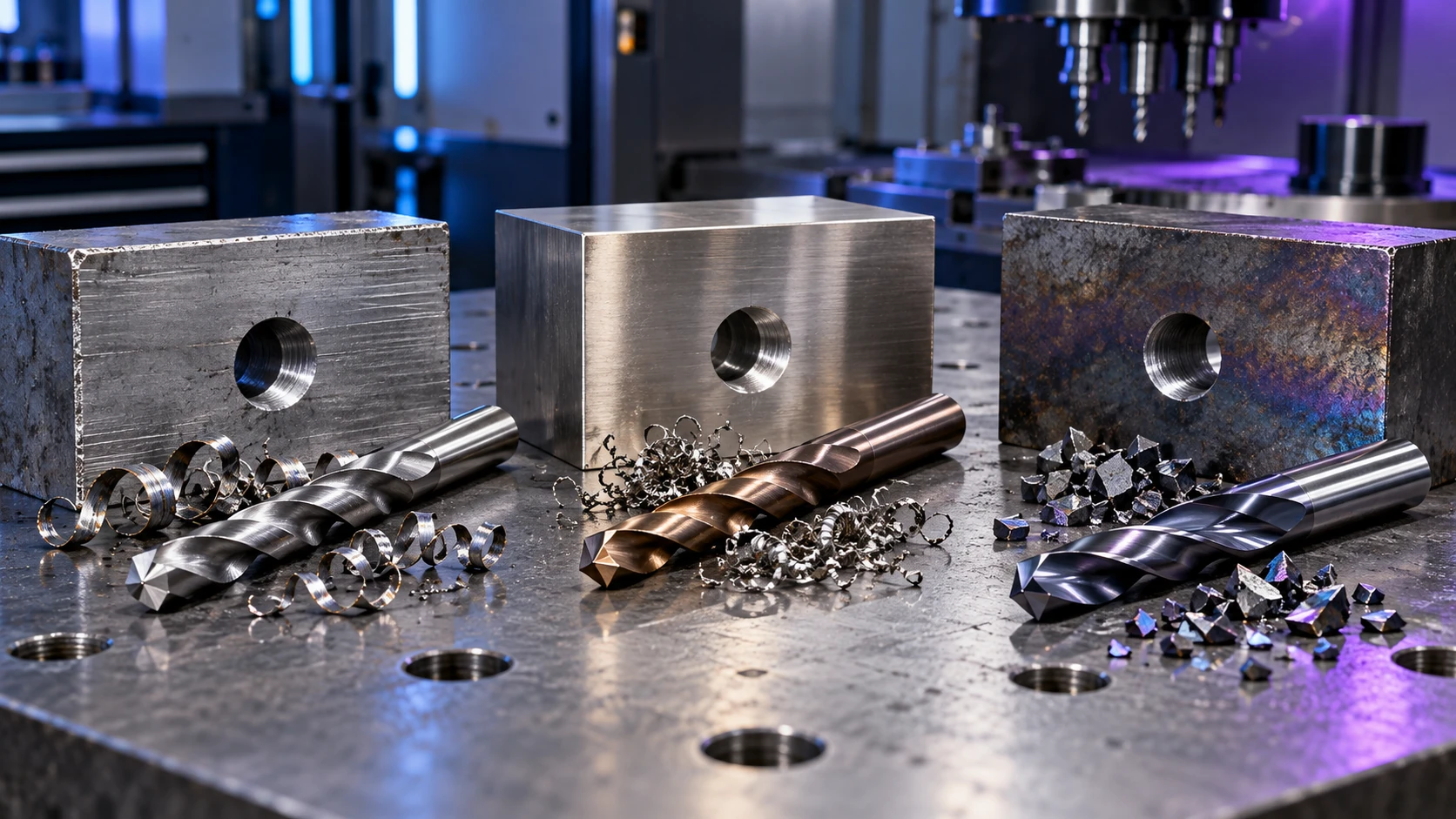
| Workpiece | Starting option | Key checks |
|---|---|---|
| Aluminum, brass, copper | HSS for general work; polished carbide for volume | Built-up edge, chip evacuation, edge preparation |
| Mild steel | HSS or cobalt; carbide for stable production | Hole tolerance, batch size, runout |
| Stainless steel | Cobalt for flexible work; carbide for rigid CNC | Work hardening, heat, coolant, chip control |
| Titanium and nickel alloys | Material-specific cobalt or carbide geometry | Heat management, coating, coolant pressure |
| Hardened steel | Purpose-designed carbide or carbide-tipped drill | Hardness range, rigidity, edge preparation |
| Cast iron and abrasive materials | Carbide often provides better production life | Abrasive wear, dust/chip evacuation, edge strength |
For hardened workpieces, see the ZIROO TOOLS guide to drill bits for hardened steel. For a wider overview of drilling options, visit drill bit types and their uses.
Evaluate Machine Rigidity Before Choosing Carbide
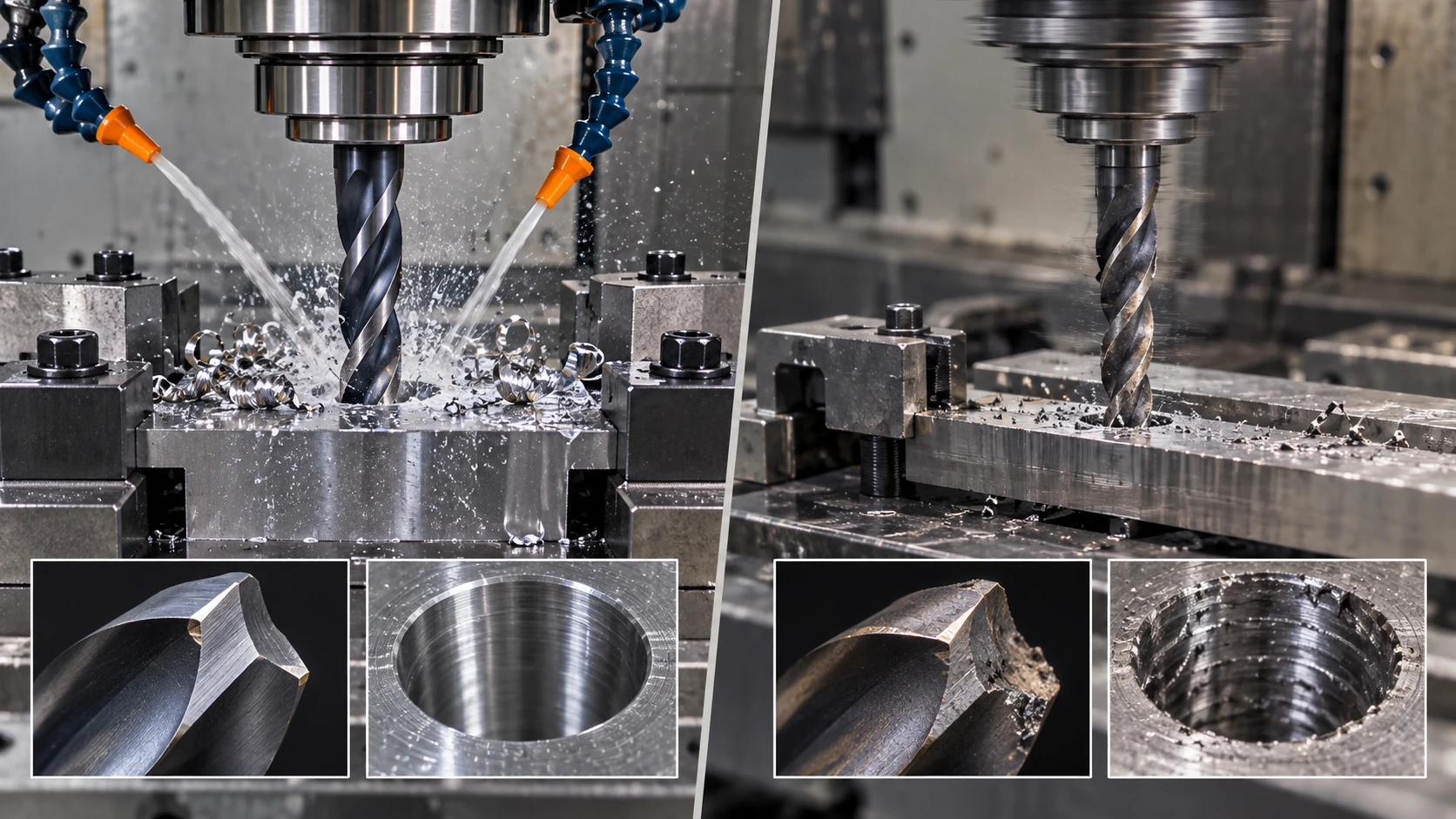
Carbide performance depends on the complete machining system. Check the spindle, holder, fixture, workpiece support, and tool projection—not only the drill itself.
- Holder and runout: Excessive runout overloads one cutting edge and can quickly damage carbide.
- Workholding: Thin walls, unsupported plates, and flexible fixtures may vibrate even on a powerful machine.
- Entry and exit: Reduce risk at angled entry, cross holes, and breakthrough conditions.
- Coolant: Deep holes and difficult materials require a validated chip-evacuation method.
- Tool projection: Use the shortest practical length and avoid unnecessary radial leverage.
Choose by Production Volume and Hole Conditions
For occasional holes or prototypes, HSS may deliver the best commercial result because the lower tool price and flexibility outweigh slower cycle time. Cobalt often suits repeated work on difficult metals when the machine is stable but the production volume does not justify carbide.
For high-volume production, calculate cost per accepted hole. Include tool price, expected hole count, cycle time, tool changes, inspection, scrap, regrinding, and downtime. Carbide becomes more attractive when it removes several tool changes or holds a tolerance that would otherwise require additional operations.
Coatings and Geometry Matter as Much as Substrate
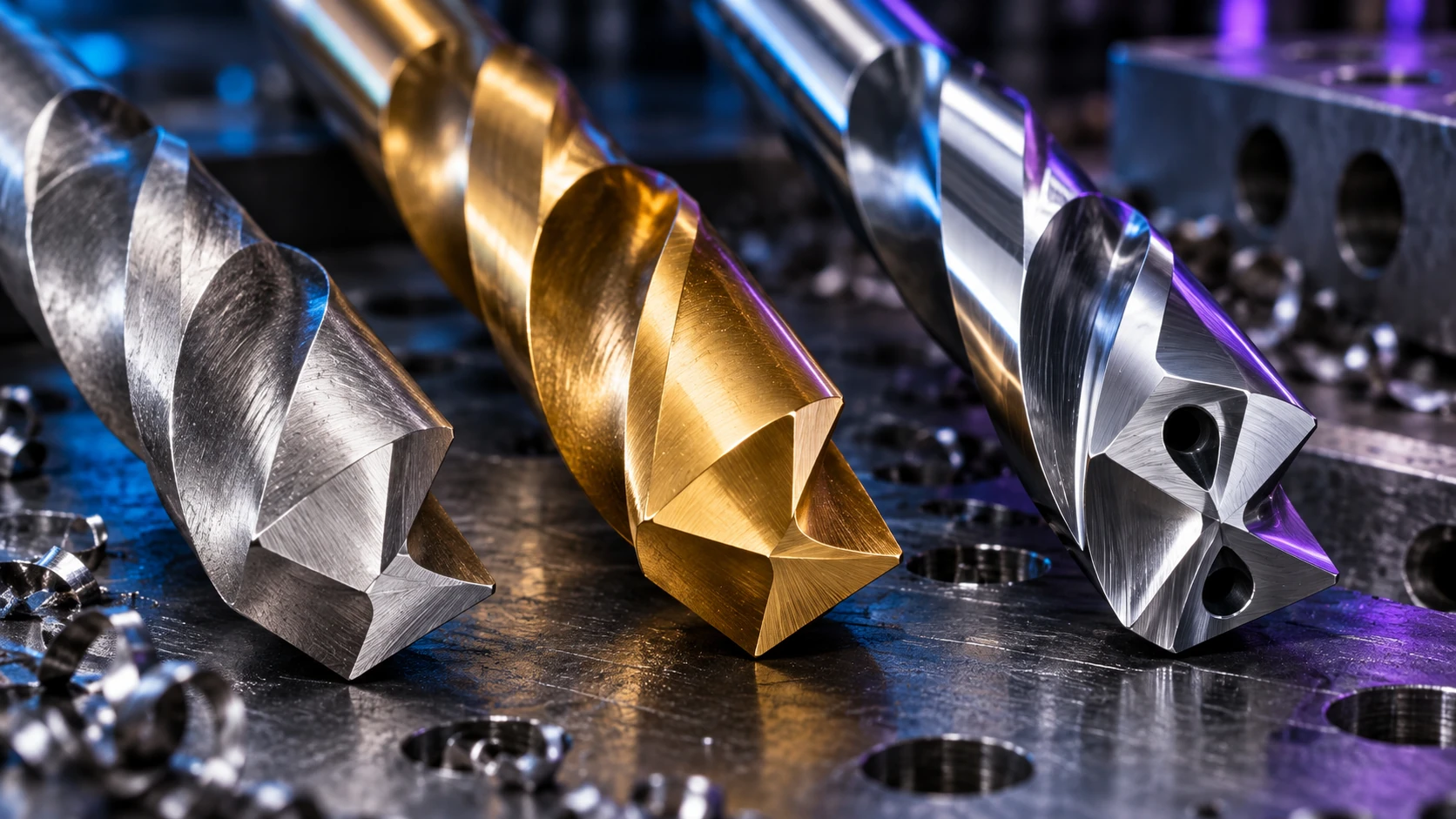
TiN, TiAlN, AlTiN, DLC, diamond coatings, polished surfaces, and other treatments can change the behavior of a drill. Point angle, split point, flute design, margin, helix, edge preparation, and coolant holes also influence chip formation and heat.
A coated HSS drill is not automatically equivalent to a cobalt drill, and a carbide drill with the wrong geometry can underperform a well-selected cobalt tool. Always match coating and geometry to the workpiece and cutting conditions.
B2B Drill-Bit Selection Checklist
Send the following information to a tool supplier before requesting a recommendation or quotation:
- Workpiece material, grade, and hardness.
- Hole diameter, tolerance, depth, and blind or through-hole status.
- Machine type, spindle speed range, and holder specification.
- Workholding method and whether the setup is rigid or interrupted.
- Coolant type, pressure, and through-tool capability.
- Monthly quantity, batch size, and acceptable tool-change frequency.
- Drawing, CAD file, sample hole, or current tool data where available.
Safety Notice
Follow the drill manufacturer’s cutting data and your workplace machine-safety procedures. Secure the workpiece, confirm the holder is locked, use suitable eye and chip protection, and keep hands away from rotating tools. Stop the machine before measuring, clearing chips, changing a drill, or investigating vibration. Carbide fragments can be ejected at high speed if a tool breaks.
Frequently Asked Questions
What is the best drill bit material for general metalworking?
HSS is often the most economical general-purpose choice. Move to cobalt for more heat resistance and tougher metals, or carbide for rigid CNC production and demanding hole quality.
Is cobalt stronger than carbide?
Cobalt HSS is tougher and more resistant to shock, but carbide is harder and more wear-resistant. “Stronger” depends on whether the main risk is impact and vibration or abrasive wear and heat.
Can I use carbide drills on a manual machine?
You can in carefully controlled conditions, but carbide requires accurate alignment and low vibration. Cobalt or HSS is usually safer when the machine or workholding cannot maintain a rigid setup.
Which drill bit lasts longest?
Carbide often has the longest production life in suitable conditions. Tool life still depends on material, geometry, coating, cutting data, coolant, runout, and chip evacuation.
How do I request a custom drill-bit quotation?
Provide the workpiece, hole size and depth, tolerance, machine conditions, production quantity, and drawing or CAD file. ZIROO TOOLS can then evaluate substrate, geometry, coating, and delivery requirements together.
Get a Drill-Bit Recommendation from ZIROO TOOLS
ZIROO TOOLS supplies B2B drilling tools and supports application-based selection for metalworking customers. Instead of choosing only by the hardest substrate, compare rigidity, hole requirements, batch size, and total cost per accepted hole.
Explore ZIROO TOOLS hole-making tools or send your drilling requirements for a quotation.