How to Choose a Twist Drill Bit: Material, Coating, Geometry, and Application
Choosing a twist drill bit involves more than matching the nominal diameter to a drawing. The workpiece material, hole depth, machine stability, coolant access, and required hole quality all affect whether a drill cuts consistently or wears prematurely. For production buyers and machining teams, the right choice balances tool life, cycle time, hole tolerance, and total cost per hole.
This guide explains how to choose a twist drill bit for metalworking by evaluating the substrate, coating, point and helix geometry, drill length, and operating conditions. Use the checklist and comparison table to create a practical specification for your next production trial.
1. Start with the workpiece and the hole requirement
Before comparing drill materials, record the material being drilled and its condition. “Steel” alone is not enough: low-carbon steel, stainless steel, hardened steel, cast iron, aluminum, and titanium alloys create different heat, chip, and wear conditions. If the grade or hardness is uncertain, confirm it with the material certificate or a representative sample.
- Workpiece: material grade, hardness, surface condition, and whether the hole crosses a joint or interrupted surface.
- Hole: finished diameter, tolerance, depth-to-diameter ratio, blind or through hole, and required position or finish.
- Process: CNC machining center, drill press, or handheld equipment; spindle runout; holder type; workholding rigidity; coolant delivery.
- Production target: batch size, acceptable tool changes, cycle-time target, and whether regrinding is part of the tool plan.
For high-volume CNC work, the operating setup matters as much as the drill specification. A brittle high-performance drill can fail early in a setup with runout or vibration, while a tougher HSS drill may be more forgiving in a less rigid machine.
2. Match the drill material to machine capability and production volume
| Drill material | Typical fit | Points to check |
|---|---|---|
| HSS | General-purpose drilling, lower or moderate cutting speeds, varied setups, and applications where resharpening is useful. | Confirm the grade and geometry suit the workpiece; lower purchase price does not automatically mean lower cost per hole. |
| Cobalt-bearing HSS (HSS-E / HSCo) | More demanding drilling where heat resistance and edge retention are important, including some stainless and alloy-steel applications. | It remains a high-speed steel tool; choose the geometry and cutting data for the specific material and machine. |
| Solid carbide | Rigid CNC setups and repeat production where higher cutting performance or consistent dimensional results justify the investment. | Carbide is less tolerant of impact, runout, and unstable workholding. Verify holder condition, alignment, and the maker’s operating data. |
There is no universal “best” material. Compare total cost using the same workpiece, hole depth, coolant, and quality criteria. Track usable holes per edge, cycle time, tool-change time, scrap, and regrinding or replacement cost. For additional context, see our guides to HSS vs. carbide cutting tools and cobalt vs. carbide drill bits.
3. Select a coating for the cutting conditions
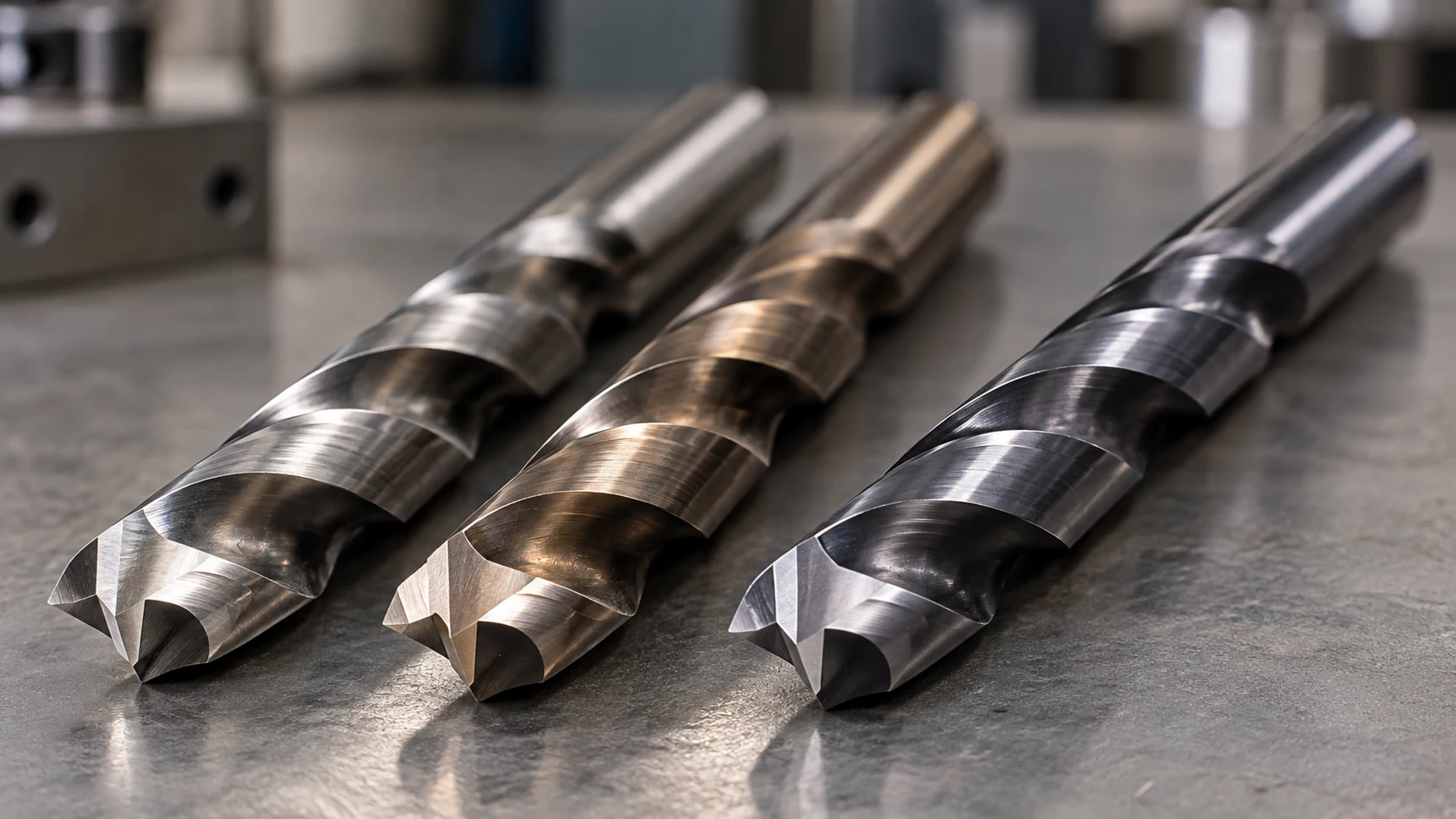
A coating is not a standalone solution. Its suitability depends on the drill substrate, workpiece chemistry, cutting temperature, speed, lubrication, and whether the tool will be resharpened. Common options include uncoated tools, steam oxide or black oxide finishes, TiN, TiCN, and AlTiN/TiAlN-family coatings. Names and performance vary by coating supplier and product specification, so confirm the exact coating rather than relying on color.
- Uncoated: a straightforward option for suitable low-demand applications and where a sharp edge or frequent regrinding is prioritized.
- Steam oxide / black oxide: may support lubricant retention and reduce built-up edge in applications specified by the manufacturer; it is not a substitute for coolant or correct cutting data.
- TiN: a general-purpose coating used on many HSS tools. Check its compatibility with your workpiece and resharpening plan.
- TiCN: a coating option for applications that call for increased wear resistance; verify temperature limits and substrate compatibility.
- AlTiN/TiAlN family: often considered for elevated-temperature cutting conditions. Aluminum-containing coatings may be unsuitable for some aluminum machining due to chemical affinity and built-up-edge concerns; follow the toolmaker’s recommendation.
Do not assume that a coating guarantees a fixed percentage increase in tool life. Run a controlled comparison and measure tool wear, hole quality, and cost per acceptable hole.
4. Choose point geometry for entry and material behavior
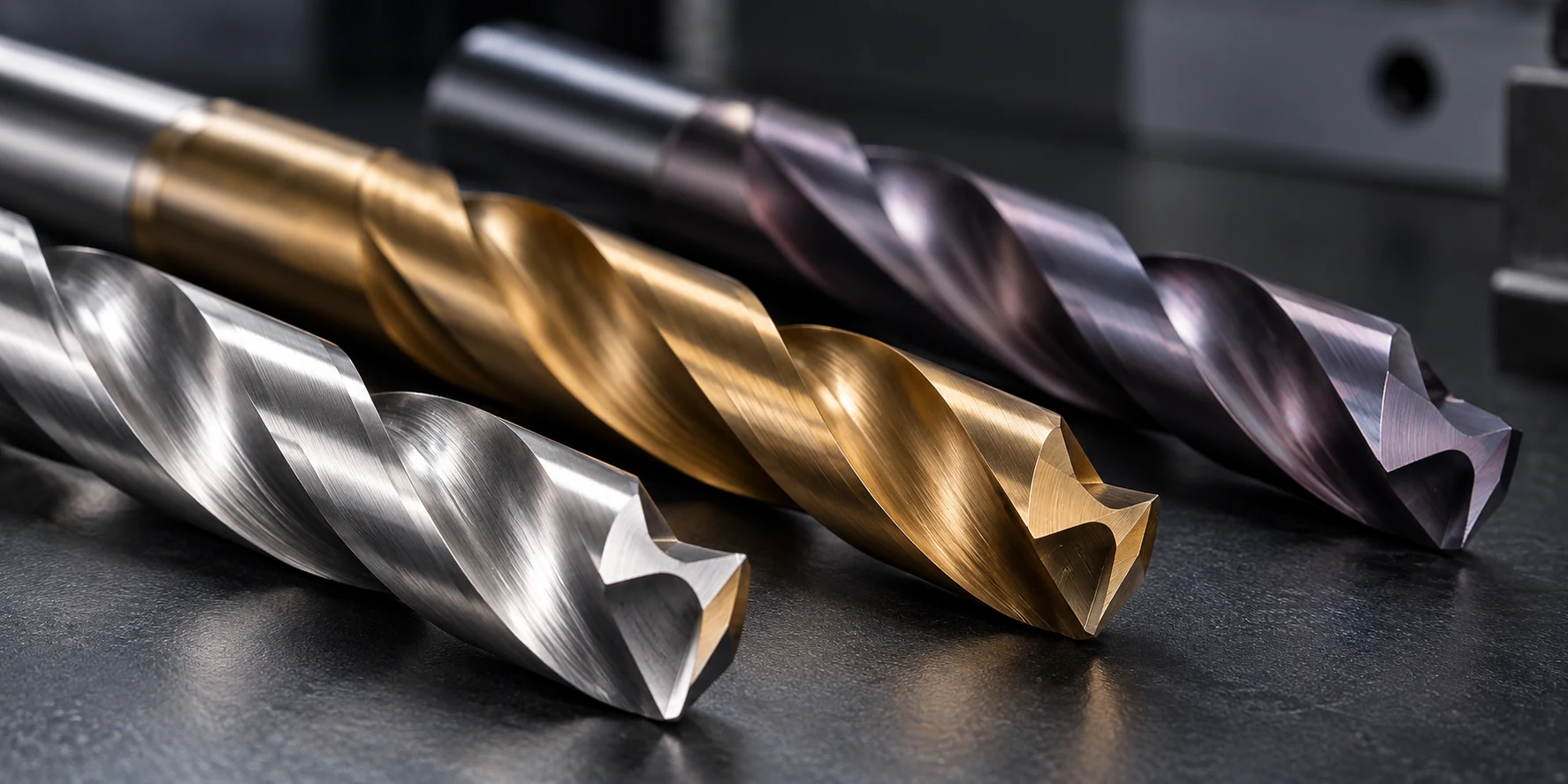
The point angle affects how the drill enters the material, distributes cutting load, and forms chips. A 118° point is common on general-purpose drills; 135° split-point designs are also widely used where improved centering and reduced walking are desired. These are starting references, not universal rules. Manufacturer examples illustrate that drill geometry is application-specific: Mitsubishi Materials describes 118° as common for HSS twist drills, while Bosch Professional lists a 135° split-point design for one HSS drill series. Drill design, edge preparation, workpiece hardness, and the required hole quality all matter.

For a production process, check whether the drill needs a spot or pilot hole. A spotting drill angle should be selected so the production drill engages correctly; an unsuitable spot can leave the outer corners of the production drill carrying the initial load. For hardened or difficult-to-machine materials, use a drill designed and recommended for that material rather than changing only the point angle. See our application guide for drill bits for hardened steel.
5. Match helix, flute, and length to chip evacuation
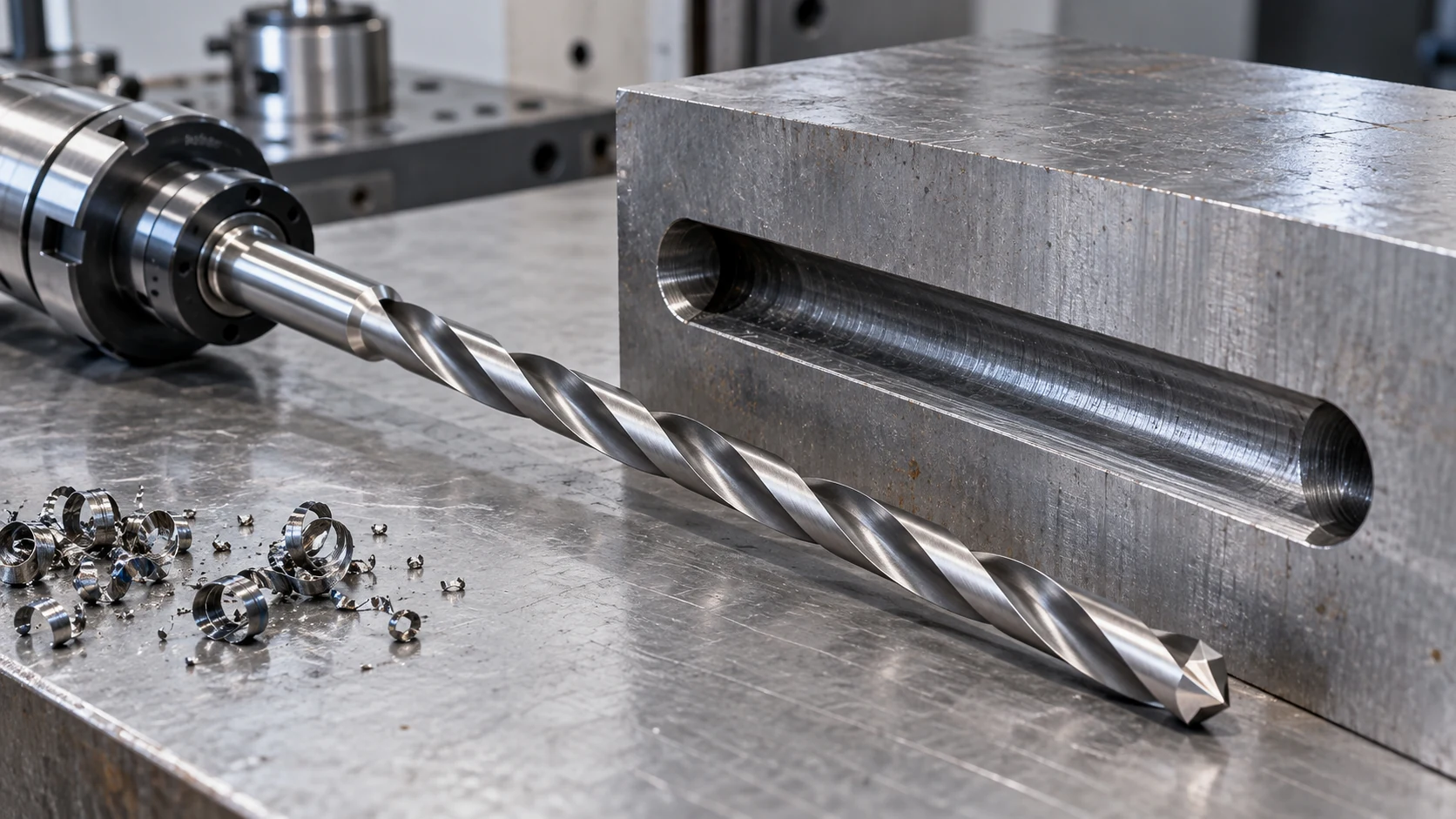
The flutes carry chips out of the hole and help deliver coolant toward the cutting edges. A standard helix is a common general-purpose choice, while specialized low- or high-helix designs may be appropriate for particular materials and chip behavior. Do not select a helix angle from a generic chart alone: flute strength, chip form, hole depth, and coolant access must be considered together.
Choose the shortest drill that reaches the required depth with enough flute length for chip evacuation. A shorter overhang generally improves rigidity, but a flute that is too short can trap chips or prevent the drill from reaching the full depth. For deep holes, confirm the tool is designed for the depth-to-diameter ratio and that the process includes suitable coolant and chip-clearing strategy. Peck drilling is not automatically appropriate for every drill or material; follow the toolmaker’s recommendations.
6. Check shank, tolerance, and machine setup
Confirm the shank fits the holder and that the holder can grip the drill securely without excessive runout. Verify the diameter tolerance, overall length, flute length, and applicable product standard on the supplier’s drawing or catalog. If the hole has a tight positional or diameter requirement, consider whether drilling alone can meet it or whether a reaming or boring operation is needed.
Also check spindle speed and feed against the tool manufacturer’s data for the exact drill diameter, material, and coolant condition. Too little feed can cause rubbing and heat; excessive feed can overload the cutting edges or create poor chips. If a new drill breaks or produces inconsistent holes, inspect runout, workholding, chip packing, coolant flow, and the entry surface before changing several tool variables at once.
7. How to Choose a Twist Drill Bit: Practical Selection Checklist
- Identify the workpiece grade, hardness, and condition.
- Specify hole diameter, tolerance, depth, and blind or through-hole status.
- Record machine rigidity, holder, runout, workholding, and coolant delivery.
- Choose HSS, cobalt-bearing HSS, or solid carbide based on the setup and production target.
- Confirm coating and point/flute geometry with the tool supplier for the actual application.
- Use the shortest suitable length and verify chip evacuation at the required depth.
- Trial one variable at a time; record tool life, cycle time, hole quality, and cost per acceptable hole.
Frequently asked questions
What is the most important factor when choosing a twist drill bit?
Start with the workpiece material and the hole requirement, then check machine rigidity and chip evacuation. These factors determine whether a particular substrate and geometry can work reliably.
Is a 118° or 135° drill point better?
Neither is best for every job. Both are common designs. Select the point based on the drill’s intended application, entry conditions, material, and whether a spotting operation is used.
Should I choose HSS or carbide twist drills?
HSS is often more forgiving and can be useful where resharpening matters. Solid carbide is typically evaluated for rigid CNC setups and repeat production. Compare actual cost per acceptable hole in your process.
Does a coated drill always last longer?
No coating guarantees longer life in every application. Substrate, coating specification, cutting data, coolant, and workpiece compatibility all affect the result. Validate with a controlled trial.
How do I choose a drill for a deep hole?
Match the drill’s flute length and design to the depth-to-diameter ratio, then confirm coolant access and chip-clearing instructions with the manufacturer. A standard jobber drill may not be suitable for a deep-hole process.
Can I regrind a coated twist drill?
Many drills can be reground, but regrinding changes the point geometry and may remove the coating at the cutting end. Ask the supplier whether recoating is available and compare the service cost with replacement.
Specify the application before requesting a quote
A useful drill-bit specification includes the workpiece grade and hardness, hole diameter and depth, machine and holder, coolant method, target tolerance, and expected batch volume. Share these details with ZIROO TOOLS when requesting a recommendation or custom configuration. The engineering team can then review the application requirements before proposing a suitable tool.