Cobalt vs Carbide Drill Bits: How B2B Buyers Choose for Metal Drilling
Choosing between cobalt and carbide drill bits is not simply a question of which material is harder. For a purchasing team or manufacturing engineer, the better choice depends on the workpiece, the machine and fixture, hole requirements, coolant delivery, and the cost of producing an acceptable hole repeatedly. A drill that performs well in a stable CNC process may be the wrong choice for a lower-rigidity setup, intermittent repair work, or an operation with poor chip evacuation.
This guide explains how to compare cobalt vs carbide drill bits for metal drilling without reducing the decision to a single rule. Use it as a starting point for matching drill construction to a real production process, then confirm the final geometry, coating, flute design, and application data with the tool supplier.
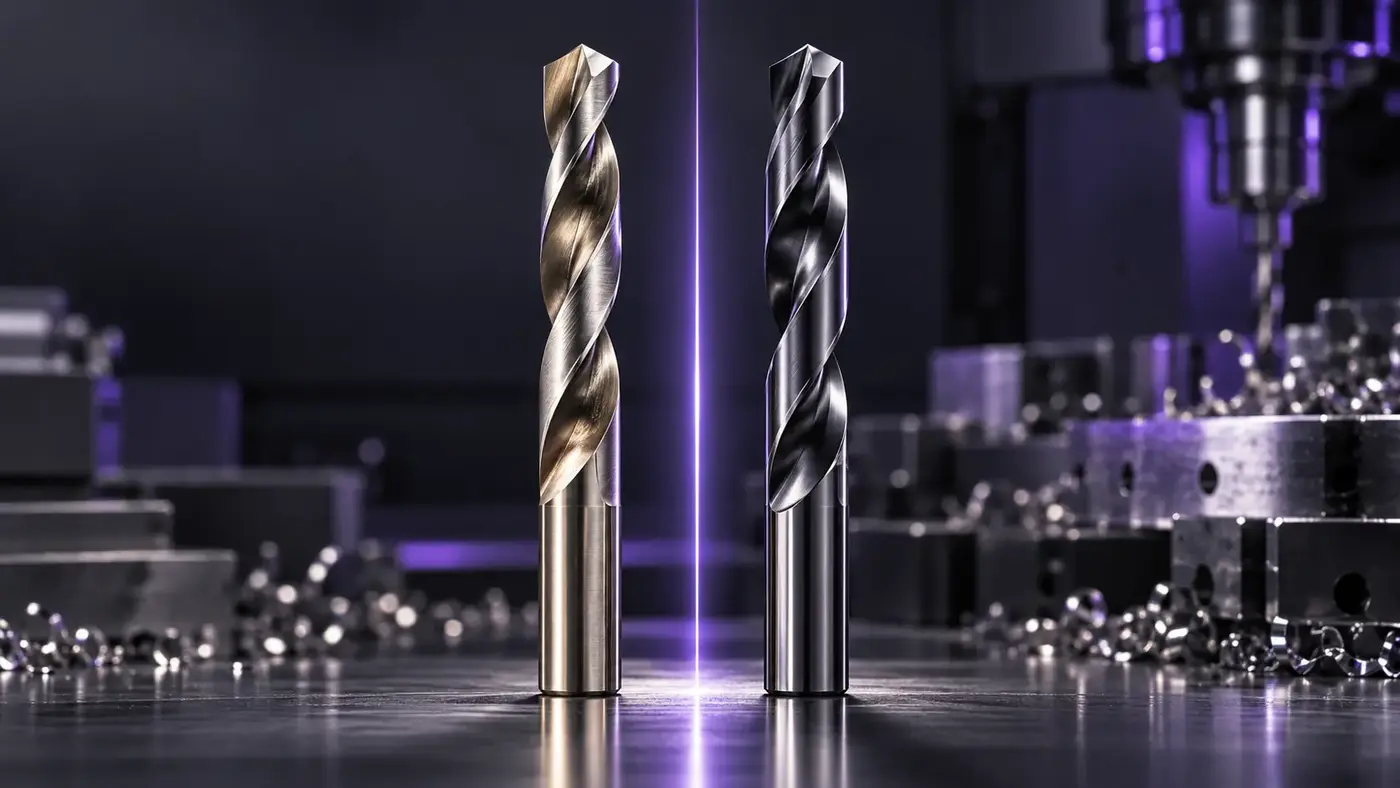
Quick Decision Matrix: Cobalt vs Carbide Drill Bits
| Decision factor | Cobalt-bearing HSS drill | Solid carbide drill |
|---|---|---|
| General character | More forgiving when the process has variation | High wear resistance and productivity potential in a controlled process |
| Setup requirement | Often better suited to less rigid or mixed-use setups | Benefits from stable machine, holder, fixture, and runout control |
| Risk to manage | Heat, wear, and gradual loss of edge performance | Chipping or breakage when the setup, entry, or chip flow is unstable |
| Typical buying logic | Flexibility, broad usefulness, and process tolerance | Repeatability, throughput, hole consistency, and cost per accepted hole |
The matrix is only a first filter. Neither option is automatically better for stainless steel, hardened material, or CNC machining. The process window matters.
What Cobalt and Carbide Mean in Drill Procurement
Cobalt-bearing HSS drill bits
A cobalt drill bit is generally a high-speed-steel drill made with cobalt-bearing tool steel. Buyers may encounter material designations such as M35 or M42, but the designation alone does not describe the complete tool. Point geometry, margin design, flute length, coating, coolant capability, and manufacturing quality can all change the result.
Cobalt-bearing HSS is valued because it can provide a practical balance of heat resistance and toughness. That balance can be useful when the job includes setup variation, interrupted entry, manual positioning, or a machine that cannot hold the same rigidity as a dedicated production cell. It should still be selected around the actual workpiece and operation—not merely because a catalogue labels it for metal. For a separate substrate-versus-coating comparison, see cobalt vs titanium drill bits for metal drilling.
Solid carbide drill bits
In this article, a carbide drill means a solid carbide cutting tool unless the supplier specifies otherwise. Do not compare a solid carbide drill with a carbide-tipped, brazed, masonry, or wood-drilling product as if they were equivalent. Tool construction changes both the operating limits and the buying decision.
Solid carbide is highly wear resistant and can support efficient, consistent drilling when the machine, holder, fixture, coolant, and program are stable. Its performance potential is valuable in repeat production, but it is less forgiving of poor alignment, excessive runout, unstable workholding, or an unsuitable drilling cycle. Review ZIROO TOOLS’ hole making tool range when you need to compare solid carbide drills, coolant-fed designs, deep-hole tools, reamers, or custom hole-making options. The purchase decision should include the capability of the entire process, not only the drill material.
Cobalt vs Carbide Drill Bits: The Core Comparison
| Comparison point | Cobalt drill bits | Carbide drill bits |
|---|---|---|
| Toughness in changing conditions | Often more tolerant of variation and less-than-ideal setups | Requires the process to remain controlled to protect the cutting edges |
| Wear resistance | Can be a dependable choice, but edge wear should be monitored | Strong potential for sustained wear resistance in a proven application |
| Rigidity sensitivity | Usually more forgiving | Usually more sensitive to holder, fixture, and machine stability |
| Hole consistency | Can deliver good results with the right geometry and process | Can support highly repeatable results when the setup is stable |
| Production economics | Useful where flexibility and lower process risk matter | Often justified when volume and cycle performance support the investment |
A buyer should compare cost per accepted hole, not just tool price. This includes tool life, cycle time, scrap risk, downtime, rework, tool-change frequency, and the cost of a failed hole in the workpiece.
Six Factors That Should Drive the Choice
1. Workpiece material and material condition
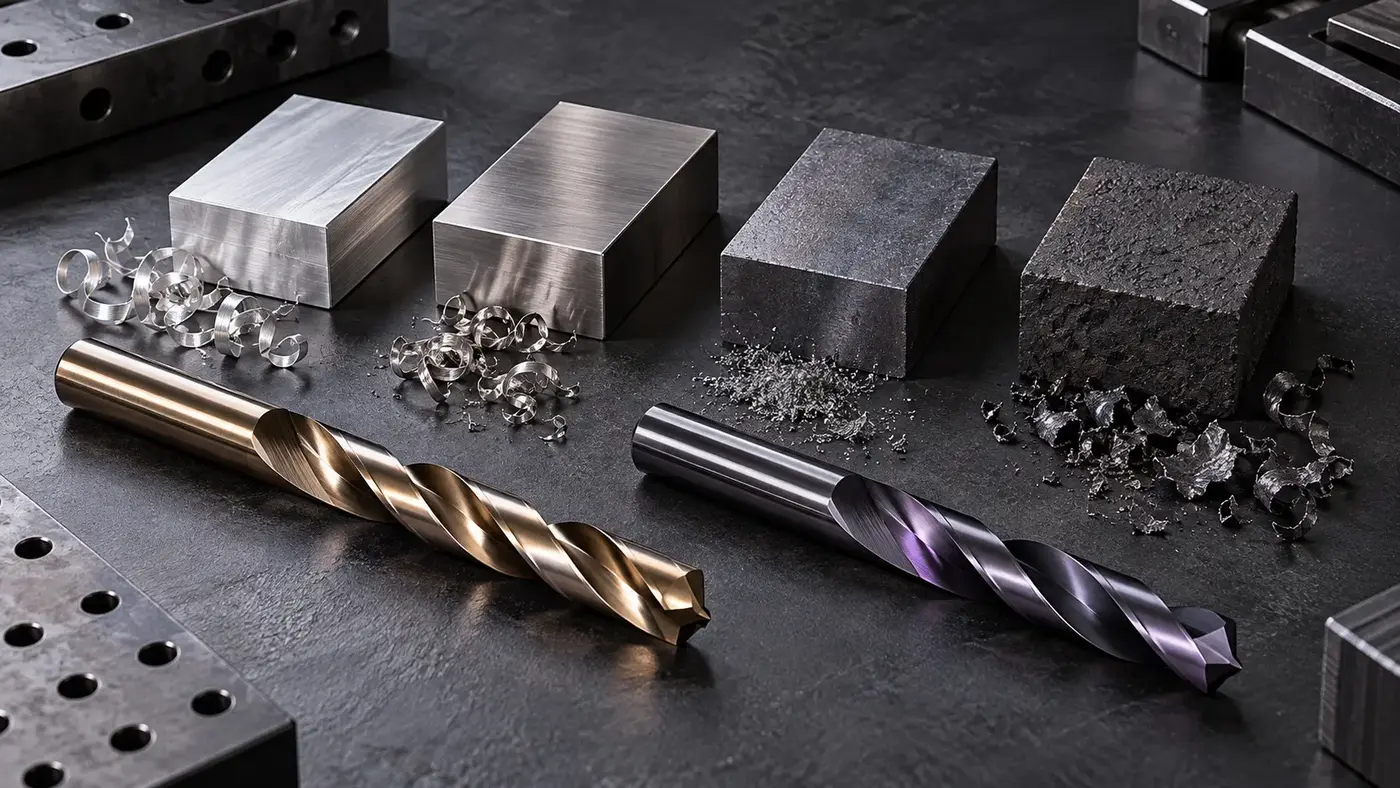
Start with the exact material grade, condition, hardness range, and characteristics that influence drilling. Stainless steels may work harden. Some cast materials are abrasive. Heat-resistant alloys can retain strength at elevated temperature. A material name by itself is not enough for a dependable recommendation.
For mild steels, aluminium, copper alloys, stainless steels, hardened materials, and abrasive grades, ask the supplier to match the drill substrate and geometry to the application. The correct point angle, coating, helix, margin, and coolant arrangement may matter as much as the cobalt-versus-carbide decision.
2. Machine, holder, fixture, and runout
Carbide drilling becomes more attractive when the process is rigid and repeatable. That means the machine spindle, toolholder, fixture, and part location work together to limit vibration and unwanted movement. If the workpiece is poorly supported or the holder condition is uncertain, the process may not protect a carbide cutting edge.
Cobalt drills can offer a wider operating window in mixed or less controlled environments, but they are not a substitute for correcting a poor setup. Check the holder type, overhang, clamping, fixture support, and available information about runout.

3. Hole geometry and drilling conditions
Diameter, depth, tolerance, straightness expectations, bottom condition, and entry/exit conditions all affect drill selection. A short, open through-hole is different from a deeper hole, a cross-hole, an angled surface entry, or a blind hole with strict bottom requirements. Interrupted cutting or uneven entry can raise the risk of edge damage and may require a different process strategy. If the application first requires the nominal hole size, use this drill bit size selection guide for metalworking before choosing the substrate.
Share the drawing and complete drilling sequence during quotation. This helps distinguish whether a standard drill is suitable or whether a special flute length, point geometry, coolant design, or custom tool is needed.
4. Coolant delivery and chip evacuation
Drilling fails quickly when heat and chips are not managed. Coolant method, pressure, through-coolant capability, chip space, pecking strategy, and hole depth should be reviewed together. Do not assume that a carbide drill alone will solve a difficult hole.
5. Batch size, throughput, and process stability
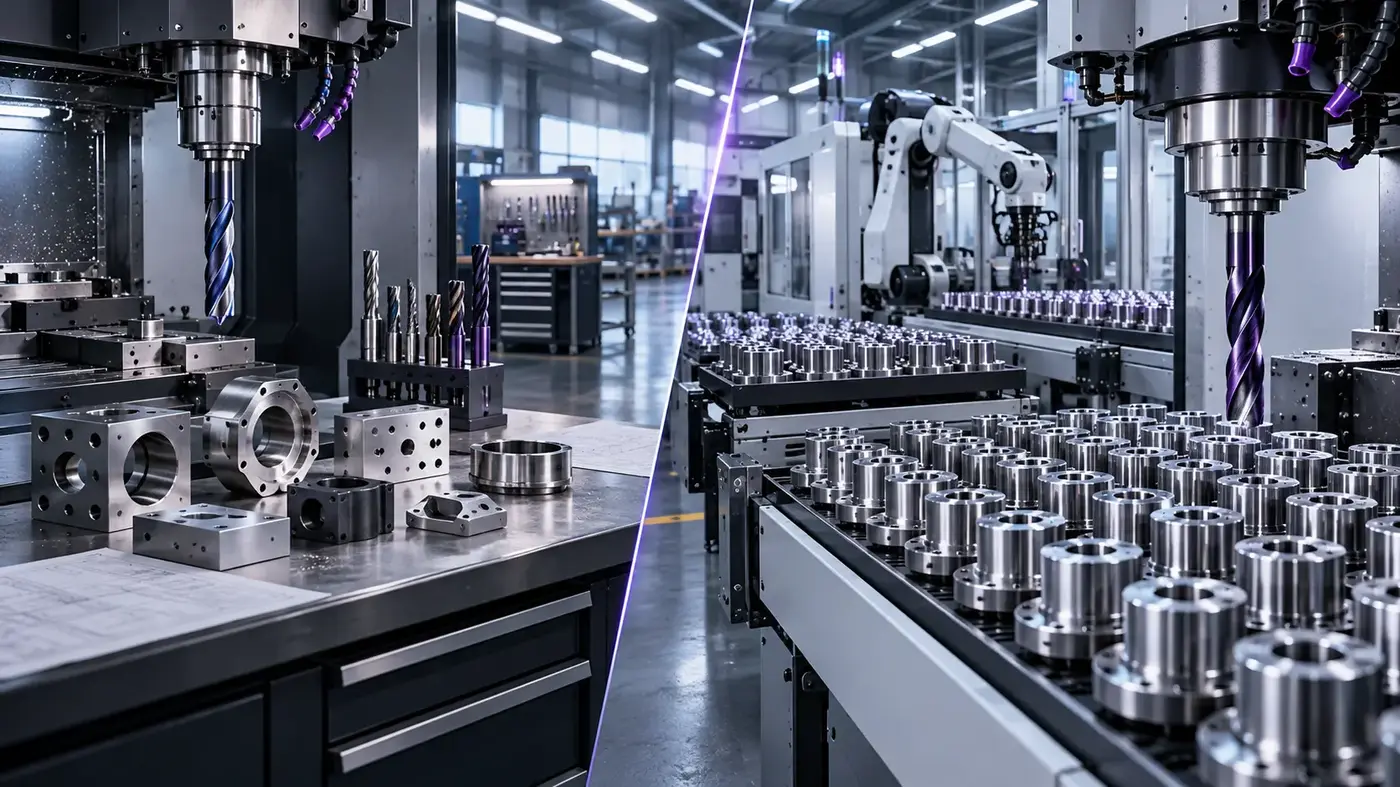
For prototypes, maintenance work, many different part numbers, or irregular production, a cobalt drill may be attractive because flexibility matters. For repetitive CNC production with a stable setup, carbide may be worth evaluating because its wear resistance and speed potential can support a more consistent process. Base the decision on batch demand, cycle time, quality, and the consequences of a tool failure.
6. Supply continuity, regrinding, and quality control
B2B buyers should ask how the tool will be managed after the first order. Is the drill a repeatable standard item or a custom design? Are dimensions and geometry documented? Does the production team need regrinding support, presetting rules, or lot traceability? A drill recommendation is stronger when it comes with a repeatable supply and validation plan.
How to Validate Cobalt and Carbide Drills Before a Production Order
When the hole is critical or the expected volume is meaningful, treat drill selection as a process trial rather than a catalogue comparison. The goal is to identify the option that produces conforming holes with predictable tool behaviour in your own machine.
- Define the baseline. Record the current drill, material lot, machine, holder, coolant method, programmed cycle, cycle time, and issue to improve.
- Keep the test controlled. Compare drills on comparable workpieces and avoid changing several variables at once.
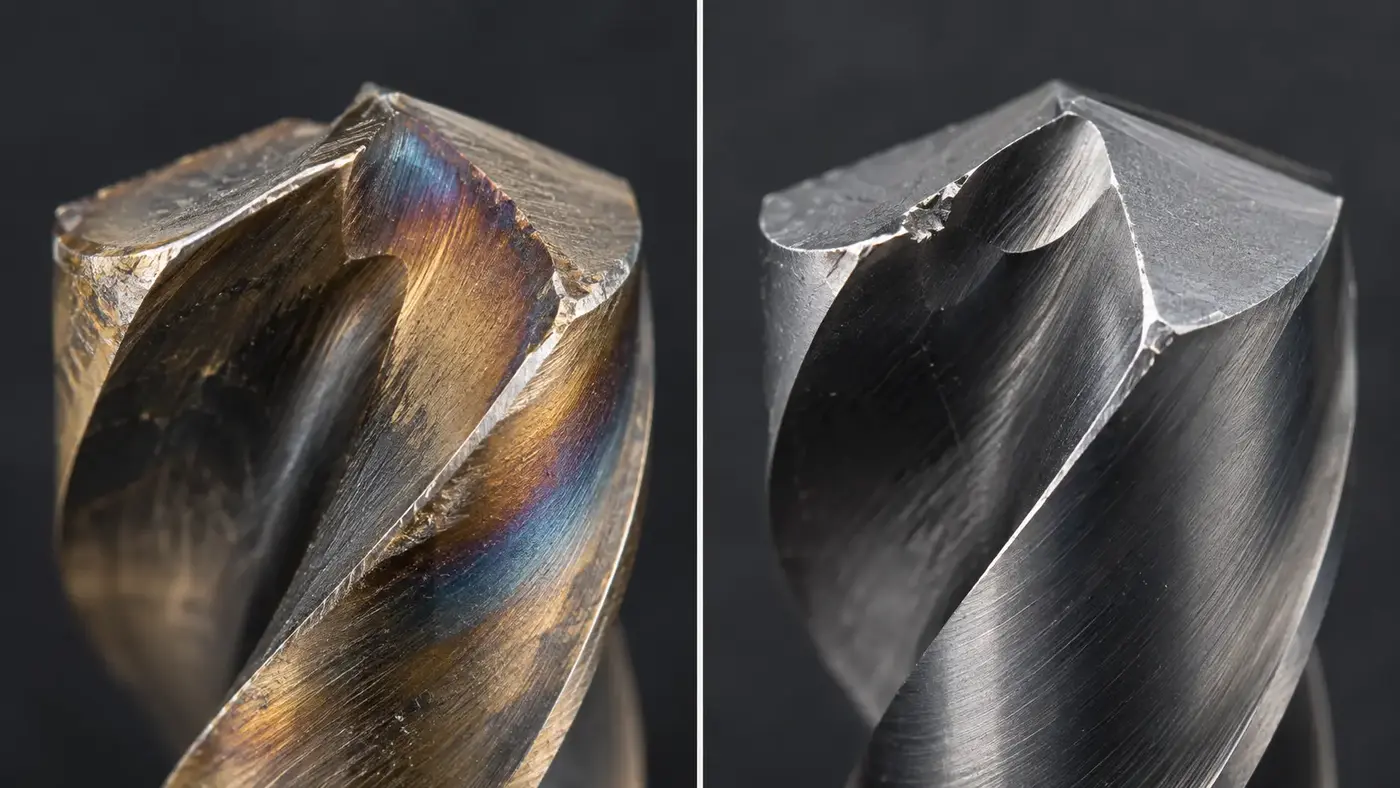
- Inspect the hole and the tool. Check diameter, location, surface condition, burr formation, straightness, and repeatability. Inspect edges for wear, built-up edge, chipping, or abnormal discoloration.
- Measure production impact. Include cycle time, tool changes, operator intervention, scrap, rework, and machine stoppages.
- Document the approved process. Retain the drill specification, holder, offsets, coolant requirements, inspection criteria, and reorder information.
Which Drill Works Best for Common Metalworking Jobs?
Stainless steel and work-hardening materials
There is no universal answer to carbide vs cobalt drill bits for stainless steel. Cobalt-bearing HSS can be a practical choice where setup flexibility and toughness are important. Solid carbide can be effective when the CNC process is rigid, coolant and chip evacuation are controlled, and production repeatability justifies the tooling strategy.
Hardened or abrasive materials
When a workpiece is hard or abrasive, carbide often deserves serious evaluation because wear resistance becomes a major concern. However, the recommendation must still account for hardness, machine condition, hole design, and toolpath.
Mild steel, aluminium, copper, and brass
For more easily machined materials, cobalt drills may provide broad practical coverage across varied work. Carbide can still make commercial sense in high-volume operations that need predictable cycle performance, tight control, or a standardized CNC process.
Maintenance, prototyping, and repeat CNC production
Maintenance and prototype environments often value versatility and tolerance for changing conditions. Repetitive CNC production places more weight on consistency, cycle time, and documented performance. Separate these buying cases at the beginning of sourcing; they can require different drill strategies even for the same workpiece material.
When a Standard Drill Is Enough—and When to Discuss a Custom Design
A standard drill can be efficient when diameter, depth, material, and hole requirements fit a proven catalogue application. A custom drill discussion can be worthwhile when a part has an unusual depth-to-diameter ratio, restricted approach, special bottom profile, difficult chip evacuation, demanding tolerance, or a large repetitive order.
The supplier may evaluate flute length, point form, margin configuration, coolant design, coating, and substrate around the part. For B2B sourcing, custom solutions are best managed with approved drawings, revision control, trial records, and reorder specifications.
Do Not Confuse Drill Substrate with Drill Coating
Cobalt and carbide describe the drill substrate or basic tool construction; a coating is a separate selection variable. A coating can support a particular material, heat condition, friction level, or wear pattern, but it does not erase the limits of the underlying drill or the process. When reviewing a quotation, ask the supplier to identify the substrate, coating, point geometry, flute configuration, coolant option, recommended material group, and intended hole-depth range.
Questions Purchasing Teams Should Ask Before Comparing Quotes
- Are all quoted tools the same construction: cobalt-bearing HSS, solid carbide, or another design?
- Does the geometry fit the actual hole depth, entry condition, and coolant method?
- What process assumptions does the recommendation make about machine, holder, and workholding?
- Which quality outcome is targeted: hole size, repeatability, surface condition, cycle time, or tool life?
- Is the tool a documented standard item or a custom design with controlled revisions?
Build the Decision Around the Process Environment
A flexible environment may involve several materials, changing part geometries, manual setup, short runs, or different machine conditions. In that situation, process tolerance can have more value than the highest theoretical cutting performance. Cobalt-bearing HSS drills are often evaluated for this broad-use role.
A controlled production environment may use the same qualified material, fixture, holder, coolant method, and program over many batches. Here, a solid carbide drill can be evaluated as part of a repeatable system where hole consistency, predictable wear, and cycle efficiency have measurable value. Some manufacturers need both strategies: a standard cobalt drill range for mixed demand and a qualified carbide program for high-repeat parts.
Common Buying Mistakes to Avoid
- Selecting by workpiece material alone. Setup, hole geometry, coolant, and expected volume determine whether the drill can succeed.
- Using carbide to compensate for an unstable process. Improve holder condition, workholding, alignment, and chip control first.
- Comparing only individual tool price. Evaluate total cost per accepted hole.
- Ignoring drill construction. Through-coolant capability, flute length, point geometry, coating, and diameter-to-depth ratio can change the recommendation.
- Ordering before a trial plan exists. For an important program, define success criteria before testing.
B2B Pre-Quote Checklist for Drill Selection
- Workpiece material grade, condition, and hardness range
- Hole diameter, depth, tolerance, and through-hole or blind-hole requirement
- Part drawing or a clear description of entry and exit conditions
- Machine type, spindle, holder, fixture, and known runout condition
- Coolant type and delivery method
- Current tool, current issue, and desired improvement
- Expected order quantity, production batch size, and quality target
With this information, ZIROO TOOLS can help compare a standard or custom drilling option against your manufacturing requirements instead of recommending a drill only from a material name.
Frequently Asked Questions
Is a cobalt drill bit made from pure cobalt?
No. In normal industrial usage, a cobalt drill bit refers to a high-speed-steel drill made with cobalt-bearing steel. Confirm the specific material and construction in the supplier specification.
Are carbide drill bits always better for stainless steel?
No. Carbide can be a strong option in a stable, controlled process, but a cobalt drill may be more appropriate where flexibility and tolerance of setup variation are more important.
Can I use a carbide drill bit on a drill press?
It depends on the drill press, workholding, alignment, and drilling conditions. A solid carbide drill is more sensitive to instability than many cobalt drills.
When does carbide justify the higher purchase cost?
Carbide may justify its cost when a controlled process can convert wear resistance and performance potential into better hole consistency, shorter cycle time, fewer tool changes, or lower cost per accepted hole.
What should I send when requesting an OEM or custom drill?
Send the part drawing, workpiece details, hole dimensions, machine and holder information, coolant method, batch size, current problem, and target result.
Related ZIROO TOOLS Resources
Use these related guides and product resources to complete your drill selection and sourcing review:
- Hole Making Tools for CNC Drilling and Reaming — compare drilling, reaming, deep-hole and custom hole-making options.
- Drill Bits for Hardened Steel — select tooling around hardness, hole type, rigidity and coolant control.
- How to Choose a Twist Drill Bit — review material, coating, point angle and flute geometry.
- Drill Bit Size Selection Guide for Metalworking — confirm nominal drill size before finalizing the tool specification.
- Cobalt vs Titanium Drill Bits — understand the difference between cobalt-bearing HSS and coated drill options.
Choose the Drill for the Process, Not the Label
The useful question is not which drill bit is best. It is which drill can create this hole reliably in this process at an acceptable total cost. Cobalt drill bits can provide practical toughness and flexibility. Carbide drill bits can offer major value in stable, repeatable production.
If you are sourcing drilling tools for an OEM program or a repeat CNC job, contact ZIROO TOOLS with your drawing and process requirements for an application-focused recommendation.