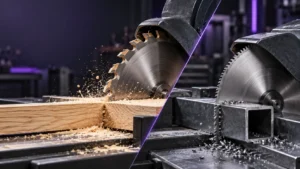
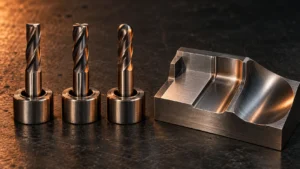
Choosing between carbide vs diamond drill bits for CNC machining requires more than comparing hardness or purchase price. The right choice depends on the workpiece, hole specification, production volume, machine stability, coolant or dust control, and the cost of each accepted hole.
There is also an important terminology issue. “Diamond drill bit” can describe a PCD drill, a diamond-coated carbide drill, or an abrasive diamond core bit for glass, ceramic, stone, or concrete. These tools do not remove material in the same way and should not be treated as interchangeable.
This guide gives CNC buyers, process engineers, and distributors a practical way to compare carbide and diamond-based drilling solutions. It explains where solid carbide is normally evaluated, where PCD or diamond-coated tools may offer an advantage, what machine conditions matter, and how to validate a tool before production.
Carbide vs Diamond Drill Bits: The Short Answer
For steel, stainless steel, cast iron, and many general CNC metal-drilling operations, start by evaluating a material-specific solid carbide drill when the machine and workholding are rigid enough. Carbide provides a sharp cutting edge, high stiffness, and a geometry that can be designed for controlled chip evacuation.
For abrasive non-metallic materials such as CFRP, glass-fiber composites, graphite, or selected aluminum-silicon materials, a PCD or diamond-coated carbide drill may be worth evaluating. The coating or diamond cutting layer can help resist abrasive wear, but only when the geometry, substrate, spindle, and application are correctly matched.
For glass, ceramic, stone, porcelain, and concrete, diamond abrasive or core drills are usually a different category of tool. They grind the material and often require dedicated cooling and operating methods. A CNC metal drill should not be selected for these applications simply because it is made from carbide.
What Does “Diamond Drill Bit” Mean?
Solid carbide drill bits
A solid carbide drill is made from cemented carbide and uses sharpened cutting edges to remove material. It is commonly selected for stable CNC production in metals and other materials covered by the tool maker’s application data. Solid carbide is rigid and wear resistant, but it is less tolerant of vibration, excessive runout, poor clamping, and impact than tougher steel-based tool materials.
Diamond-coated carbide drill bits
A diamond-coated carbide drill has a carbide body and a diamond layer deposited on the working surfaces. The carbide provides the tool structure while the coating is intended to slow wear in selected abrasive materials. Manufacturer product pages for composite drilling show that these tools are designed together with special points, flute forms, and chip-control features; the coating is not a universal upgrade for every workpiece. Kennametal’s CFRP drill information is an example of a product-specific carbide and CVD diamond coating application.
PCD drill bits
PCD, or polycrystalline diamond, is a manufactured diamond cutting material used in selected non-ferrous, composite, graphite, and other abrasive applications. PCD drills may use a diamond cutting element joined to a carbide or other tool body. Their suitability depends on the specific PCD structure, edge preparation, workpiece, and required hole quality.
Diamond abrasive and core drill bits
Diamond abrasive and core drills use exposed diamond particles or segments to grind through hard or brittle materials. They are common in glass, ceramic, stone, tile, and concrete work. Their cutting action, cooling method, and machine requirements differ from a sharp-edged CNC drill used for metal cutting.
How Carbide and Diamond Tools Remove Material
| Decision factor | Solid carbide drill | Diamond-based drill |
|---|---|---|
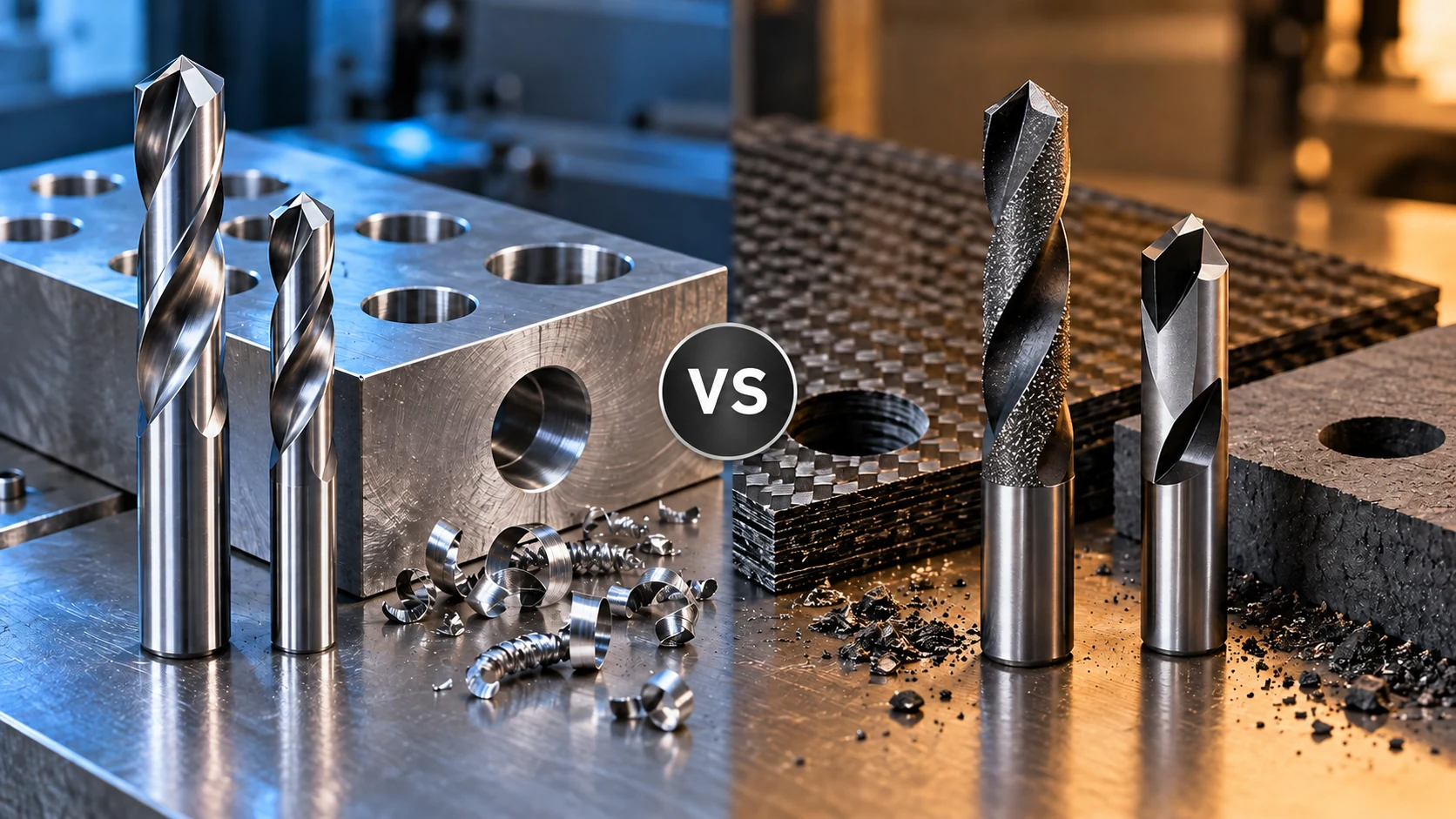
| Primary cutting action | Sharp edges cut and form chips | PCD or diamond-coated edges cut abrasive materials; abrasive core tools grind |
| Common industrial focus | Steel, stainless steel, cast iron, aluminum, and other approved CNC materials | CFRP, glass fiber composites, graphite, selected non-ferrous materials, or brittle materials depending on tool type |
| Main strength | Rigidity, flexible geometry, and productive metal drilling | Wear resistance in selected abrasive applications and reduced edge wear |
| Main risk | Chipping, vibration, heat, or poor chip evacuation when the setup is unstable | Coating damage, thermal damage, delamination, or poor performance when the tool is used outside its intended material range |
| Selection priority | Material grade, hardness, hole geometry, machine rigidity, and coolant | Material abrasiveness or brittleness, diamond structure, edge geometry, cooling, and process stability |
Carbide vs Diamond Drill Bits by Workpiece
Steel, stainless steel, and cast iron
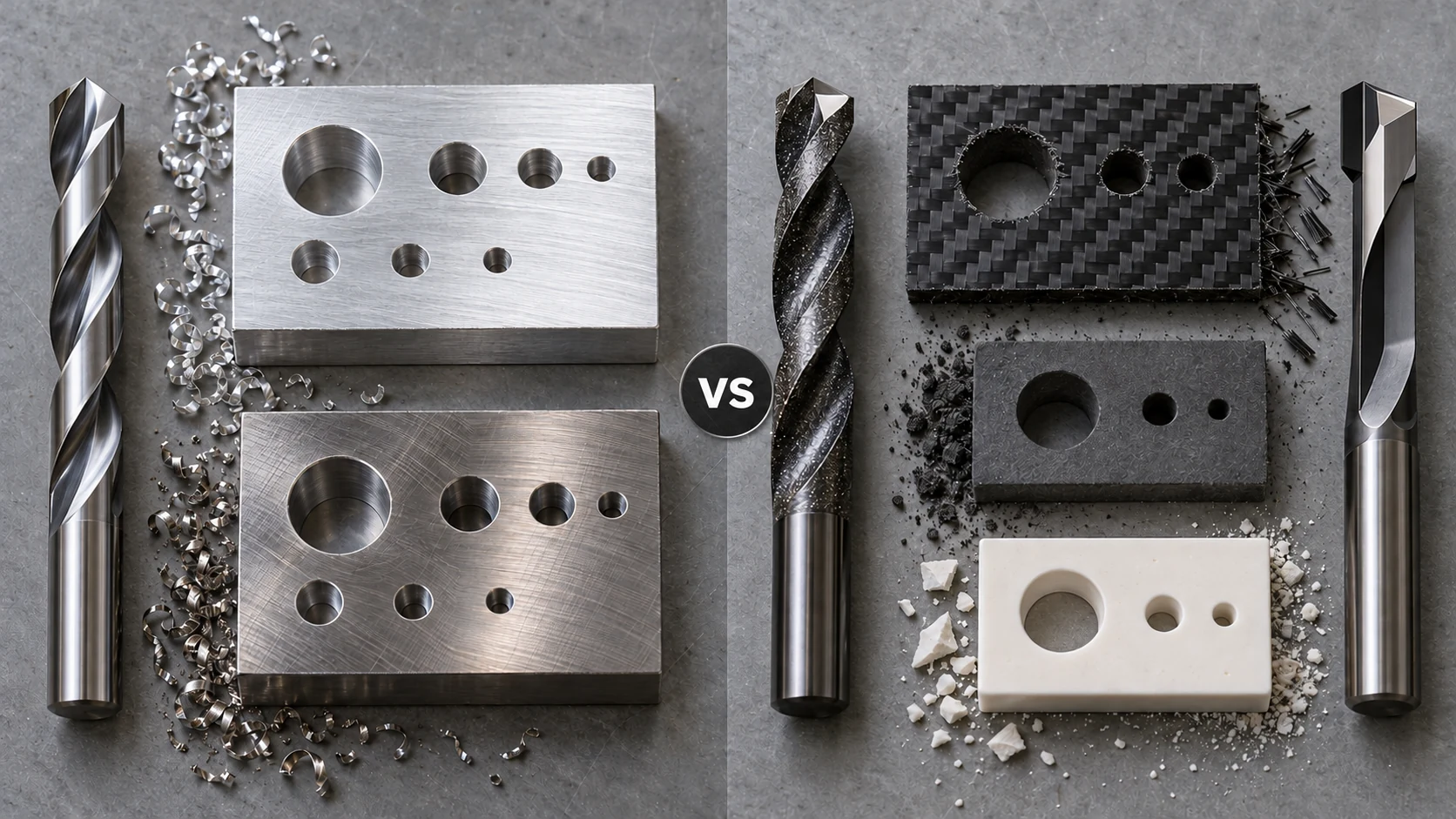
For steel and stainless steel, evaluate a drill designed for the material grade, hardness, hole depth, and cutting condition. A solid carbide drill may be suitable for rigid CNC production where runout, clamping, coolant, and chip evacuation are controlled. Stainless steel may require extra attention to heat, work hardening, and chip control. For a broader comparison of metal drilling options, see our drill bit types and uses guide.
Cast iron can be abrasive, but the correct tool still depends on whether the material is gray iron, ductile iron, or another grade. Confirm the expected chip form, hole tolerance, and dry or wet machining condition before choosing a drill.
A diamond tool is not automatically a better choice for ferrous metals. The tool maker’s application data should be checked before considering any PCD or diamond-coated solution for a metal workpiece. When the workpiece is hardened steel, review our drill bits for hardened steel guide before requesting a quotation.
Aluminum and other non-ferrous metals
Aluminum and other non-ferrous materials may create built-up edge, burrs, or chip adhesion. Point geometry, flute polishing, coolant delivery, and the required surface finish can matter more than the simple name of the tool material.
PCD may be useful in selected non-ferrous production applications where abrasive phases, long batches, or high surface-finish requirements make edge wear the limiting factor. Confirm the alloy, silicon content, hole size, tolerance, batch size, and machine condition before comparing PCD with carbide. The same material and process checks also apply when comparing carbide with cobalt tools; see our cobalt vs carbide drill bits guide.
CFRP and glass-fiber composites
Composite drilling introduces problems that are different from metal drilling. Buyers may need to control delamination, fiber pull-out, burrs, heat, dust, and hole quality at the entry and exit surfaces. Specialized solid carbide drills, diamond-coated carbide drills, and PCD tools may all appear in this application area.
For example, composite drilling products from established tooling manufacturers combine a carbide substrate or body with special point geometry, flute design, and a CVD diamond coating. OSG’s composite and metal-stack drill example combines a diamond-coated carbide body with high helix, parabolic flutes, and edge features aimed at chip evacuation and chipping resistance. These features are intended to work together for a specific composite application. The tool should therefore be evaluated as a complete design rather than selected by coating name alone.
Graphite and abrasive non-metallic materials
Graphite and similar materials can wear a conventional cutting edge quickly. A diamond-coated or PCD drill may be considered when abrasive wear changes hole size, burr condition, or process stability too quickly. Dust extraction, workholding, spindle condition, and tool geometry remain essential parts of the process.
Glass, ceramic, stone, and concrete
These materials are hard and often brittle. A diamond abrasive or core drill can grind the material while reducing the shock associated with aggressive cutting. Water cooling, controlled pressure, and the correct machine are often required.
Do not transfer parameters from a construction diamond core bit to a CNC diamond-coated drill. The tool construction, workpiece, spindle, and cooling method may be completely different.
Key Selection Factors for CNC Buyers
Before requesting a quotation, collect the information below. Providing only a diameter makes it difficult for a supplier to recommend a reliable tool.
- Workpiece material, grade, hardness, and surface condition
- Hole diameter, tolerance, depth, and required location accuracy
- Blind-hole or through-hole condition
- Entry and exit quality requirements
- Machine type, spindle interface, and available speed range
- Holder type, measured runout, and workholding condition
- Coolant, minimum-quantity lubrication, air, or dust extraction
- Expected holes per part, batch size, and annual demand
- Current tool, failure mode, and inspection method
Tool Life, Hole Quality, and Cost per Accepted Hole
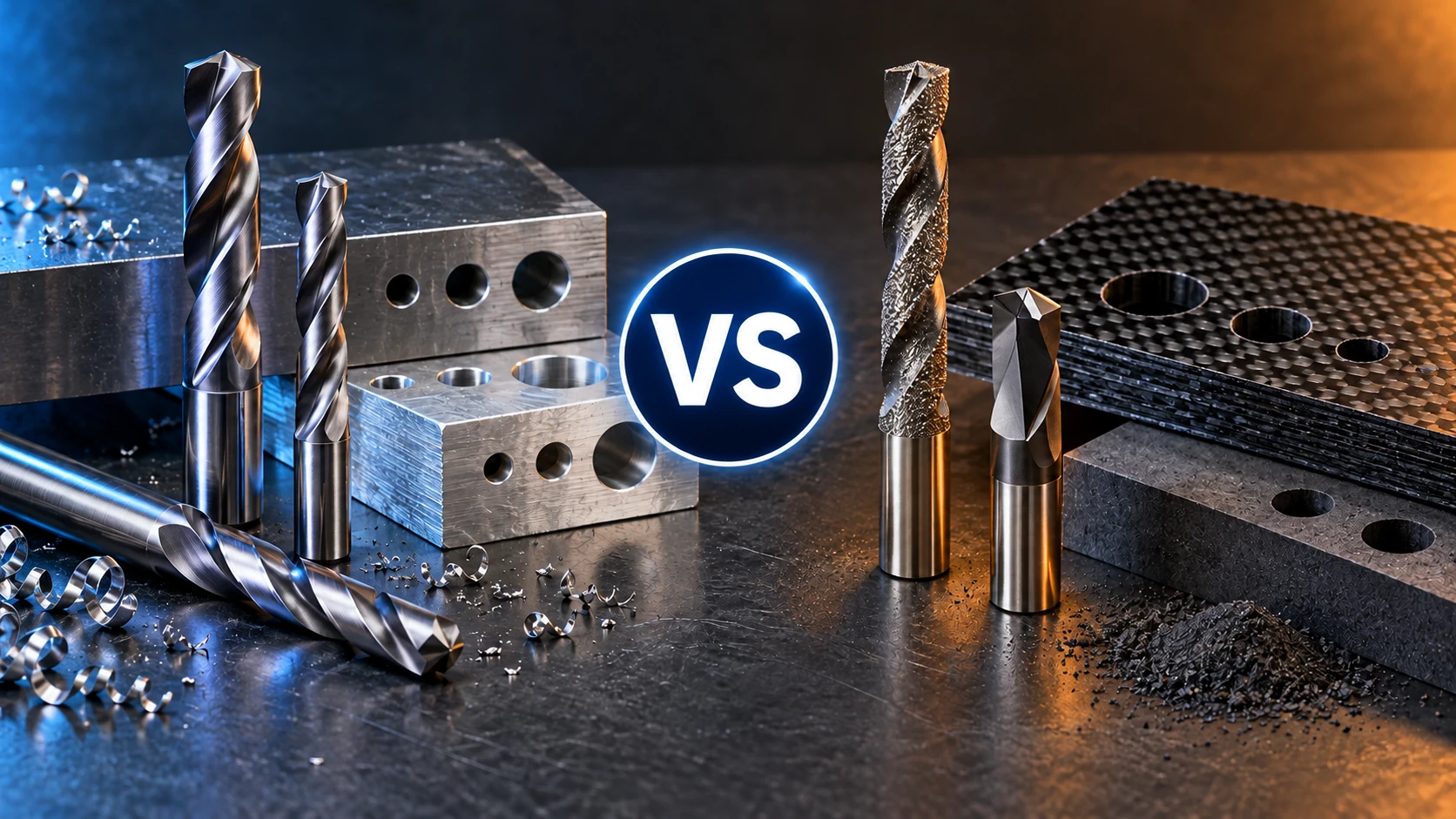
Unit price is only one part of the decision. A higher-priced PCD or diamond-coated drill may be justified when abrasive wear causes frequent tool changes or hole defects. A solid carbide drill may be the better economic choice for prototypes, short runs, or materials where diamond wear resistance does not create a measurable benefit.
Use this simple calculation during a trial:
Cost per accepted hole = total tooling and process cost ÷ number of accepted holes
Include the drill price, tool changes, machine downtime, inspection, rework, scrap exposure, cleaning, and any regrinding or recoating service. Keep the material batch, machine, holder, coolant, and acceptance criteria consistent when comparing two tools.
Machine and Process Requirements
- Check spindle and holder condition. Measure runout where the hole tolerance and tool diameter require it.
- Secure the workpiece. Movement or vibration can chip carbide and damage coated or PCD edges.
- Plan chip and dust removal. Deep holes need a clear chip path; composites and graphite need suitable dust control.
- Match cooling to the tool. Follow the product documentation for coolant, air, or dry machining.
- Use product-specific cutting data. Do not copy speed and feed values from a different diameter, substrate, coating, or workpiece.
- Inspect the first holes. Check size, position, burrs, delamination, surface condition, and tool wear.
A Practical Trial Plan Before Production
Run a controlled trial on representative material before standardizing a carbide or diamond-based drill.
- Record the material grade, hardness, batch, hole size, depth, and tolerance.
- Record the machine, holder, runout, workholding, coolant, and program.
- Follow the selected tool maker’s starting data.
- Inspect a defined number of holes at the beginning and during the trial.
- Record tool wear, hole size, burrs, delamination, chip form, and cycle time.
- Calculate the cost per accepted hole.
- Repeat the test when material batches or production conditions change.
Common Selection Mistakes
- Using the phrase “diamond drill” without identifying the tool construction.
- Choosing only by hardness while ignoring abrasiveness, brittleness, or ferrous content.
- Requesting a quotation with only the hole diameter.
- Ignoring hole depth, entry condition, or blind-hole clearance.
- Choosing carbide without checking machine rigidity and holder runout.
- Using construction diamond-bit parameters for CNC production.
- Applying one supplier’s tool-life result to every material and machine.
- Comparing purchase price without calculating the cost of accepted holes.
RFQ Checklist for Carbide or Diamond Drill Bits
Include the following details in an RFQ. If the operation includes drilling, reaming, or hole finishing, you can also review the ZIROO TOOLS hole-making tools range.
- Material grade, hardness, and whether the workpiece is metal, composite, graphite, glass, ceramic, or stone
- Hole diameter, tolerance, depth, and blind or through condition
- Drawing, sample, or hole-location sketch
- Machine, spindle, holder, and coolant or dust-control details
- Required hole quality and inspection gauge
- Expected quantity and production frequency
- Current tool and the reason for changing it
- Standard size, special geometry, coating, or OEM marking requirements
When Is a Custom Drill Worth Reviewing?
A standard drill is usually the simplest starting point when the hole size, depth, shank, and material are conventional. A drawing-based or modified drill may be worth reviewing when the hole has an unusual depth ratio, a special entry or exit condition, a non-standard shank, a tight tolerance, a composite stack, or a production problem that standard tools have not solved.
For a custom discussion, provide the drawing or sample, material and hardness, hole details, machine interface, coolant or dust-control method, required quantity, and the current failure mode. This gives a tooling supplier enough information to evaluate geometry, substrate, coating, and inspection requirements together.
Frequently Asked Questions
Are carbide drill bits better than diamond drill bits?
Neither is best for every application. Carbide is often a practical starting point for stable CNC metal drilling. Diamond-based tools may be better for selected abrasive composites, graphite, or other approved applications. Match the tool to the workpiece and process.
Can diamond-coated carbide drills replace solid carbide drills?
They can be useful in selected abrasive materials, but the coating does not make one drill suitable for every job. Confirm the tool maker’s material range, geometry, cooling requirements, and trial data.
Are diamond drill bits suitable for steel?
Do not assume they are. Some diamond-coated tools may be designed for specific non-ferrous or composite applications. Check the exact product documentation before using a diamond-based tool on steel.
When should I use a PCD drill bit?
Evaluate PCD when abrasive wear is limiting the process and the tool is designed for the workpiece. Common evaluation areas include selected non-ferrous alloys, CFRP, graphite, and other abrasive materials.
Do diamond drill bits always last longer than carbide drills?
No. Tool life depends on the material, geometry, coating or diamond structure, cutting data, cooling, machine stability, and inspection criteria. Use a representative trial to compare life.
Which drill is better for aluminum?
Start with a drill designed for the aluminum alloy and required hole quality. A polished carbide geometry may be suitable for many jobs; PCD may be considered for specific abrasive or high-volume applications.
What information should I send to a drill-bit supplier?
Send the material, hardness, hole diameter, tolerance, depth, blind or through condition, machine and holder, coolant or dust control, quantity, and current process problem.
Can ZIROO TOOLS recommend a carbide drill for my application?
Yes. Share the drawing or hole details, workpiece material, machine conditions, production quantity, and current failure mode so the tooling direction can be reviewed against the application.
Safety Notice
Follow the machine manufacturer’s instructions and your workplace safety procedures. Keep guards and enclosures in place, secure the workpiece, and wear the required eye, face, and respiratory protection. Stop the spindle before inspection, tool changes, or chip removal. Do not clear chips by hand while the machine is running. Composite and graphite dust must be handled according to the controls required at your facility.
Conclusion
Carbide vs diamond drill bits is a workpiece and process decision. Solid carbide is often a strong starting point for stable CNC metal drilling. PCD or diamond-coated carbide can be evaluated when abrasive wear, composite fibers, graphite, or selected non-ferrous materials limit conventional tool life. Diamond abrasive and core drills belong to a different group for many glass, ceramic, stone, and concrete applications.
To request a suitable drilling direction from ZIROO TOOLS, prepare the material, hole specification, machine setup, production quantity, and current process issue, then contact our tooling team. A representative trial and a cost-per-accepted-hole comparison provide a more reliable basis for production selection.